Cooking rice isn’t magic. It’s chemistry. Hard grains need two specific things to transform into fluffy, edible morsels: significant heat and plenty of water. You can’t rush the process, but you can automate it.
The journey from raw seed to dinner plate happens in four distinct phases. First, the rice sits in the water, soaking up moisture. Then comes the boil. After that, the water absorbs into the grain, a process that is technically steaming. Finally, the rice rests. A good rice cooker guides the food through all four stages without you lifting a finger.
Inside the Machine
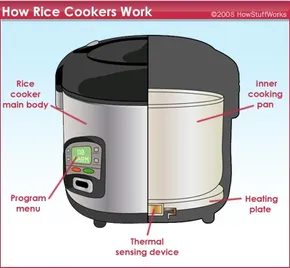
Look at a basic rice cooker and you’ll see a few key components. There’s the main body, the inner cooking pan, an electric heating plate, and a thermal-sensing device. Plus, some buttons for convenience.
You place rice and water in the inner pan. You slide that pan into the shell. The weight of the pan presses down on the thermal sensor built into the bottom of the unit. This triggers the heating plate. It kicks in hard, bringing the water to a boil fast.
The thermal sensor is basically a spring-loaded thermometer. It gauges the temperature of whatever is in the pan. It’s tucked into the main body, right where the heat meets the metal.
Not all pans are created equal. Simple cookers transfer heat from the plate to the pan. The material matters. Copper and aluminum are highly conductive. They move heat easily. Some pans use these metals to speed things up. Others use heavier, slower materials. The metal choice can affect how long the whole process takes. But usually, you don’t notice the difference much.
The Temperature Trick
Here is the part that confuses people. Water boils at 212 degrees Fahrenheit (100 degrees Celsius). Once it hits that steady boil, it doesn’t get hotter. It stays right there as long as there is liquid water in the pan.
The rice cooker relies on this fact.
While water is present, the temperature is stable. The rice is cooking. But once the rice absorbs all that water, the liquid disappears. The temperature in the pan starts to rise. Fast. The thermal sensor detects this spike. It knows the water is gone.
The cooker then makes a decision. It switches off. Or it moves to a warm cycle. Either way, the cooking is done. The rice enters its final resting phase.
Why Bother?
Most people don’t need a $200 gadget to boil water. You can use a pot on the stove. But stovetop cooking requires attention. You have to watch the boil. You have to time the rest. It’s easy to make mistakes. It’s easy to burn the bottom or leave it undercooked.
Rice cookers reduce the margin for error. They handle the timing. They handle the heat.
Some modern units use fuzzy logic. This technology lets the appliance react to what’s happening inside the pan in real time. It adjusts the heat curve based on the actual conditions, not just a timer. We’ll look at how fuzzy logic changes the game in the next section.
For now, just remember the basics. Water. Heat. Absorption. Rest. The machine does the heavy lifting. You just wait.


