How #HomeThermostats Work: From Mercury Vial to Smart Apps
Your thermostat is the brain of your home’s comfort system. This determines whether the furnace is burning or the air conditioner is running. These two systems consume the most electricity in your home. It also determines daily comfort. You probably don’t think too much about this. But rising energy costs mean it’s time to take a closer look.
The technology inside is surprisingly simple. Let’s dismantle the home thermostat. Trace its lineage from clunky mechanical switches to sophisticated digital panels. Learn how modern features like remote control and system partitioning actually work.
Era of Mercury Switch
Let’s start with the old one. You can still see them in motels and old homes. The key component is the mercury switch. This is a glass bottle. It contains a small amount of liquid mercury.
Mercury is a liquid metal. conducts electricity. It flows like water. There are three wires inside the bottle.
A thread runs through the bottom. Mercury is constantly in contact with it. There is another wire on the left. If you tilt the vial to the left, the mercury fills the gap in this thread. The third wire is on the right side. If you lean to the right, the circuit closes there. simple physics. No coding required.
Bimetallic tape and temperature control
How does the thermostat know when to tilt the bottle? Look at the thermometer. One shows the temperature on the cover. The other is on the top floor. Control your HVAC system.
These are not digital sensors. Twisted bimetallic plate.
A bimetal is two different metals joined together. Each metal expands at a different rate when heated. Choose your metal carefully. heated strips. The inner metal expands more than the outer layer. The tape opens. As it cools, it curls up.
The middle part of the coil is connected to the temperature control rod. A mercury switch is attached to the tip of the coil. As the coil winds and unwinds, the mercury switch tilts. Left or right? On or off.
Circuit and fan control
Non-digital thermostats have two mechanical switches. They don’t use touch screens. They use body movements.
These switches move small metal balls. The ball rolls over the traces of the circuit board. Set mode with one switch. heating or cooling. The other controls the circulation fan.
This is a chain reaction. Changes in temperature. The tape opens. The bottle tilted. The ball is rolling. The circuit is closed. Electricity flows.
Outside the machines
We have explained the basics of mechanical thermostats. But the world moves on. Digital models are now common. It uses a thermistor to improve accuracy. Offers programmable schedules. Can be controlled from a mobile phone.
Several innovations can help improve accessibility. A talking thermostat announces the settings to the visually impaired. Before Wi-Fi, you could control your phone’s thermostat remotely. Today, smart thermostats can learn your habits.
Understanding old devices can help with troubleshooting. It also highlights how far we’ve come. You don’t need a physics degree to understand home climate control. I’m a little interested. And maybe a driver.
Remember mercury the next time you adjust a knob or tap a screen. Don’t forget to roll the metal. Everything works together. To keep warm. Or cool. It depends on what you need.
Internal heating and cooling mechanism
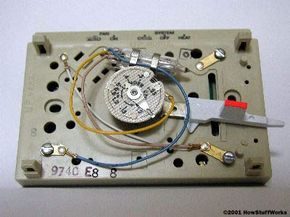
Turn the lever up. Internally, this movement rotates the bimetallic coil. The mercury switch tilts to the left. Electric current passes quickly through liquid metal. The relay clicks. The heater starts. The circulating fan rotates. I feel the heat.
But it won’t last forever. When the room warms up, the radiator loosens. The switch returns to the right. The circuit is broken. The heater stops.
Cooling works the same way, but in reverse. Turn the switch down. The relay powers the air conditioner. The room is cooler now. The coil is twisted. The mercury tip stands out again. This cycle repeats itself.
However, there is a problem. Mechanical thermostats have blind spots. The air “inside” the thermostat housing can rise to 72 degrees before the rest of the living room. If the heat continues until the local air is perfect, the corridors will sweat.
Enter your calibration.
The device turns off the heater prematurely. Residual heat from the stove is expected to continue radiating into the room even after the burner is turned off. This is a simple coil. resistance.
When the heater is in operation, current flows from the mercury switch through the yellow wire to the resistance loop. Move along the wire until you hit the wiper. From there, proceed to the circuit board.
Turn the knob. Move clockwise. You can increase the length of the resistance wire through which the current must pass. The resistance produces heat. A higher resistance means more heat is generated in the sensor. This extra heat allows the bimetallic coil to unwind more quickly. The thermostat thinks the room is warmer than it actually is. The power cuts off prematurely. The stove stopped, but the heat continued.
Next, we’ll look at how these components communicate with your home’s electrical system.
Basic information about wiring
Older systems rely on physical connections. This thermostat uses 5 wires. each has a job.
- RH : Current from the heating transformer (24 VAC).
- RC : Current from the cooling transformer (24 VAC).
- W : Signal to start heating.
- Y : Signal that starts the compressor of the air conditioner.
- G : Signal to start the fan.
Two transformers maintain the system. These provide the low voltage power needed to trip the furnace or AC unit relays. When you want cool air, just follow this path.
Power comes from RC. The mode switch sends current to the traces, which goes to the lower right corner of the card. Tighten the screw and connect it to the pink wire. The pink wire is connected to the lower wire of the mercury switch.
Turn the switch to the right to cool down. Electricity flows through the mercury to the blue wire. The blue wire is connected to the lug in the lower left corner. From there, traces on the circuit board send power back to the mode switch. The current flows over the point of contact.
The current reaches the G terminal. The fan starts. Current also flows through the Y connector. The compressor starts. A cold wind is blowing.
Digital and machines
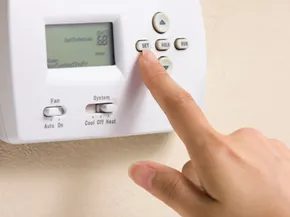
Mechanical switches are very reliable. But they are dumb.
A Digital Thermostat uses a Thermistor. A resistor whose resistance value changes with temperature. The microcontroller reads this resistor. Convert numbers to accurate temperature measurements. Does not contain mercury. There are no moving parts and no stickiness.
Reasons for upgrading to programmability.
The mechanical thermostat stays at 72 degrees until you touch it. Digital devices remember your schedule. Program the heating to turn off when you get to work at 8. It turns on when I get home at 5. It heats up again in the middle of the night.
Stop heating empty houses. Stop cooling empty apartments. Money is saved here.
System partition
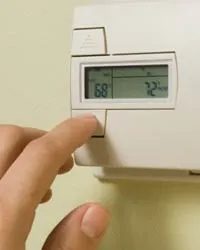
Your home can have its own personality. In some rooms you can bake bread in the summer. Some things freeze in winter. It’s not just your imagination. When the temperature rises, the upper level becomes very hot. The basement stays cold. Vaulted ceilings dissipate heat quickly. A sunny room becomes an oven. Blankets cannot solve physical problems. Zone control required to level the playing field.
This is not rocket science. Several thermostats are installed. These are connected to the central control panel. This panel moves the damper inside the duct. The thermostat monitors that zone. Sends open/close signals to the damper. This ensures that the air is delivered exactly where it is needed. Are there rooms available? Close the damper. Save energy.
Cost savings
It’s not just about convenience. This applies to your wallet. According to the US Department of Energy, you can save up to 30% on your heating and cooling costs. Think about it. Heating and cooling already consume 40% of your electricity bill. The purpose of partitioning is to prevent waste. If there is no one in the room, do not blow air into it. Easy calculation. Save a lot of money.
DIY guide
Most homeowners balk at the price. For the average person, installation is not a weekend project. Traditional installation requires an expert. But there is an alternative. The invention and innovation program of the Energy Agency financed the retrofit solution. It’s called Retro Zone.
Install the air control part of the flexible damper. Combine these with an electronic regulator and air damper system. No heavy engine. The current channels will remain unchanged. There are no structural changes. Don’t tear down the walls.
Flexible dampers are effective. There are round and square models. Filled with air to prevent or allow flow. It is heat resistant. humidity, aging, ozone, and chemicals in the air. It is resistant? It probably doesn’t matter. Most vulnerabilities do not affect performance. Can be installed in steel pipes or flexible ducts. The installation is simple. Just slide into place. These work with most zone control panels.
Shopping list
If you are ready to build this product, you will need the following items in your shopping cart:
- Thermostat for each zone
・Electromagnetic actuator
· Solenoid valves - Zone control panel
- Hydrostatic switch
- transformer
- Fireproof tape
- Control limit switch
- Flexible damper
Adjust the system size
The project changes according to the number of areas. Don’t skip this part.
In a two-zone system, keep the zone sizes roughly the same. Each zone’s ductwork must be capable of handling 70% of the HVAC unit’s total CFM (cubic feet per minute).
Three zones? Make sure their range is as close as possible. Each pipe can now handle up to 50% of the total CFM.
There are four zones. You may need to increase the duct by 1 inch. A differential pressure switch is required. The upper and lower limits of the protection are mandatory. Why? To avoid huge losses. Do not completely block the air flow over the heat exchanger or radiator. The consequence may be damage to the HVAC system. Protect your device first.
Next, let’s look at another innovation in home thermostats: the talking thermostat.
A talking thermostat is more than just a sci-fi device. These are useful tools for the elderly, the visually impaired, and anyone who needs hands-free control. The device reports the time, date, set temperature and current room temperature. There is also an audio guide for installation.
They are useful even if you have perfect vision. HVAC problems are often overlooked until they cost a lot of money. Even small problems can become big problems if they are not taken into account. A talking thermostat warns if repairs are needed. It also tells you when the filter needs to be changed. Replacing them on time can help reduce heating and cooling costs. It also helps control allergies.
Some models use voice commands. Say “thermostat” and then “raise” or “down”. The rest is done automatically. This is caused by the Digital Signal Processor or DSP. DSP filters real-world analog signals. Converting them to digital signals. It then sends them through application-specific integrated circuits (ASICS). Thermostats react in real time.
These are high-end devices. These include all the easy-to-use features of a high-quality thermostat. A built-in delay function prevents sudden start cycles. This protects the compressor. The compressor is the most expensive part of the system. Delay reduces wear. These units are programmable. Heat or cool only when needed.
Reduce costs with smart configuration
Reduce the temperature by 1 degree Fahrenheit (0.6 degree Celsius) for 8 hours each day. You can save about 1% on heating and cooling costs. Lowering the temperature by 10 degrees Fahrenheit (5.6 degrees Celsius) can save about 10%. The same goes for air conditioners. Increase the temperature by 10 degrees Fahrenheit for 8 hours each day. You can save about 10% of your bill.
Telephone thermostat
It’s great to have a vacation rental. You don’t have to pay the heating and cooling costs of two homes. Programmable thermostats require careful planning. You have to time your arrival perfectly. Telephone thermostats are different. You can heat or cool your home just by calling.
Replaces the existing thermostat. Connect to your HVAC system and phone line. Call the property. Enter the password on the touch-tone phone. You can access the controls. Adjust temperature settings. Also change system mode.
A digital microprocessor handles these functions. Includes a push button sensor and a telephone interface module. You can “talk” to your home’s thermostat via the internal telephone interface. A separate phone line is not needed. Works together with answering machine or voicemail. If you have a high-speed DSL Internet connection, your line must have a DSL filter.
Smart thermostat and Wi-Fi control
Smartphones and apps help you avoid landlines. Wi-Fi enabled smart thermostat now available. Adjust the temperature in your home with the touch screen smartphone. There are many applications. They range from free to a few dollars. Like most apps, they are affordable.
Technological development benefits consumers. Simple devices become smarter. Combine different features to save costs and reduce stress.
Installation location
Ideally, thermostats should be placed where people spend the most time. Keep it about 1.5 meters (5 feet) off the ground. Maintain a minimum clearance of 18 inches (46 cm) from exterior walls. Do not expose to heat sources. The source is sunlight. Other devices are sources. The source is the exhaust pipe of the heater. Windows are the source. Hot water pipes are the source of water.
Avoid placing near stairs. Avoid corners. Both can affect air circulation. Poor air circulation can lead to inaccurate readings. The HVAC system is not working properly. It wastes energy. You lose your comfort. Thermostats require a steady air flow.
“Do not expose to heat sources other than indoor air.”
Frequently asked questions
How does the system section work with modern thermostats?
System zoning includes the control of several thermostats in different areas of your home. This allows for custom temperature settings for each zone. An empty room cannot be heated.
Can a smart thermostat significantly reduce energy costs?
Yes. They understand your schedule and preferences. It adjusts the temperature automatically. This optimizes energy consumption. It maintains comfort.
Where is the best place for the thermostat?
Install it on an interior wall. Keep 5 feet off the floor. 18 inches from exterior wall. Avoid direct sunlight and drafts.
Do I need a professional to use my cell phone thermostat?
This includes connecting the HVAC system to the phone line. Do-it-yourself is possible if you are familiar with basic electrical work. Otherwise, hire an HVAC technician. Safety first.
Are voice controlled thermostats accurate?
Yes. Filter and Transform the sound with a digital signal processor. The response is real-time. It responds to commands like “raise” and “decrease”.
The market is constantly changing. New features are coming. The goal remains the same. Take control of your environment. Save money. Feel comfortable. What should I update next?
Where to dig deeper?
If you just want to understand the mechanics behind heat, start with the basics. How does a thermometer actually measure temperature? How does the air conditioner move and cool the air? Read more about physics at the link below.
- How the thermometer works
- How the air conditioner works
- How the water heater works
Next notice the electricity that powers them. You can’t repair a breaker panel or wire a new outlet unless you know the difference between amps and volts.
- What are amps, watts, volts and ohms?
- How wires, fuses and connectors work
- Relay mechanism
Even if you don’t work on cars, cooling systems are surprisingly similar. Whether it’s your engine block or your home’s HVAC unit, the cooling logic is the same.
- How the car’s cooling system works
- How the ice maker works
Smart control and savings
That’s where the money is. Programmable thermostats are more than just a luxury. Here’s how you can “dismiss” your electricity bill without freezing in the dark.
- Programmable thermostat: a nice way to “reduce” your energy bills
- Information sheet: Programmable thermostats
- Thermometer and thermostat
Do you want to plan your home? Honeywell has temperature zone guidelines. Want to talk to the thermostat? Voice interaction models exist.
- Information sheet: Programmable thermostats
- home.honeywell.com
- Enable the Mart Kelvin Voice Interactive Thermostat
- a talking thermostat
Information behind comfort
Where does this information come from? This comes from energy.gov and real life testing.
- Effects of retreat zones (energy.gov)
- Building Information File (energy.gov)
- Talking Thermostat Archives