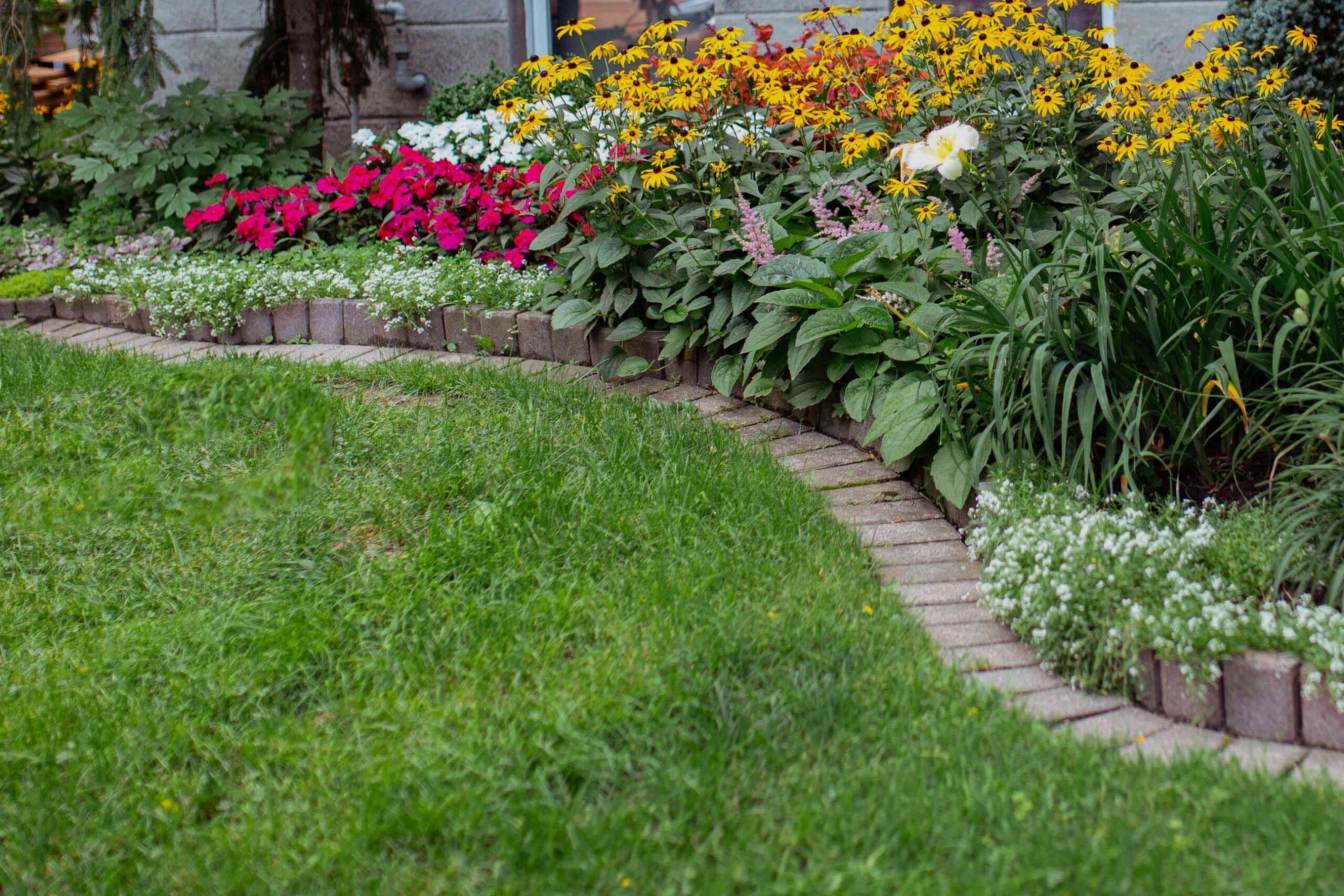
Bricks aren’t just for patios. They’re stubborn, durable, and honestly, cheap if you know where to look. You don’t need a landscaping crew to make them work. Just stack, lay, or press them into the dirt.
Double Stack It
Why stop at one layer? Stack two bricks high. It creates a raised lip that holds your mulch in place, keeping the dirt off your grass. Neat stacking looks traditional, haphazard stacking looks effortless. Both work. The soil stays put either way.
Structure matters more than perfection when it comes to retaining dirt.
Half Bricks for Walkway Blends
Already got a brick path? Don’t switch materials. It looks lazy if you don’t continue the pattern to the garden edge. Lay them flat on the boundary of the walkway. Timeless. Clean. Traditional gardens love this trick, and modern ones tolerate it just fine.
Add Some Gravel
Gravel isn’t just cheap filler. It adds grit. Lay your bricks, then pack gravel against the outside edge. You get contrast—smooth brick versus rough stone—and your drainage actually improves. Dry paths stay dry. Mowing becomes less of a chore since the mower wheels won’t sink into wet mud.
Press Them In
Curved beds are the bane of standard edging. Circular borders need curved solutions. Instead of bending expensive plastic or trying to force straight bricks to bend (they break, by the way), press standard bricks into the soil around a focal point. A birdbath. A statue. The brick defines the shape while helping you mow around tight corners without shaving off petunias.
Level the ground first. Seriously. Debris makes for a wonky edge.
The Zen Rotunda
Curves call for curves. Use the bricks to trace the path around a water feature or a circular garden bed. It guides the eye. It tells the visitor, this is a path, not a obstacle. The bricks highlight the feature against a neutral backdrop, creating a quiet zone in the middle of a chaotic yard.
Go Intricate
Boring shapes get boring borders. Why settle for rectangles when you can have… whatever? Three distinct beds? Sure. Interlocking shapes? Even better. Use different brick colors. Mix the sizes. The goal is visual interest near a chicken coop or a potting station. Make the border part of the art, not just a fence for the plants.
Thick Mortar Vibes
Some gardens just need to look a bit messy. In a good way. Thick mortar lines. Horizontal laying. This works for rock gardens or succulents, places where low maintenance is the name of the game. It looks rustic, like someone slapped the bricks down in a hurry, but it holds together fine. Texture without the sweat.
Retain That Slope
Slopes are problems waiting to happen. Soil washes away. Bricks stop it. Building a retaining wall is more work than just laying a border, sure, but it handles the pressure of a hillside. Weather-resistant bricks last decades. You spend the money once, you get a classic tiered garden for a long time.
Pick colors that don’t clash with your house. You’ll live with that mistake every day.
Paint Them Black
Or charcoal. Or dark green. If your house siding is dark, paint the bricks to match. It’s a trick for curb appeal that costs pennies. The plants pop against a black background, like stage lighting. It ties the garden to the architecture. Cohesive. Sharp. Expensive-looking for very little effort.