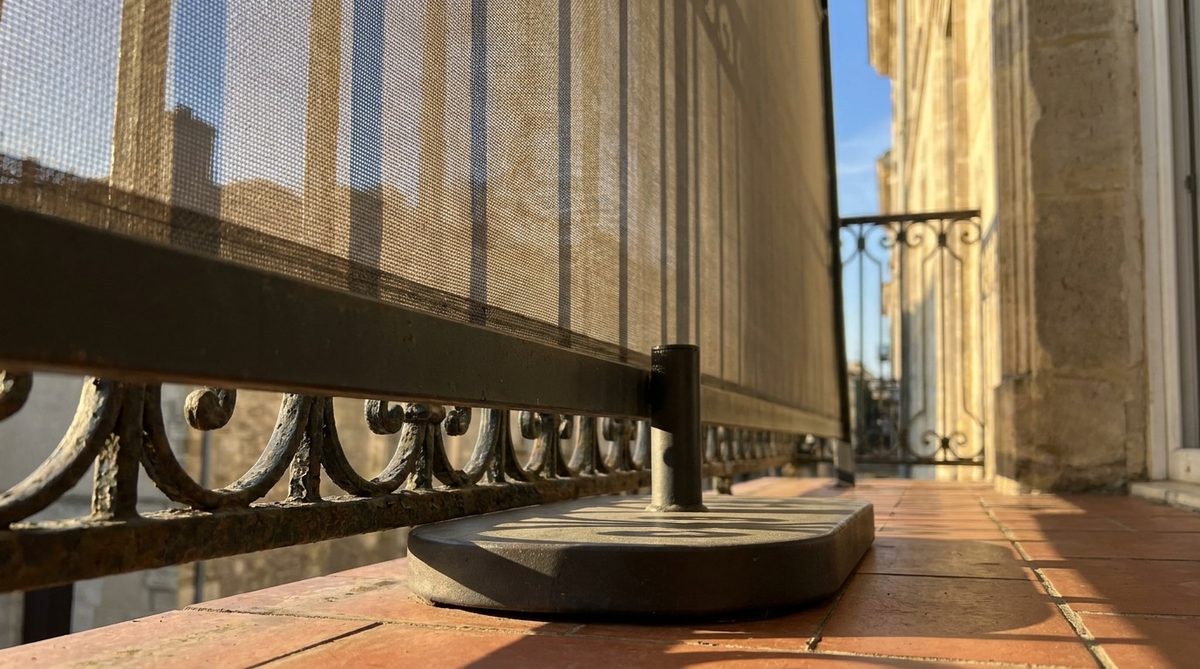
Spring is here. The sun is out. You want to drink your coffee outside without feeling like a performer in a neighborhood theater. But then you look up. There they are. Your neighbors. Watching. It kills the vibe instantly.
You need privacy. Fast. Cheap. And you probably shouldn’t drill into your landlord’s walls.
Most people reach for bamboo screens or PVC roll-ups. They look nice in the magazine. In reality, they turn into brittle, sun-bleached messes within a season. Wind tears them apart. Rain rots them. They are disposable props.
Or you try plants. Large pots. Climbing vines. Sure, it looks green. It looks organic. But where do you put your chair? The floor space vanishes under foliage. Plus, you are now a gardener. You have to water them. You have to prune them. You have to worry if they survive the winter. It is a lot of work for a view you don’t even get because the pots block your sightlines anyway.
Then there is the installation problem.
If you own your home, you can drill. You can mount rigid panels. You can anchor them deep into the brick. If you rent? Forget it. Most leases forbid drilling into facades. Co-op boards will fine you. You lose your security deposit. You are left standing on your balcony, exposed, holding a roll of cheap mesh, wondering why you pay rent for this feeling of vulnerability.
There is a better way. It comes from Sweden. It is not a plant. It is not a drilled-in panel. It is a simple, tension-based system that requires zero tools and leaves zero holes.
Why traditional barriers fail renters
Let’s be honest about the bamboo screens. They are porous. Light gets through. Voices carry through. After three months in the sun, the bamboo turns gray and brittle. A stiff breeze snaps the ties. You are left with a sad, flapping curtain that offers the illusion of privacy but fails the function.
PVC rolls are slightly more durable but still fragile. They crack in the cold. They fade to a sickly white. And let’s talk about the “green wall” solution again. Yes, nature is pretty. But practicality matters. A large planter takes up two square meters of balcony floor. That is space you lose for a table. For a chair. For actually living on your balcony.
And the maintenance? Constant. Dead leaves. Dead bugs. Mold. You didn’t sign up for landscaping. You signed up for relaxation.
The Swedish tension pole solution
Enter the tension rod. Or more specifically, the specialized tension privacy screen system.
This is not a curtain rod for your bedroom. These are heavy-duty, vertical tension poles designed for outdoor use. They work on friction. You adjust the height. You place them between your balcony floor and the ceiling rail (or a sturdy upper beam). They lock in place. No screws. No drills. No glue.
How it works
The principle is simple physics. You compress the pole between two surfaces. The tension holds it rigid. You slide panels onto these poles. The panels can be fabric, mesh, or slatted wood. They hang freely. They block the view. They let in the light and air.
For renters, this is the holy grail.
- No damage: Remove them when you move out. Leave the walls pristine. Get your deposit back.
- No tools: You usually just need a tape measure and a hand crank or a simple tightening mechanism. Sometimes just a rubber mallet.
- Speed: You can set up a full privacy enclosure in under an hour. Two people make it faster. One person can do it alone if they are careful.
Materials and tools you need
- Tension poles: Look for stainless steel or coated aluminum. Ensure they are rated for outdoor use (UV resistant
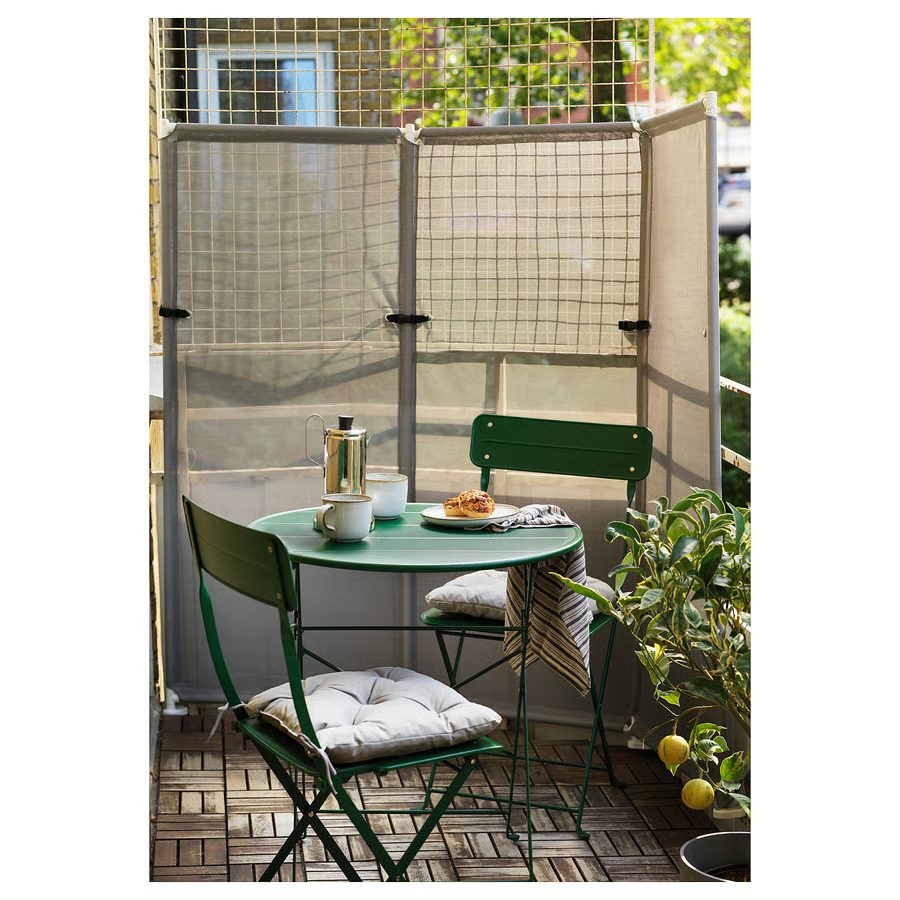

IKEA’s YTTERSKÄR screen: Instant privacy for small balconies
You don’t need power tools to fix your view. Sometimes, you just need a little Scandinavian engineering. The YTTERSKÄR room divider from IKEA is exactly that solution. It’s a three-panel screen supported by four sturdy posts. It unfolds in seconds.
The fabric is the real trick here. It’s slightly transparent. This lets sunlight filter through while blurring out the people on the next balcony. You get privacy without the gloom. It doesn’t feel like a cage. If your space is tight, you can deploy just one or two panels. This lets you wrap the screen around a corner or block a specific sightline. It’s modular by design.
A budget-friendly barrier that looks good
Custom wooden fences cost a fortune. This screen costs less than $30. That’s a huge difference. You can reconfigure your entire balcony for the price of a few takeaway coffees. The design is clean. The lines are sharp. It fits into modern setups or boho-style decor without shouting for attention.
Just place it on the floor. Angle it toward the neighbors’ windows. Done. No drilling. No mess. It’s a decorative touch that actually works.
Why this nomadic solution beats fixed structures
A traditional claustra is fixed in place. You install it, you’re stuck with it. The YTTERSKÄR screen moves with you. Storm warning? Fold it up. Summer ending? Slide it into a closet. It lays flat. It takes up zero space when you don’t need it.
This flexibility lets you change your outdoor room’s function on a whim. Need a shaded spot for remote work in the afternoon? Set up the screen. Want an intimate dining nook for dinner? Move it. It’s a multi-purpose tool that adapts to your schedule.
No tools, no damage, total control
Preserving your privacy shouldn’t require sweat equity. You aren’t drilling into railing. You aren’t fighting with complex assembly instructions. Your balconies and façades stay intact. This matters if you’re renting. It matters if you just hate making drywall dust.
You get infinite flexibility. Adjust the layout as the season progresses. Re-think the space as your needs change. It’s a low-stakes way to claim your territory.
The cost is minimal. The risk of diplomatic incidents with landlords is non-existent. You get a protected bubble for your spring coffee. The question isn’t whether you need it. It’s why you waited this long to set it up.


