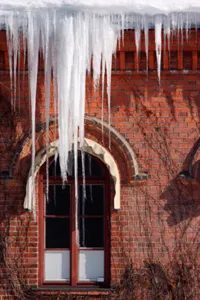
That scene of glinting icicles on a crisp winter afternoon looks like a holiday postcard. It’s charming until you realize those frozen drips are actually a leak. When snow on your roof melts into icicles during freezing temperatures, it means heat is escaping your attic. That warm air is melting the snowpack from below. You are literally paying to heat your roofline.
The result is simple. Your thermostat climbs. Your energy bill spikes. The house gets colder despite the furnace working overtime. If you see icicles, your thermal envelope has a hole in it. Insulation is supposed to keep heat in during winter and out during summer. When it fails, comfort goes down the drain.
The Problem with Heat Leakage
Standard insulation materials like fiberglass or cellulose have their place, but they aren’t perfect. They can settle over time. They can get wet. They can be installed poorly. If your home’s barrier against the elements is compromised, no amount of tweaking the thermostat will fix the root cause. You need a seal.
Enter Icynene.
This spray foam insulation has been on the market since 1986. It’s marketed as a greener alternative to traditional materials. It expands to fill gaps that batts and rolls simply can’t reach. It creates an air seal as well as a thermal barrier. The catch? It costs more upfront. For many homeowners, the question isn’t whether it works, but whether it’s worth the premium price tag compared to other options.
Why Choose Spray Foam?
Insulation effectiveness varies based on climate, installation quality, and material age. Icynene addresses the most common failure point of traditional insulation: air leakage. Warm air rising through cracks in the ceiling is the primary driver of ice dams and icicle formation. By sealing these cracks, you stop the heat loss at the source.
This isn’t just about winter. In hot, humid climates, blocking air movement reduces the load on your cooling system. It keeps moisture out and conditioned air in. The product offers a consistent R-value per inch, which means you get predictable performance. If you’re tired of cold spots and high bills, it’s time to look under the hood of your home’s efficiency.
What is Icynene?
Icynene is a water-blown spray foam insulation. Unlike polyurethane foams that use blowing agents with higher global warming potential, Icynene uses water. This makes it one of the more environmentally friendly foam options available. It expands significantly upon application, filling even the tiniest cracks and crevices.
The product comes in different densities. Light-density foam is often used for attics and walls where air sealing is the priority. Higher-density options provide more structural rigidity and sound dampening. Understanding these variations is key to choosing the right product for your specific renovation needs.
Is It Worth the Investment?
The initial cost of Icynene is higher than fiberglass or cellulose. You are paying for materials and specialized labor. The foam requires professional installation. It involves mixing two chemical components on-site and spraying them onto surfaces. This isn’t a weekend DIY project for most homeowners. Safety gear and proper ventilation are mandatory during application.
However, the long-term savings can offset the upfront cost. Reduced energy consumption leads to lower utility bills. Improved comfort means fewer drafts and more consistent indoor temperatures. For homeowners in extreme climates, the difference can be significant. The question becomes whether you prioritize immediate budget or long-term efficiency.
Exploring the Options
Before you commit, you need to understand the landscape. There are


Understanding the Real Cost of Air Movement
Standard batts don’t stop air. They slow heat transfer, but if your walls are leaky, you’re paying to heat the outdoors. That is the fundamental flaw of relying solely on R-value. You need to look at two distinct metrics: thermal resistance and air sealing. Icynene addresses both. Most traditional materials, like fiberglass, sit there and wait for the air to push through them. Icynene, a water-blown spray foam, expands to fill cavities. It becomes the barrier. It stops the draft before it becomes a heat loss problem.
The R-Value Reality Check
R-value measures thermal resistance. Higher is better. But it is not a static number. It fluctuates based on density, thickness, and installation quality. Consider the baseline. Fiberglass batting typically offers between 3.14 and 4.3 R-value per inch. Blown-in cellulose hovers around 3.13 to 3.7 per inch. These are initial ratings. They assume perfect conditions.
Reality is messier. Settling reduces effectiveness over time. Improper installation creates gaps. Warm air bypasses the insulation entirely. This is why two homes with the same R-value can have vastly different energy bills. Icynene expands to form an airtight seal. It adheres to substrates. It eliminates the convective loops that plague standard batts. The result is consistent performance.
Determining Your Insulation Strategy
Which insulation type is best for your specific situation? There is no single answer. It depends on variables you control and variables you don’t. Start with your climate. If you live where temperatures drop below freezing regularly, you need higher thermal resistance. A mild, sunny climate demands less aggressive insulation.
Look at your building’s geometry. A two-story home with a cathedral ceiling has a larger surface area than a ranch-style house. More surface area means more opportunity for heat loss. Do you have a basement? An unconditioned attic? Each zone has different requirements. A finished attic needs different treatment than an unfinished crawl space.
Your HVAC system matters too. How efficient is your furnace? Does your AC rely on open windows for ventilation? High-efficiency systems paired with poor insulation still waste energy. Low-efficiency systems in tightly sealed homes run harder and longer. Calculate your current heating and cooling costs. If bills are high, air leakage is likely a culprit.
Consider the timeline. Are you building new or retrofitting an existing structure? New construction allows for continuous insulation layers. Retrofitting requires navigating existing wiring, plumbing, and finishes. Costs vary by region. Local labor rates and material availability dictate your budget.
Icynene Specifics
Icynene comes in different formulations. Low-pressure spray foam is common for retrofits. It expands slowly. It fits into tight spaces. High-pressure systems are used in new builds. They cover large areas quickly. Both types provide an air barrier. Both types reduce moisture intrusion. Moisture in walls leads to mold. Mold compromises indoor air quality.
Safety is paramount. Spray foam requires protective gear. Gloves, goggles, respirators. Professionals handle the mixing and application. Homeowners can prep the area. They can remove old insulation. They can seal small gaps. But the foam itself needs expert handling. Incorrect mixing ratios lead to poor curing. Cured foam should be firm. It should not crumble or smell excessively.
Compare Icynene to traditional options. Fiberglass is cheaper upfront. Cellulose is environmentally friendly. But neither stops air movement. Icynene costs more initially. It pays back through reduced energy bills. It lasts as long as the building. It does not settle. It does not sag.
What matters is


The Chemistry Behind the Foam
You are looking at a material that starts as liquid and ends as a flexible barrier. Icynene is produced by a single entity, Icynene Inc., based in Mississauga, Ontario. When you apply it, you are spraying or pouring a thin layer that looks exactly like whipped cream. It cures fast. Within moments, that soft, airy substance hardens into a solid, spongy sheet.
The company’s material safety sheets liken the finished texture to angel food cake. Why the comparison? Because it is light. Air is trapped inside.
Here is the science. The foaming agent is water. When water hits the Icynene components, a chemical reaction occurs. It produces carbon dioxide gas. That gas expands the mixture, creating the foam. It is an open-cell foam. This means the bubbles created during the process break open. Air stays put as the foam cures rapidly. It is less dense than closed-cell foams, where bubbles remain intact. The result is a material that attaches to your structure and stops air from moving between your indoor space and the outdoors.
The Product Lineup
Icynene Inc. does not just make one thing. They have four distinct products, each with a different chemical makeup and application focus.
- Icynene LD-C-50 : This is the original. You can spray it or pour it. It relies on petroleum. It is the standard against which others are measured.
- Icynene LD-R-50 : This is the newest spray. It swaps some petroleum for castor oil. Yes, the same oil you might use in cooking. The company markets this as their most environmentally conscious option. Castor plants grow quickly. They do not require watering. They do not need pesticides. This product is available only in the United States.
- Icynene MD-R-200 : Another spray option. It is also a greener version. One of its two components contains 12.6 percent recycled plastic.
- Gold Seal 400 : This is not the foam itself. It is a delivery system. It allows you to dispense the foam into small, oddly-shaped, or out-of-the-way areas where standard nozzles fail.
The Cost Equation
You have choices. And when you are shopping for insulation, Icynene is not the only game in town.
The upfront cost is the first thing that gives homeowners pause. According to the Charleston Post and Courier, Icynene costs 50 to 60 percent more than traditional fiberglass insulation. It is also slightly more expensive than other blown-in foams.
Is it worth it? We will get to that. But for now, understand that you are paying for performance. You are paying for an air seal that fiberglass simply cannot match. The material attaches to the structure. It reduces air movement. That is a tangible benefit that translates to long-term energy savings.
Insulation Performance
Now that we know what Icynene is made of, how it behaves, and what it costs, the next logical step is to measure its effectiveness. How well does this foam actually stop heat loss? How does it perform in extreme cold or stifling heat? These are the metrics that determine whether the higher price tag pays off over time.

Professional Installation Only
You can’t just buy a can of Icynene and go to town. This is not a DIY project. The manufacturer restricts installation to authorized dealers who have completed rigorous training on equipment, safety, and building codes. The gear is serious business. Installers need specialized spray equipment that costs around $50,000. They also wear full-face respirators with clean air supplies. Why? Because the chemicals in the mix are potent. If you try to skip the pros, you’re risking your health and your warranty.
The foam is sticky. It adheres to almost everything it touches. That’s good for the insulation’s longevity but bad for your windows, doors, and water heaters if you’re not careful. Pros cover these surfaces meticulously before spraying. One stray drop can ruin a finish.
Which Icynene Product Fits Your Project?
Icynene isn’t one-size-fits-all. The installer picks from four main types based on your specific needs.
New Construction: Sprayed Foam
For new builds, they spray between studs in walls, ceilings, and floors. The mix expands rapidly—up to 100 times its original volume in seconds. You can choose the standard version or the “green” alternative. The thermal performance is solid. The R-value sits between 3.6 and 3.7 per inch. That’s comparable to cellulose insulation made from recycled paper.
Existing Homes: Poured Foam
You don’t need to tear down walls to insulate an older house. Installers pour the foam into hollow cavities. You might need a few drilled holes in the drywall or siding to get to the voids. The poured foam expands slower than the spray, reaching 60 times its starting volume over several minutes. They usually pour twice to ensure the cavity is completely filled. This method matches fiberglass batting with an R-value of 4 per inch.
Minor Repairs: Sealant Kits
Got a leaky window or a small gap after a repair? There’s a specific kit for that. It’s designed for minor procedures. The expansion rate is similar to the spray version, and it delivers an R-value of 3.7 per inch. It’s quick, clean, and effective for those annoying drafts.
The Advantages of Icynene Insulation
Foam insulation has been around for a while, but Icynene offers distinct benefits that make it worth the premium price for many homeowners.
Environmental Impact
Older foams used chlorofluorocarbons (CFCs) to foam up. Those chemicals destroyed the ozone layer. Later, hydrochlorofluorocarbons (HCFCs) became common. They’re less harmful but still bad for the environment. Icynene uses water as the foaming agent. No ozone-depleting gases. It’s also low-density. You apply a thin layer that expands significantly, meaning less petroleum is used in manufacturing compared to dense polyurethane foams. Two of their product lines even replace some petroleum ingredients with renewable or recycled materials.
Air Seal Performance
Because the foam expands into every nook and cranny, it creates a tight building envelope. This stops air from leaking in and out. A tight envelope is the holy grail of energy efficiency. It reduces drafts and keeps conditioned air where it belongs.
No Settling Over Time
Some insulations, like fiberglass, can compress over time. As the building shifts or settles, the insulation compacts, creating gaps. Icynene stays flexible. It moves with the house rather than against it. The R-value doesn’t drop as the material stays supple.
Weather-Resistant Application
Many insulations require dry, warm conditions. Icynene doesn’t. Professionals can install it in less-than-ideal weather. This flexibility can speed up construction timelines when the forecast isn’t cooperating.
Noise Reduction
The dense, cellular structure of the foam dampens sound. Filling the cavities between walls and floors reduces ambient noise from outside and between rooms. It’s a quieter house.
Indoor Air Quality
Once installed, Icynene doesn’t off-gas. The smells from the installation process dissipate within a few days. There’s no residual odor or chemical leakage over time.
Energy Star Certification
Homes insulated with Icynene often qualify for Energy Star certification. This program, run by the EPA and the Department of Energy, recognizes buildings that meet high efficiency standards. It’s a mark of quality and savings.
Tax Incentives for Homeowners
You’re not just spending money; you’re investing in efficiency that the government might help pay for. For the 2009 and 2010 tax years, US homeowners could claim federal tax credits for energy-efficient improvements. This included insulation like Icynene, new windows, doors, and roofing. The credit covered 30% of the cost, up to a maximum of $1,500. It wasn’t a blank check, but it helped offset the initial investment.
Of course, nothing is perfect. There are downsides to this high-performance material.
The Hidden Costs of Icynene
Perfection is a myth. It doesn’t exist in ice cream, puppies, or Icynene spray foam insulation. You need to look at the cracks in the porcelain. Here is what can go wrong when you choose Icynene for your home.
The Landfill Problem
Icynene is an open-cell foam. It expands fast. It gets applied in thin layers that swell to fill gaps. This rapid expansion means overflow is common. You end up with excess foam jutting out of the wall cavity. You have to saw it off. Now you have waste. You can shove the scraps into nearby attic cavities if you are filling them anyway. But often, that surplus goes straight to the dump. It adds to the landfill load.
Artificial Venting Issues
Foam seals tightly. Too tightly, sometimes. It plugs every nook and cranny. This stops heat transfer effectively. But it also stops air flow. You still need fresh air inside. You want it on your terms, not leaking through random cracks. A house sealed with Icynene may require artificial ventilation systems. In winter, that incoming cold air needs heating. If you don’t heat it, you waste the energy savings the foam was supposed to provide.
Smell and Sensitivity
The odor issue isn’t usually with the Icynene itself. It’s with the installation. The company requires installers to be trained. This ensures proper mixing and application. But rare mistakes happen. If the mix is off, a chemical smell can linger. It’s not a guaranteed outcome, but it is a risk if the installer cuts corners.
Moisture and Condensation
Icynene blocks air. It does not block water vapor. Interior moisture can pass through the foam and hit the underside of your roof. There, it condenses. Dampness is bad for structure. It leads to rot. Over time, this damage is costly. That is why a vapor diffusion retarder is often recommended. These devices slow down water vapor moving through insulation. They are common in cold climates. You can paint them on. Or you can install a physical barrier like plastic, aluminum, or steel sheets.
Comparing Insulation Options
Pros and cons. Pluses and minuses. How do you decide? Compare Icynene to other types. Look at the numbers.
Insulation costs vary wildly. Insulating an attic runs $0.50 to $2.25 per square foot. For $5.38 to $24.22 per square meter. The average cost to insulate an entire home sits between $2,500 and $5,500. You cannot make a smart choice without looking at your own variables. Your structure. Your budget. Your concerns. Allergies? Environmental impact? Availability in your area?
Once you know your limits, you can pick. Here are the other players in the game.
Cellulose
Made from recycled paper and flame retardants. It is blown into cavities. Great for existing homes. It fills small, irregular spaces well. It settles over time. You might lose up to 20% of its R-value. That starts at 3.13 and ends around 3.7.
Closed-Cell Polyurethane Foam
A petroleum product. Sprayed to fill gaps. Uses hydrofluorocarbons in the mix. It creates a tight envelope. Plugs spaces effectively. R-value is higher, at 6.25. It may drop slightly in the first few years.
Cotton Batting
R-value of 3.0 to 3.7. Considered greener. It is renewable. But petroleum is still used to grow and transport the cotton. So it is not perfectly clean.
Fiberglass Batting
R-value of 3.14 to 4.3. Comes in rolls. Professionals or DIYers can lay it out. Hard to fit around irregular shapes or pipes. Escaped fibers can irritate your skin and lungs. Short-term issues, usually. Loose-fill fiberglass is also an option. Blown in by pros. Made of recycled glass. R-value 2.2 to 4.3. Settles slightly over time.
Mineral Wool
Rock wool or slag wool. Manufactured loose-fill. Contains about 75% recycled industrial material. R-value ranges from 3.1 to 4.0.
Rigid Polyurethane Foam Boards
R-value of 5.6 to 7.0. Holds up well over time. Mainly used in new construction.
Making the Call
You know Icynene now. You know its flaws. You know the alternatives. Think it through. Decide what fits your home. Or put on another wool sweater. Maybe two.
Keeping Cool
Forget snow. Think about military tents in Iraq and Afghanistan. High heat. High AC costs. The military turned to foam insulation. They approved it for tent use in 2007.
The initial price tag was steep. $30,000 to $70,000 per tent. Total spend hit an estimated $95 million. But the savings came fast. Estimates say the insulation saves at least $105 million a year in energy costs. It blocks heat. And wind. And dust. In Afghanistan, the cost was $29 million. Savings followed a similar path.
Insulation works. Even in the worst conditions.


