Start with the bulb you know best. The standard incandescent lamp found in almost every house. It features a large, frosted glass envelope. Inside, a gas mixture of argon and nitrogen surrounds a tungsten filament. Electricity pushes through this filament, heating it to roughly 4,500 degrees Fahrenheit. That is about 2,500 degrees Celsius. The metal gets white hot. This process is called incandescence. It creates visible light. But it is not a clean process.
These bulbs are inefficient. They last only 750 to 1,000 hours. Why? Because they radiate massive amounts of infrared heat. Most of the energy becomes heat, not light. That is wasted energy. The tungsten filament evaporates over time. The vapor deposits on the inner glass. Eventually, a thin spot forms. The filament breaks. The bulb burns out.
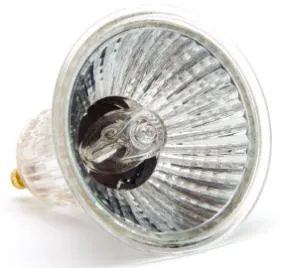
Enter the halogen lamp. It uses a tungsten filament too. But the design is different. The filament sits inside a small quartz envelope. Glass would melt here because the envelope is so close to the heat source. The gas inside is not inert argon. It is a halogen gas. These gases have a unique property. They combine with tungsten vapor. If the temperature is high enough, the halogen atoms bond with evaporating tungsten. This redeposits the tungsten back onto the filament.
This recycling process extends the life of the bulb significantly. You can also run the filament hotter. More heat means more light per unit of energy. The bulb is brighter. It still produces a lot of heat though. The quartz envelope gets extremely hot. Hotter than a standard bulb. Handle with care.
Understanding the Technology
How Halogen Recycling Works
The key difference lies in the chemical reaction inside the envelope. Standard bulbs lose material permanently. Halogen bulbs recover it. This allows for higher operating temperatures. Higher temperatures mean better efficiency. But also higher surface temperatures.
Safety and Installation
Quartz is strong but fragile under thermal shock. Do not touch the envelope with bare hands. Oils from your skin can create hot spots. These spots may cause the quartz to crack or explode. Wear gloves during installation. Ensure the fixture is rated for halogen bulbs. They run hotter than standard incandescents. Check wiring ratings. Overheating can be a fire hazard in enclosed fixtures.
Efficiency Comparison
Incandescent bulbs waste up to 90% of energy as heat. Halogen bulbs are more efficient. They convert more electricity into light. They also last longer. The recycling mechanism reduces filament degradation. This means fewer replacements. Less waste. Better value over time.
Where to Use Halogen Bulbs
Look for halogen bulbs in track lighting. They appear in display cases. You might see them in under-cabinet lighting. These applications benefit from the focused beam and high color rendering. They provide clear, bright illumination. Not ideal for general ambient lighting. The heat output is too high for widespread use.
Why Choose Halogen?
The choice comes down to light quality and lifespan. Halogen bulbs offer a brighter, whiter light. They last longer than standard incandescents. They are more efficient. But they are not the most efficient option available today. LED technology has surpassed them. Still, halogens hold a place in specific applications. They are easier to dim. They work with existing fixtures. For now, they remain a viable upgrade.
Maintenance Tips
Replace burnt-out bulbs promptly. The halogen cycle stops working