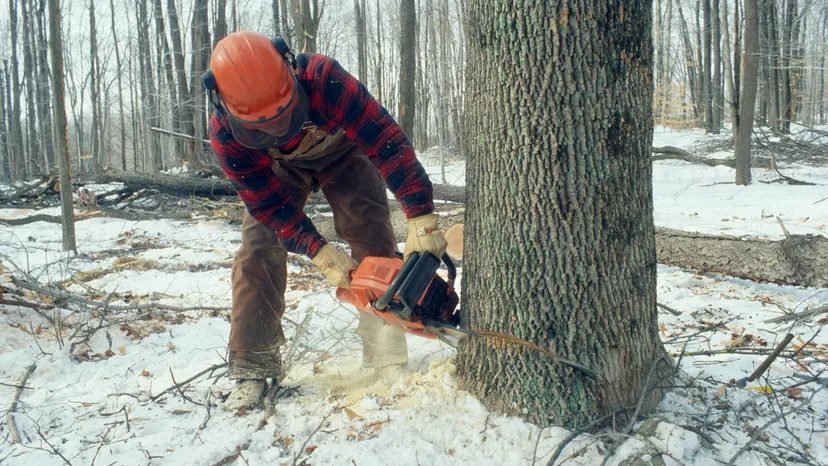
You do not need a degree in mechanical engineering to respect the chaos of a gas-powered chainsaw. It is a tool that demands respect, mostly because it is loud, vibrates, and can bite back if you get complacent. Whether you are clearing brush, splitting firewood, or helping a firefighter carve a firebreak, the utility is undeniable. But beyond the cutting, it is also one of the few places where the raw mechanics of a two-stroke engine are visible to the naked eye.
This is not a textbook lesson. This is a teardown.
We are going to take apart a standard 16-inch chainsaw. The goal is to stop guessing how the magic happens and start knowing exactly what makes the blade spin. You will see how the ignition system, the clutch, and the fuel delivery system interact. It is practical knowledge. It helps you maintain the machine. And it prevents you from buying a new one when you could have fixed the old one with a screwdriver and a bit of patience.
The Heart of the Beast: The Two-Stroke Cycle
A chainsaw does not use oil and gasoline separately like your car. It mixes them. This mixture fuels the engine and lubricates the moving parts at the same time. That is the fundamental difference. Two-stroke engines are simple. They have few moving parts. That simplicity is why they are powerful for their size, but it also means they require specific care.
When you pull the starter cord, you are manually turning the crankshaft. This action sucks the fuel-air mixture into the cylinder. As the piston moves up, it compresses that mixture. Then, the spark plug fires. The explosion pushes the piston down. That downward force is what turns the crankshaft, which spins the chain. In a four-stroke engine, you have intake, compression, power, and exhaust strokes. In a two-stroke, the exhaust and intake happen almost simultaneously during the final part of the power stroke. It is messy. It is efficient. And it is why your chainsaw smells so distinct.
Dismantling the Magneto: The Spark Generator
The first thing you will encounter under the shroud is the magneto. Do not confuse this with the battery in your phone. A magneto generates its own electricity. It does not rely on an external battery to create the spark that ignites the fuel.
Inside the flywheel, there are magnets. As the engine runs, these magnets spin past a coil of copper wire. This movement induces an electrical current. That current is stored in a capacitor and then released in a sudden, high-voltage burst to the spark plug. If your saw will not start, or if it runs poorly, the magneto is often the culprit. A loose wire or a cracked coil can kill the spark.
The magneto creates the spark necessary to ignite the fuel-air mixture without any external power source.
When you take the saw apart, look closely at the flywheel. It is the heavy metal wheel on the end of the crankshaft. It is not just for balance. It drives the cooling fan and houses the ignition system. If the magnets lose their strength, the spark becomes weak. The engine misfires. You will feel it as a hesitation in the power.
The Centrifugal Clutch: Connecting Power to Chain
Next,