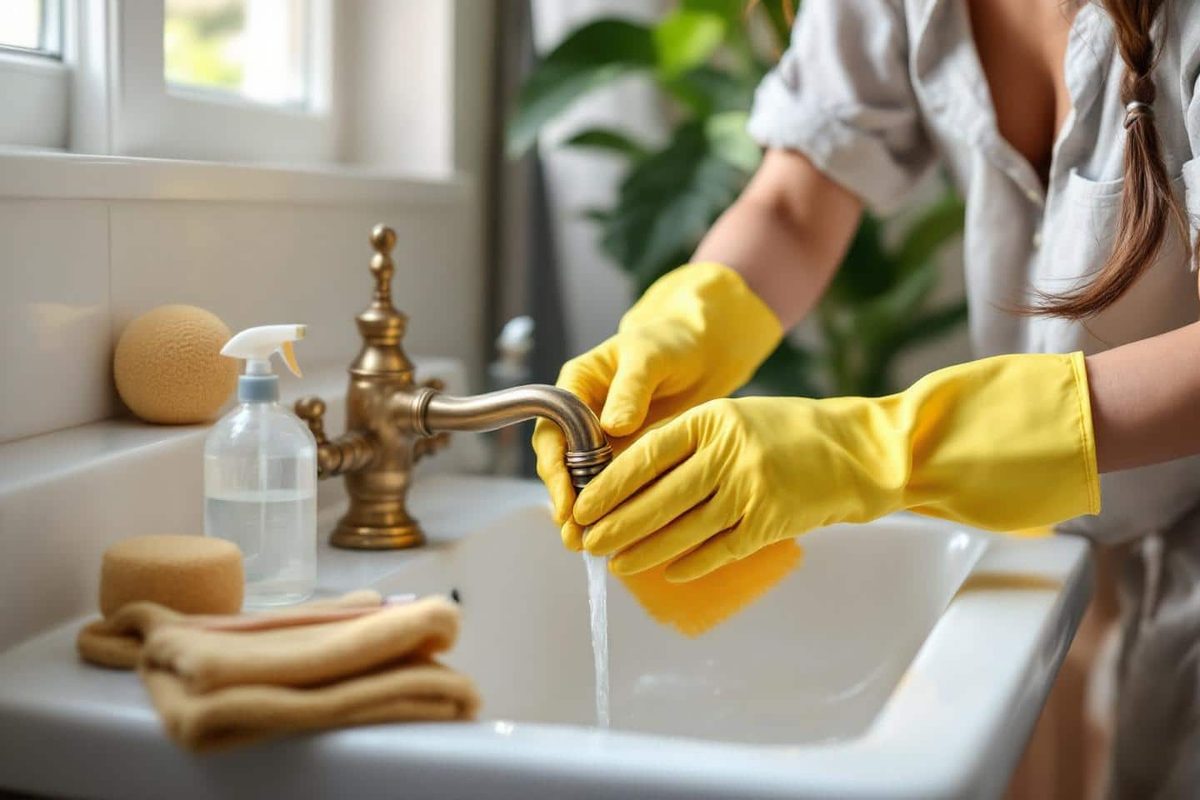
Hard water doesn’t just leave stains. It attacks.
Over the years, limescale builds up in old faucets like armor. This white, crisp film tarnishes the metal. It captures the light in a completely wrong way. It destroys the charm of vintage plumbing.
Many homeowners stare at their antique fixtures and freeze. They are afraid to clean them. What happens if you scratch the spout? What if you mess up the finish? What happens if you make the water flow worse?
It’s a legitimate fear. But not doing so is also a slow death for brass and copper.
You don’t need strong chemicals or wire brushes. You need patience and the right gentle touch. Generations of cooks and cleaners have passed down simple, proven tricks. These are not myths. These are practical steps to restore the shine without erasing the history.
How to clean vintage faucets safely. Let’s examine the why, how and what of the materials.
Why does the limescale target the old metal faster?
Modern faucets are technically advanced. They have protective coatings. They resist mineral build-up. Old faucets? They are different.
Decades ago, manufacturing standards varied widely. Alloys changed according to the region. Finishes were often applied by hand. Protective layers break down faster. Result? Porous surfaces.
Limescale loves porosity.
In France, this can be seen everywhere. Farmhouses often have antique brass faucets. Haussmann apartments can have copper or nickel faucets. These materials react uniquely to the minerals in the water. Lime just doesn’t stay on top. It creeps into fine grooves. It hardens.
Modern faucets can do without this. Old ones hold it. And if you ignore it, the scales will become even fatter. It will be more difficult to remove it later.
The Risk of Ruining the Finish
Cleaning an old faucet is a delicate procedure. No demolition.
Using the wrong product will cause permanent damage. Strong acids eat through the patina. Abrasive powders scratch the surface. A metal scraper can remove decades-old marks in seconds.
Think about the finish. Is it gold plated? Nickel? Chrome? Pure brass?
Each material has special requirements. Aggressive cleaning removes the layer that gives the faucet its soul. It leaves behind bare, vulnerable metal.
Now the goal is preservation. Not just cleaning. You want to keep the story. This means prioritizing gentle methods. Natural ingredients reduce the risk of damage. They respect the material.
Gentle methods that really work
You don’t need to buy expensive commercial descalers. Most of them are probably in your kitchen.
This is how it is cleaned, depending on the material.
For brass and copper
Brass darkens. Copper oxidizes. Both form a dark, brown layer called patina. Some people want this look. Some want to remove it.
If you want to descale and brighten the metal:
- Use a natural acid. Lemon juice or white vinegar work well. Citric or acetic acid breaks down the calcium carbonate in lime.
- Use and wait. Dip a cloth in juice or vinegar. Wrap it around the faucet. Let rest for 15-30 minutes. Don’t let it dry out.
- Wash gently. Use a soft brush or a non-scratching sponge. Avoid steel wool. It leaves gray streaks on soft metal.
- Rinse and dry. Water stains can cause new stains. Dry immediately with a soft cotton cloth.
Some old-fashioned cleaners use a paste of salt and flour to give the copper a deeper shine. Or salt and vinegar. The structure ensures a slight abrasion. Acid cleans. Rinse thoroughly.
For nickel and chrome
These surfaces are more difficult. They are more scratch resistant than brass. But they are not immune to acid burns.
- Avoid prolonged exposure to acid. Vinegar is OK for short periods. Leaving it for hours can dull the surface.
- Stick to soap and water. Daily cleaning with mild dish soap and warm water is often enough to prevent build-up.
- Limited surface layer: Use baking soda paste. Baking soda is a mild abrasive. It removes dirt without scratching the chrome. Apply, leave on for 10 minutes and then rub gently with a soft cloth.
Gold-plated faucets
These are the most fragile. The coating is thin.
- No acids. Never use lemon or vinegar for gilding. It can peel off the layer.
- No abrasive cleaners. No baking soda pastes. No polishes.
- Just softness. Use a microfiber cloth and a drop of mild soap. Dry immediately. Buff with a dry microfiber cloth for a shine.
Prevention is better than cure
Keep the faucet clean after cleaning.
Limescale takes weeks to form. It won’t appear overnight. Daily habits prevent a hard crust.
- Wipe clean after use. A quick wipe with a dry cloth removes water droplets. The absence of droplets means that the minerals have not evaporated.
- Install a filter. If the water is hard, a faucet filter will help. It reduces the mineral content before it reaches the tap.
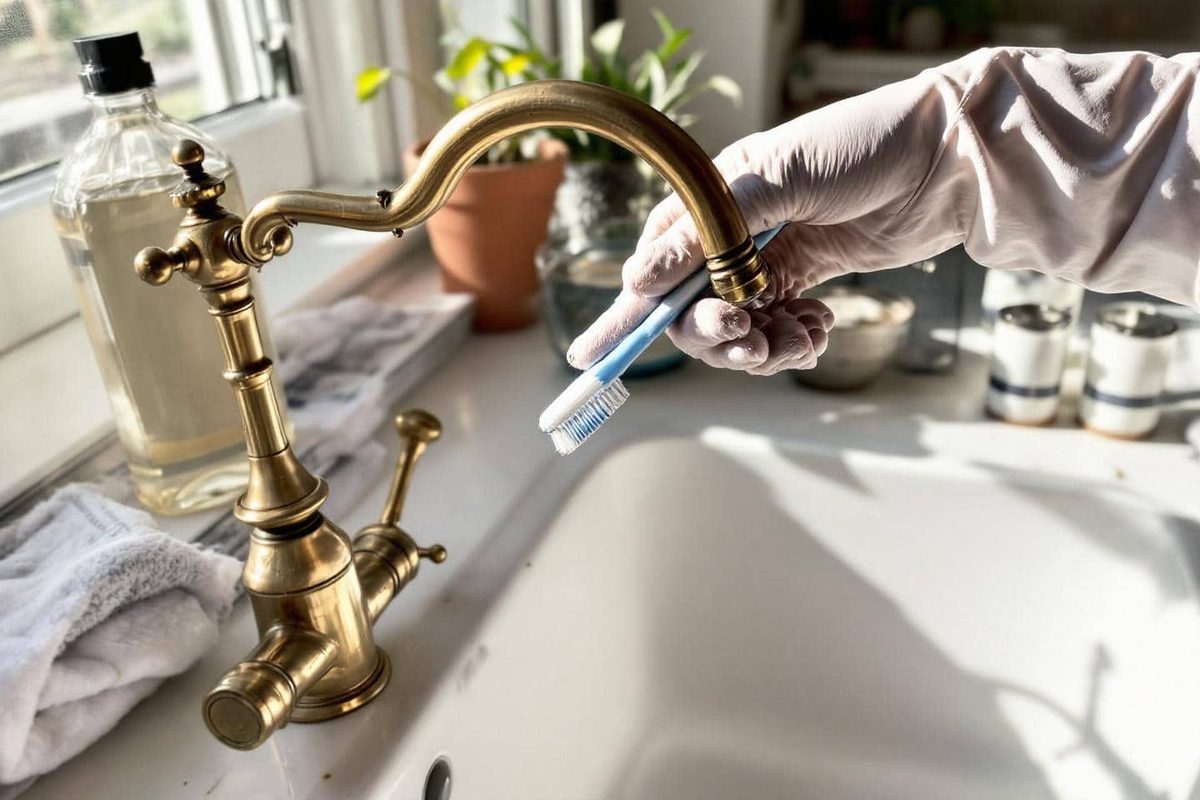

Traditional descaling methods are surprisingly effective if you respect the metal. White vinegar is the best solution, but the result depends entirely on how you use it. It’s not just throwing acid on brass; It’s about technique.
Why white vinegar is suitable for cleaning metal
White vinegar, sometimes called household vinegar, has a special place in environmentally friendly cleaning. Its acid dissolves limescale without damaging surfaces, as long as you pay attention to timing and proportions. It is cheap, efficient and environmentally friendly. In a supermarket, a liter often costs less than a euro, and in an ordinary household it serves double duty.
In many parts of France, using vinegar to clean metal is almost a family tradition. Grandmothers used it to descale porcelain and polish metals. It’s making a comeback, especially as vintage decor finds its way into modern homes. People want old faucets to look like new.
Wet cloth method: step by step
The key to safety here is accuracy. Do not pour vinegar directly onto the faucet. Do not rub hard. There is a risk of scratching the surface or acid building up in the crevices where it can eat away at the metal over time.
Instead, use a clean, thick cloth dipped in undiluted white vinegar. If the limescale is stubborn, do not dilute it. Thanks to long-term contact, the acid gently dissolves the limescale. This method preserves the integrity of the metal.
Here is the exact process:
- Dip a clean cloth in clean white vinegar.
- Wrap the faucet completely with cloth.
- Focus on areas with heavy build-up and press the cloth into the corners.
- Let it rest for 30 minutes to an hour, depending on the thickness of the crust.
- Remove the cloth. Wipe the surface with a damp microfiber cloth.
- Gently polish to a shiny finish. Use light pressure.
This works on most vintage brass, copper and stainless steel faucets. It will not scratch or dull metal. For tight corners or complex reliefs, dip a cotton swab in the vinegar and dab the specific spots.
Maintaining your faucets after descaling
Once the scale is gone, it should stay that way. Regular care ensures that the shine is maintained without harsh chemicals or heavy work.
Preventing limescale from returning
The best strategy is to dry the faucet after each use. Water stains are just evaporated minerals. The soft microfiber cloth absorbs water immediately without scratching. After brushing your teeth or washing your hands, it takes about one minute … to prevent those white, chalky residues from forming.
Add a small amount of vegetable oil for extra protection. Sunflower or olive oil will work. Just one drop, rubbed together, forms a hydrophobic film. This repels water and nourishes bare or lightly varnished metal. It’s an old-school trick that still holds up.
Mistakes that ruin faucet finishes
The patina is good. Damage is not. Avoid scouring powder. Never use a razor blade to remove build-up. Avoid strong chemical cleaners that promise instant results. These practices create micro-scratches that trap dirt and accelerate corrosion.
Also banish brushes with hard bristles. Aerosol sprays and aggressive gels are dangerous for vintage pieces. They strip finishes faster than you can reapply them.
Never mix vinegar with bleach. Even by accident. This creates toxic chlorine gas and destroys the metal over time. It’s a dangerous combination that offers no benefit.
Consistency is better than intensity. Gentle and regular care extends the life of your fixtures. It respects the original craftsmanship.
Restoring an old faucet brings the past back to life. It honors the skill of the original artisans. With a simple vinegar compress, anyone can maintain beauty without fear. Each new spot can be wiped away with a damp cloth. It’s a quiet way to maintain charm of a modern home.
The trend toward vintage aesthetics is growing. These faucets are silent witnesses to daily life. Caring for them is a way to pass on knowledge. It’s about respecting the material. It’s about doing it right.
You have the tools. You have a method. The rest is just patience.