They dig. They hunt. They sting.
Ground wasps are complicated tenants. You might want them gone because your kid almost stepped on a dirt mound yesterday, but here’s the thing—they’re also killing aphids for you. Yellow jackets. Hornets. Cicada killers. They’re mostly polite until you threaten them. Then the pitchforks come out. 🐝
So, how do you kick them out without losing a hand?
Meet the Neighborhood Bad Boys
If you see something small, fast, and striped, it’s likely one of these guys. They’re roughly half to one and a half inches long. Most have black wings. Some are orange or rusty. They range from skinny with fat tails to thick-chested tanks.
They split into two camps: social or solitary.
Social wasps like yellow jackets live in teams. They build papery nests out of wood and spit. They help each other eat, fight, and raise young. Solitary wasps? Lone wolves. Usually female. They dig underground. No roommate. No help.
Here is how you tell them apart. It matters more than you think.
- Yellow Jackets: Bright yellow and black. Aggressive if poked. Great pest controllers otherwise.
- Mud Daubers: Solitary. They pack mud into tubes to hold their eggs. Non-aggressive. Leave them be unless they are under your eaves.
- Great Golden Digger Wasps: Look like bees but shine metallic blue/gold. Not mean. Just confused by your presence.
- Cicada Killers: Big. Nearly two inches long. Brown and yellow. They kill cicadas. They avoid people. They only sting if you crush them in your hand. Why would you do that?
Spotting the Entry Points
You won’t see the house first. You’ll see the yard.
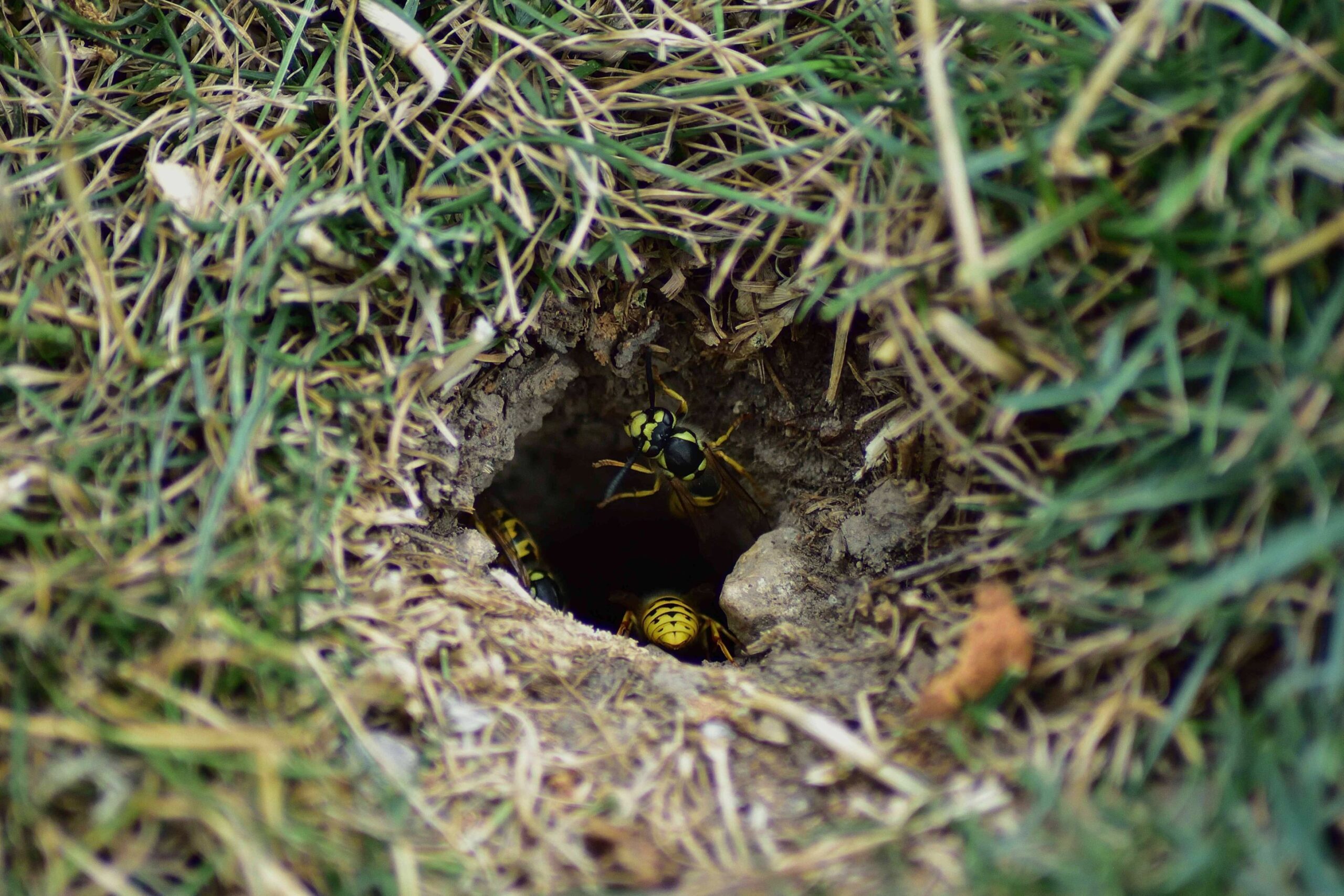
Ground wasps like sandy soil. It’s easier to excavate. Look for holes about an inch and a half wide. There will be piles of displaced dirt next to them—small cones of sand. Several holes close together.
Check near fruit trees or berry bushes too. These things love sugar. If you have a trail of dirt piles near your blueberry bush, congratulations. You have guests.
DIY Eviction Notice
First, pause. Ask yourself if this is necessary. Is the nest a safety hazard? Is it right by the swing set? If yes, move forward. If no, let them work.
If you must remove them, you have options. Chemical warfare works, but these are quieter ways to handle it.
- Wet the soil. Wasps hate wet ground. It’s too hard to dig. Keep the yard damp in late spring. It stops them from building.
- Use diatomaceous earth. Sprinkle the powder around the nest entrance. It cuts them dry. It takes a few days. Be patient. It’s one of the most effective natural kills.
- Soap flood. This is tricky. Cover the nest with fabric. Tie it down tight. Pour soapy water down a small hole. The soap stops their wings. The water fills the nest. It works. It’s brutal but clean.
- White vinegar. Spray it at night. When they are inside and sleeping. Wasps hate the smell. It might make them pack up and leave. Don’t do it at day time. You’ll just enrage an entire army.
- Shove it back in dirt. If there is just one or two holes, pack hard soil over it. Plastic works too. Trap them in. They might dig out elsewhere, but you’ve probably messed up the structure enough to send a message.
Know When to Quit
Some jobs are not worth the hospital trip.
If you have been stung before, stay back. Allergies don’t negotiate. If the nest is the size of your fist or larger, you are probably dealing with a colony that wants to stay. That’s pro territory.
Even if you aren’t allergic.
Do you have kids running around with sticks? A dog that digs like it’s looking for bones? If the answer is yes, call someone else. The peace of mind is worth the fee.
Wasps will keep digging. Soil will keep being dry. Next spring, you might find a new hole. Or an old one reactivated.
They are here until they are gone. Usually because the winter kills them, or because you made it too hard.
So you watch. You wait. And you watch your step. 🏃♂️💨