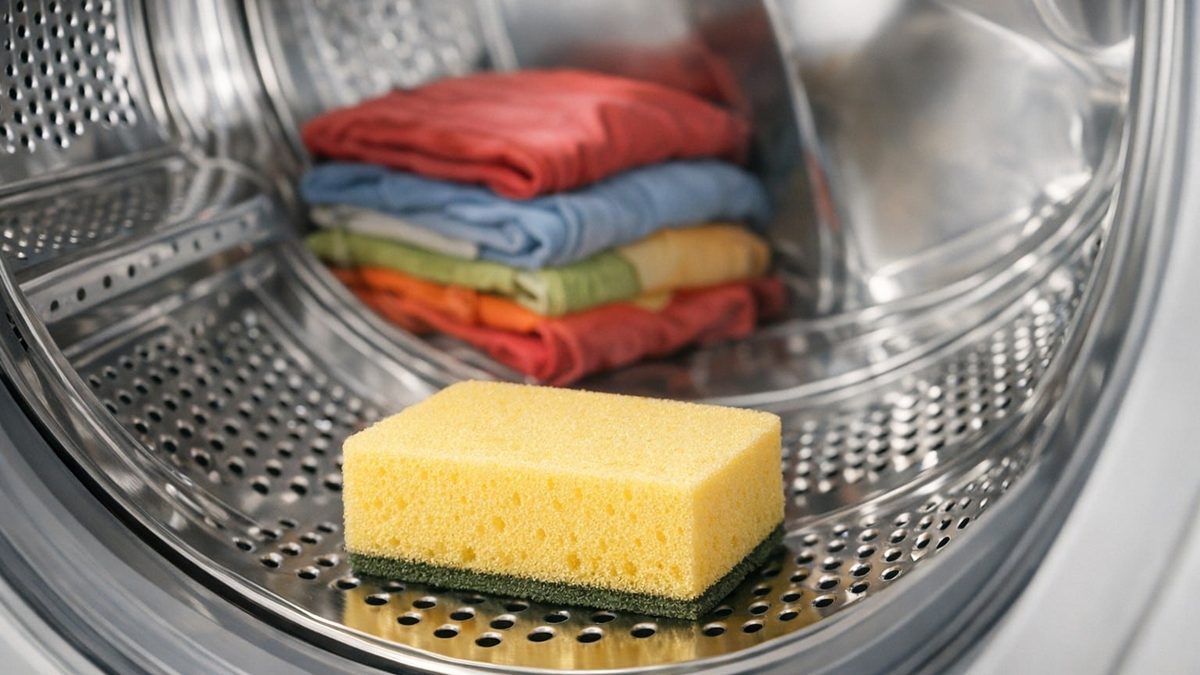
A classic sponge, costing less than a euro. Toss it into the drum instead of (or alongside) liquid detergent. This tiny gesture has a concrete explanation. Professional dry cleaners have known this secret for years. When colored clothes emerge from a cycle with shades still vibrant after ten, twenty, or thirty washes, it’s not luck. It’s avoided chemistry.
The Chemical Cost of Detergent on Color
Laundry detergent is a cocktail of components. It can contain up to 25 different molecules. Think surfactants for stain removal, enzymes, bleaching agents, preservatives, perfume, and dyes. This mix is formidable against grease. Against dyed fibers, it’s a different story.
Optical brighteners don’t actually make clothes white. They are chemical compounds designed to deposit onto fibers. They absorb ultraviolet rays and re-emit blue light. This creates an optical illusion. Your whites look brighter. On colored laundry, this deposition does the exact opposite of the intended result. The shades dull progressively. It’s like a veil has settled over the fabric.
Over thirty identical wash cycles, dry cleaners see what families miss. Whites turn grey. Colors fade. Towels lose their absorbency. This observation is consistent among laundry professionals. Liquid detergent shines for colors at 30-40°C. It dissolves instantly. It limits residue on dark textiles. It rinses easily, helping preserve deep blacks and vivid tones when clothes aren’t heavily soiled.
The problem persists when you overdose. A study by UFC-Que Choisir, published in late 2025, revealed that 67% of consumers use too much detergent. This raises the real cost per wash by 30% to 50% above the theoretical price. That is useless product remaining suspended in your fibers.
The Sponge as a Mechanical Filter
Placing a sponge in your washing machine acts like a magnet. It captures lint, pet hair, and other debris. These things get trapped in your clothes during the wash. That’s the visible function. The explanation that interests professionals goes deeper.
When fibers lose color in the machine, the culprit isn’t always the detergent itself. It’s the repeated friction. Suspended particles in the wash water rub against the fabric surface. During the cycle, the sponge acts as a collector. Its porous, slightly abrasive texture grabs detached fibers. It holds them. It prevents them from sticking to your clothes.
By capturing these suspended micro-debris, it reduces the invisible “sandpaper” effect. This erosion destroys dyes with every rotation of the drum. The main reason fibers retain hair even after an intense wash is simple. Textile fibers tend to hold onto lint. Lint has a bad habit of sticking more with water and detergent. This mechanism affects dyes too. More suspended particles mean more accumulation. More friction means eroded tones. The sponge breaks this spiral.
A sponge in the machine also preserves the filter. It saves the drum. It helps the pipes. Fewer debris circulating in the water means a filter that clogs less often. It means a pump that works less hard. Field reports agree. Nearly one in five households with pets shows signs of accelerated washing machine wear. This is due to invisible, unfiltered debris.
Practical Steps for a Euro
An accessory for under a euro could redefine daily routine. Slide a household sponge into the drum. Behind this simple gesture lies a frustrating reality. Manufacturers multiply technological innovations. Yet a persistent problem of hair, lint, and costly breakdowns remains ignored. Sponges sold at discount stores like Action fit this role perfectly.
The method is direct. Choose a new sponge without a hard abrasive side. Place it in the drum with the laundry. Start your usual program. After each wash, remove the captured debris. Rinse it thoroughly. Let it dry.
Two points need attention. Avoid harsh chemicals or overly concentrated fabric softeners. These can damage the sponge or leave residue on your clothes. Avoid high-temperature wash cycles with the sponge inside.
Don’t overload the drum. Friction increases suspended hair. An overloaded machine largely cancels the sponge’s effect. The rotation movement no longer allows it to act freely. Leave a third of the drum empty. Keep the sponge clean. Run a program at 30 or 40°C. This is the mechanical combination dry cleaners apply to preserve color long-term.
You might wonder if a sponge alone is enough for heavily stained items. It isn’t. It doesn’t replace surfactants. It doesn’t lift grease. But for maintenance? For keeping those bright reds and deep blues from turning grey? It works. The water keeps moving. The sponge keeps catching. The colors stay.
The real cost of laundry: why your wallet and wardrobe are suffering
Most French households run about 220 loads of laundry a year. That is a lot of cycles. You are pouring roughly 26 liters of liquid detergent or 40 kilograms of powder into the drum annually. Even a tiny saving per load adds up fast. Supermarket brands vary wildly in price. First-price options hover around 0.15 € per wash. Store brands sit between 0.20 € and 0.25 €. Name brands? They range from 0.25 € to 0.40 € per load.
Do the math.
Twenty-two hundred cycles. That is 33 to 88 euros spent every single year on detergent alone. And that is assuming you measure correctly. Most people overdose. It is a habit so deep we don’t even notice the suds.
How to reduce laundry costs without sacrificing cleanliness
Using a dryer sheet (or a dryer ball, depending on where you live) isn’t about eliminating detergent entirely. Especially if you have heavily soiled clothes. You still need the chemistry to break down stains. But it does help slow down buildup. It reduces the frequency of cleaning your machine’s filter or drum.
For lightly soiled items, however, the approach changes. Reduce the detergent dose significantly. Let the mechanical action of the dryer sheet or wool ball handle the fluff and residue. This matters for more than just your bank account. Chemical bleaching agents damage the environment. They also damage the fabric itself.
Less harsh chemicals means your colored clothes hold their vibrancy longer.
Small habits that protect your clothes
Here is a detail most people miss. Turn your pants inside out before tossing them in the washer. It actually protects the colors. The friction of the cycle hits the inner lining instead of the visible surface. Combine this simple step with using a dryer sheet or wool ball. You limit the contact points between the dyed fabric and the machine’s abrasive action.
It costs about two euros for the materials. Maybe a bit of habit formation. The alternative? Years of pilling and faded graying. Is it worth saving a few minutes on sorting? Probably not.
Source : planetezerodechet.fr