You think that 1,000-thread count Egyptian cotton sheet set is a mark of luxury. It’s likely a scam. Thread count isn’t just a marketing buzzword. It’s a scientific term. The Federal Trade Commission has strict rules on how those threads are counted. But the rules don’t stop manufacturers from cheating.
So, what is a good thread count for sheets?
Technically, thread count is the number of threads in a single square inch. You count the lengthwise threads (warp) and the widthwise threads (weft). If you weave 100 threads one way and 100 the other way, you have a thread count of 200.
We assume more threads mean softer fabric. That’s not always true. A 200 thread count is good. A 400 thread count is softer. Anything above 400? You’re just paying for a higher price tag.
How to Spot Inflated Thread Counts
How do brands claim 800 or 1,200 threads per inch? They can’t fit that many in a square inch. They use creative math.
In a free market, everyone wants the highest number. Manufacturers don’t just count threads. They count each fiber (called plies) that makes up a thread. One thread might have four plies twisted together. One brand counts it as one thread. Another counts it as four.
Consumer Reports tested this. They bought $280 queen sheets. The label said 1,200 thread count. An independent lab counted them. There were only 416 threads per inch. That’s 35 percent of what the manufacturer claimed.
The FTC got involved. The Textile Bedding Committee of the National Textile Association asked for help. Bed, Bath & Beyond was sued for misrepresenting thread count. They settled in 2008 without admitting guilt. They offered refunds, gift cards, and discounts.
But thread count is only part of the story. Do you care about the quality of threads? Not just quantity? And what’s the deal with Egyptian cotton?
Is Egyptian Cotton Worth It?
Egyptian cotton is famous. It has long fibers. Long fibers make smoother yarns. Smoother yarns feel softer. But not all “Egyptian cotton” is created equal.
Some brands use cotton from other countries and call it Egyptian. Others use short-staple cotton and blend it. You need to check the label. Look for “100% Egyptian cotton.” Look for certifications.
If you want soft sheets, don’t obsess over 1,000 threads. Look at the weave. Look at the fiber length. A 400 thread count with long-staple cotton beats a 1,000 thread count with short-staple cotton. Every time.
Sleep well. Or don’t. The sheets won’t save you from bad sleep hygiene.

Stop obsessing over the number stamped on the tag. A high thread count means absolutely nothing if the fibers themselves are trash. You are paying for quality, not just quantity.
True cotton sheet quality hinges on a mix of factors. Fiber quality matters most. Then yarn size. Then finishing techniques. Then thread count. Then construction.
A sheet with 200 high-quality long-staple fibers will feel better against your skin than one with 400 inferior, twisted fibers. The hand-feel is what counts when you crawl into bed at 2 AM.
In the cotton world, length equals quality. Look for long staples. Egyptian cotton fibers are longer than standard cotton. Longer staples create stronger threads. Stronger threads mean more durable fabric. It won’t pill after a year of washing.
How Cotton Becomes Premium Fabric
Raw cotton is messy. It needs processing to become luxury bedding.
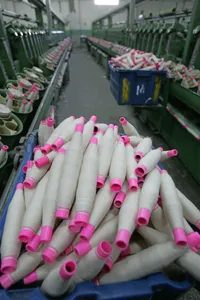
The first step is carding. This process works out smaller, weak fibers. It leaves the longer, stronger ones behind. Next comes combing. Combing removes even more of the short, inferior fibers. What remains is clean, uniform cotton ready for spinning.
Once spun into threads, the fabric undergoes two critical treatments.
First, singeing. The fabric is passed over a flame. This burns off surface fuzz. If you skip this, that fuzz becomes pilling later. It ruins the smooth feel you paid for.
Second, mercerizing. This happens under pressure. It increases the strength of the cotton. It also helps the fabric accept dye more evenly. The result is brighter colors and a silkier texture.
Finding the Sweet Spot
Consumer awareness is rising. The era of bloated thread counts is ending. Experts generally agree that paying more for a thread count above 400 is a waste of money.
When shopping, aim for a thread count between 200 and 400. This range offers the best balance of durability and softness for most people.
“High-quality sheets have a greater number of finer threads woven together, which ultimately increases both fabric quality and price.”
A sheet needs at least 200 thread count to be considered good quality. This is typical for standard cotton. Higher counts range from 300 to 800, but you rarely need to go past 500 for Egyptian cotton, sateen, or bamboo.
Common Sheet Questions
What does thread count actually measure?
It’s the number of vertical and horizontal threads in one square inch. If you have 50 vertical and 50 horizontal threads, your thread count is 100. Higher counts usually mean softer sheets, but only if the fibers are good.
Is Egyptian cotton worth the extra cost?
Yes. If you want super-soft, premium sheets, Egyptian cotton is the way to go. It ranges from 300 to 400 thread count. It is luxurious, breathable, and long-lasting.
What thread count do luxury hotels use?
Luxury hotels don’t stick to one rule. Most use 250. High-end hotels often use 300. Some go as high as 600 or 800. But remember, spending more doesn’t always mean better sheets. It depends on the material and construction.
What thread count keeps you cool?
Thread count has very little to do with temperature regulation. Material is far more important. If you sweat at night, choose lightweight fabrics. Bamboo, linen, and certain cotton blends are excellent choices for cooling. Some brands even market specific cooling sheets.
The Verdict
Focus on the fiber. Look for long staples. Check for singeing and mercerizing. Then worry about the thread count.
Most shoppers will find their best sheets in the 200 to 400 range. Anything higher is often marketing fluff.
You now have the tools to ignore the hype. Go find sheets that feel good, not just look impressive on a label. The best night’s sleep starts with knowing what you’re buying.