You have two machines on the counter. Both spin blades. Both turn chunks into paste. So why buy both?
They look similar on paper. But they fail spectacularly at tasks meant for the other. Confusing them ruins dinner. Here is how they actually work. And more importantly, when you should grab which one.
The Mechanics of the Food Processor
Let’s look at the food processor first. It is not just a blender with a bigger bowl. It is a multi-tool.
Carl Sontheimer, an engineer, introduced it to North America in 1973. He took a French industrial blender and tweaked it for home kitchens. It took years for people to get it. Once they did, sales skyrocketed. Why? Versatility.
A food processor handles the heavy lifting of prep work. It chops. It slices. It shreds. It grinds. It purees.
Some higher-end models go further. They can:
– Juice citrus and vegetables
– Beat cake batter
– Knead bread dough
– Whip egg whites
– Grind meat and vegetables
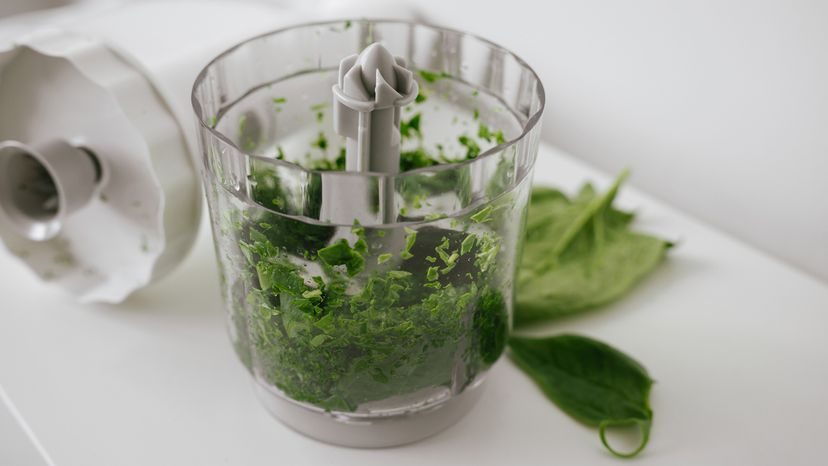
The key difference lies in the blade and the bowl. The processor uses wider, flatter blades. It moves food around in a wide, shallow bowl. This creates a chopping action. It mimics a chef’s knife.
The Mechanics of the Blender
Now look at the blender. It is simpler. But don’t underestimate it.
A blender has a tall, narrow jar. The blades are fixed at the bottom. They create a vortex. Food gets sucked down into the blades.
This design is for liquids. Or foods with high liquid content. Blenders excel at:
– Smoothies
– Soups
– Purees
– Emulsifying dressings
They struggle with dry ingredients. Try making dough in a blender. You will just get a spinning mess. The food stays at the top. It never hits the blade.
Why You Need Both (Usually)
You can make hummus in a blender. You can make it in a food processor. But the texture is different.
The food processor gives you control. You can stop and scrape. You can choose chunky or smooth. The blender blends until smooth. Or until it breaks.
If you make a lot of bread, you need a food processor. The dough hook or blade handles the gluten development. A blender would stall.
If you make a lot of smoothies, you need a blender. The tall jar ensures everything gets caught in the blade path. A food processor would splatter.
The Verdict
Do you really need both?
If you cook a lot, yes. They are not interchangeable.
The food processor is for solid food. The blender is for liquid-based mixtures.
Buy based on what you cook. Not what looks cool on the shelf.
The Basic Components of a Food Processor
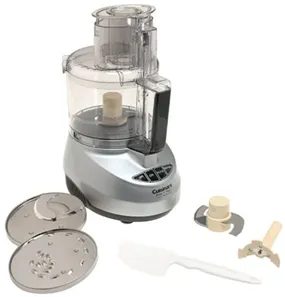
Modern food processors come in three basic sizes: full, compact and mini. No matter what size they are, however, the basic components are the same: a motor, a bowl with a lid and feed tube, and a set of attachments.
-
Motor : The motor is housed in the base of the appliance, and it is the heaviest part of the device. Full-size machines generally have larger, more powerful motors, and can weigh more than 20 pounds (9 kilograms). This weight has a utilitarian value: The heaviness of the base gives the appliance stability and ensures that it doesn’t move around while the motor is running.
-
Bowl : The bowl, which is usually made of durable, transparent plastic, fits onto this shaft and locks into position. Some models come with large and small bowls for use with the same base.
-
Lid : The lid, usually made of the same material, locks onto the top of the bowl; in many older models, engaging the locking mechanism turns on the motor, but newer models generally have an on/off switch or button. The lid has a feed tube fitted with a plunger. You can insert food into the device through this feed tube, pushing it down with the plunger. Some models have wider and narrower feed tubes for use with larger and smaller food items.
Food Processor Attachments
Expanding Your Food Processor’s Toolkit
The standard S-shaped blade—often called the sabatier blade—is just the beginning. That metal or hard plastic workhorse sits at the bottom of the bowl, mounted on a central plastic pillar. It handles the heavy lifting: chopping, pureeing, and mixing. But if you want to move beyond basic prep, you need to look at what else fits on that central shaft.
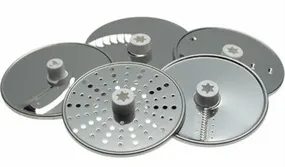
Most bowls also accept discs that mount at the top. You push carrots, cheese, or cucumbers through the feed tube. The disc catches it. Shredding or slicing happens instantly. These discs usually come in fine, medium, or coarse settings. If your machine didn’t come with every variation, you can buy them separately. It’s a cheap way to double the utility of a machine that’s already taking up counter space.
But why stop there? You can buy attachments that transform a food processor into a multi-tasking station.
The dough blade is next. It looks like the S-blade but has straighter, less curved paddles. Metal or plastic. It doesn’t shear the flour; it kneads it. Perfect for pizza dough or bread. You get a proper gluten structure without overworking the mixture into a paste.
An egg whip is another option. Two straight arms with large open paddles. It incorporates air. Beat egg whites or heavy cream until they’re fluffy. It’s efficient. You save the energy of hand-whisking and get consistent volume every time.
Then there are the slicing discs.
The julienne disc has short, sharp teeth. It turns potatoes or zucchini into long, thin matchsticks.
The French fry disc is similar but cuts thicker. Heavier pieces. Better for actual fries.
And if you’re tired of manual juicing?
A citrus juicer is a dome that fits over the shaft. Halve an orange or lemon. Press it down. The dome turns, squeezing the juice directly into the bowl.
A non-citrus juicer works differently. It purees soft fruits and vegetables. The pulp collects in the center strainer. The juice flows down into the bowl. It’s clean. It’s fast. It removes the mess from the counter.
How Blenders Actually Work
Blenders are older than food processors. The Illinois State Museum dates the first electric blender to 1922. It was built for soda fountains. Malts. Shakes. The patent didn’t hit until 1932.
They work on a simple principle: liquid creates movement.
A blender needs fluid. Without it, you just have dry ingredients spinning in a jar. The high-speed blade creates a vortex. A spiral. It pulls ingredients down toward the blade. Then forces them back up. The cycle repeats. Until everything is smooth. Uniform. Consistent.
The Basic Parts of a Blender
Every model differs, but the anatomy is standard.
The housing is the base. It holds the motor. It needs to be heavy. Sturdy. If it tips while you’re blending hot soup, you’ve got a mess.
The blade location varies. Some models have removable blades. Others have them permanently attached to the jar base.
The jar is usually a glass or plastic pitcher. Some bases are compatible with regular-mouth Mason jars. You can blend directly in the storage jar. One less dish to wash. Smart.
The gasket or seal ring sits between the blade and the jar base. In removable-blade models, it prevents leaks. If it’s cracked, you’ll have liquid in your motor base. Not good.
The jar base or nut attaches the jar to the housing.
The lid keeps things inside. In some compact blenders like the Magic Bullet, the base doubles as the lid. Simple design. Fewer parts to lose.
Food Processor vs. Blender: Where They Differ
They both spin blades. They both cut food. But they aren’t interchangeable. Trying to chop an onion in a blender usually results in a watery mess. Trying to make soup in a food processor often leaves you with chunks.
Blenders create a vortex.
The blade is angled upward. It pulls ingredients down. The liquid carries them. This creates a smooth puree. Bisque. Smoothie. Soup. Uniformity is the goal.
Blenders chop finer.
Harold McGee notes in On Food and Cooking that blender blades shear more finely than food processor blades. The confined space of a blender jar forces ingredients into the blade path repeatedly. A food processor chops with texture. A blender eliminates it.
Food processors have interchangeable blades.
Most blenders have one fixed blade. You’re stuck with chopping, pureeing, or blending. A food processor swaps attachments. Shred cheese. Slice tomatoes. Knead dough. It’s versatility.
So which do you need?
If you’re making pesto, a food processor is better. The chunks add character. If you’re making a strawberry daiquiri, you need a blender. The ice needs to shatter into snow.
You can’t really do both perfectly with the same machine.
The vortex requires liquid. The chop requires solid contact.
Maybe you don’t need to choose. Maybe you just need both. Or maybe you’re content with one and accept the limitations. The counter space is the real constraint. The attachments multiply the value, though. A $20 julienne disc changes how you prep vegetables. A $30 dough blade changes how you bake bread.
It’s not just about the machine. It’s about what you can do with it when the standard blade isn’t enough.
You start looking at your counter. At the bowl. At the shaft. And you wonder what else could fit there.
Liquids vs. Solids: The Core Difference
The dividing line is usually the consistency of what you’re putting in. Food processors excel at cutting, grating, and slicing solid ingredients. They handle chunks well. Blenders are built for crushing and pureeing liquids mixed with solids.
There is a physical reason for this. Food processors have wide bowls. If you try to blend liquids in one, it leaks. The seals aren’t designed for high-velocity fluid dynamics. Conversely, blenders have narrow jars. They need liquid to create a vortex. Without enough fluid, the blades just spin air. The motor strains. The mixture gets stuck at the bottom.
You need to pick the right tool for the job. Here is how to break it down.
When to Use a Blender
Blenders are your go-to for smooth textures and frozen items. They are not just for morning smoothies. They have specific mechanical advantages for certain tasks.
Smoother Purees and Soups
You can puree food in a processor, but the texture will be different. A blender yields a smoother result. This is true especially for mixtures with higher liquid content. Think baby food, velvety soups, or thin sauces.
Harold McGee explains the science in On Food Cooking: The Science and Lore of the Kitchen. He notes that pureeing is a physical crushing or shearing action. It breaks down plant tissue. This liberates thickening molecules. Blenders and mortars are the most effective tools for this crushing action. Food processors slice rather than crush. The slicing action leaves distinct particles. The crushing action integrates them.
If you are making hot soup, use caution. An immersion blender works directly in the pot. It is safer and easier. If you must use a standard blender, pour carefully. Cover the lid with a towel. Steam builds pressure. If you don’t vent it, the lid will blow off. Hot soup will splatter everywhere.
Frozen Drinks
Blenders were literally created for milkshakes. It makes sense they dominate the frozen drink category. Whether it is a smoothie or a frozen cocktail, the tall jar holds more liquid than a processor. The blades are sharp and fast. They are designed to liquefy frozen fruit. A food processor might struggle with the density. It can leave icy chunks. A blender turns ice into snow.
Ice Crushing
Use a blender for ice. Appliance tester Cindy Fisher told Tasting Table that ice can damage a food processor. The chopping blade is not built for it. Neither is the plastic container. Blenders have blades designed to pulverize hard items into smaller pieces without breaking the vessel.
When to Use a Food Processor
The wide bowl changes the game. It handles low-liquid mixtures better. It also offers versatility with attachments.
Nut Butters
Making nut butter requires pressure. The wide bowl allows the nuts to circulate. They get trapped between the blade and the sides. This friction creates heat. The oils release. You get a smooth butter. A blender jar is too narrow. The nuts get stuck at the bottom. The motor overheats before you get a result.
Mixing and Kneading Dough
This is the one area where blenders fail completely. A food processor is the only appliance that can effectively cut cold butter into flour for pie crust. The quick pulses incorporate the fat without warming it. It can also knead bread or pastry dough. The blade mimics a hand kneading motion. A blender’s blade creates a whirlpool. It does not push or fold. Your dough will just spin in circles.
Grating Ingredients
Most food processors come with a shredding disc. It fits into the feed tube. You can grate carrots, cheese, or potatoes quickly. The disc shreds consistently. A blender has no equivalent attachment. You would need a box grater. That takes time and effort.
Chopping Dry Ingredients
Use the pulse button on a food processor. It gives you control. You can chop a large batch of vegetables without turning them into a puree. The wide bowl spreads the ingredients out. They hit the blade evenly. A blender tends to puree everything if you are not careful.
Pesto: A Compromise
Both tools work for pesto. The result just varies. A blender makes a smoother pesto. The high speed emulsifies the basil and oil perfectly. A food processor yields a slightly coarser pesto. It keeps some texture.
A Ligurian nonna would tell you to use neither. The traditional way is a mortar and pestle. The word “pesto” comes from the verb “to pound.” Pounding releases oils differently than spinning. But if you want speed, either appliance works.
Food Processor FAQs
What is a food processor used for?
Food processors chop, blend, slice, and dice all types of foods. They replace several single-use tools.
Can you use a food processor in place of a blender?
Blenders are better for liquids. Food processors allow you to work in bigger batches. They have more sophisticated blades. They can knead dough. Blenders cannot do that.
How is a food processor different from a blender?
Food processors have efficient blades for slicing and chopping thicker foods. They do not require as much liquid or water. Blenders are better for milkshakes and smoothies.
Is a food processor worth it?
It obliterates the need for a separate chopper, mixer, and blender. Cleanup is easier. It saves counter space.
Do I really need a food processor?
If you dislike chopping and slicing but like to cook, it is a good investment. It lessens time in the kitchen. Cooking becomes less labor-intensive.