You think you need expensive terra cotta pots to grow tomatoes on a small balcony. You’re wrong.
Most gardeners head to stores like Jardiland or Botanic, buying bulky containers that clog up tiny terraces. It’s a waste of space and money. A professional vegetable grower once showed me a different way. It’s brutally simple. Skip the pots. Use the soil bags themselves as the container.
This isn’t just a gimmick. It’s a method that optimizes yield while keeping your wallet intact. You transform a barren corner into an eco-friendly, energy-rich micro-farm.
Why Soil Bags Outperform Traditional Pots
The Root Volume Advantage
Root depth dictates success in container gardening. Traditional pots are often shallow and rigid. They restrict growth. They also heat up quickly in direct sun, suffocating the roots.
A soil bag offers something different. Specifically, a 30 to 40-liter volume creates a protective cocoon for solanaceous plants. Tomatoes are hungry. They need space to spread their roots underground. This volume allows for extensive root development. It pulls in resources efficiently. It retains moisture during hot afternoons.
“Opting for a bag offering an space of 30 to 40 liters creates a perfect cocoon for solanaceous plants with a demanding temperament.”
No more trips to hardware stores for expensive bins. You use the packaging that brought the soil to your door.
Strategic Drilling for Drainage
Stagnant water is the enemy. Rot kills plants faster than drought.
Place the soil bag flat on your balcony floor. Take scissors or a sharp point. Poke generous holes in the bottom. This isn’t optional. It’s vital.
Water must escape freely. If it pools at the base, the roots rot. The plant dies. Simple physics.
The Drainage Layer
Before you plant anything, add a barrier. Throw a handful of gravel or clay balls into the bag. Push them down through the drainage holes.
This creates a professional-grade drainage layer. It protects the bottom of the root ball. It prevents the plastic from absorbing heat from the balcony pavement. It stops water from sitting in the soil too long.
Planting Strategy: Two Plants, One Bag
The May Planting Window
Wait until late May. The climate needs to soften. Frost risk must be gone. Then, plant directly in the bag.
Open the top of the plastic carefully. Insert two vigorous tomato seedlings.
Some might think this is too crowded. It’s not. Placing two plants per bag creates healthy competition. It accelerates leafy growth. It uses every square centimeter of substrate efficiently. The shared root mass doesn’t exhaust the resource. It thrives on the interaction.
Vertical Tuteuring for Small Spaces
Balconies don’t have room for horizontal sprawl. You can’t let the vines creep across your floor.
Fight this constraint with vertical support. Drive wooden stakes or spiral tuteurs firmly into the bottom of the bag. Anchor them deep.
Guide the main stems upward. Force them to climb straight toward the sky. This captures sunlight from a higher vantage point. It keeps the living space on the terrace clear. You get fruit without sacrificing floor space.
Watering and Feeding Routines
Weekly Hydration Schedule
Water is the engine. In a confined plastic environment, consistency is key.
Adopt a strict weekly rhythm. Prevent sudden drying. Water the soil directly. Do not splash the leaves. Wet foliage invites cryptogamous diseases. Keep the leaves dry. Keep the roots wet.
This routine stimulates sap flow. It prevents stress.
Liquid Fertilization for Heavy Feeders
Two tomato plants in one bag are aggressive eaters. The nutrients in the original soil bag deplete fast. They can’t sustain two large plants alone.
You must supplement. Mix a high-quality liquid fertilizer with your weekly watering. Apply it every seven days.
This organic boost acts like natural performance enhancer. It amplifies spring flowering. The flowers turn into fleshy, generous fruits.
“It is fundamental to couple your watering with a dose of high-quality liquid fertilizer at a weekly frequency.”
The result is a harvest that defies the size of your balcony. You aren’t just surviving the summer. You’re maximizing it.
The bag rots away at the end of the season. You recycle the plastic. You reuse the stakes. The cycle continues.
There’s no need for complex setups. Just soil, space, and discipline.
What will you do with the rest of your balcony?
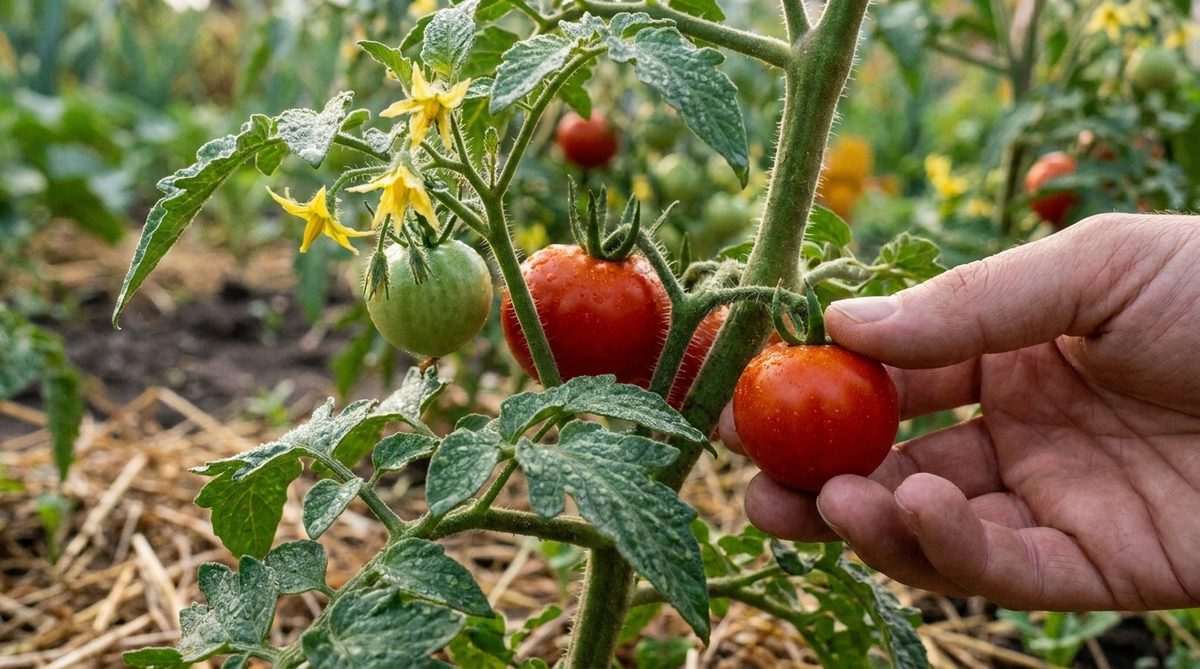
The visual and gustatory payoff is real. When you stack your harvest, the density of growth on a small vertical plane makes traditional pots look obsolete. Clay containers take up too much space and hold too little soil. This vertical system changes the game. You get an exceptional yield per square meter, turning a cramped balcony into a productive farm.
How to Replicate This High-Yield Method at Home
You don’t need a garden. You need a process. Here is the exact workflow to turn your terrace into a suspended pantry using simple, low-cost materials.
1. Choose the Right Container
Forget rigid plastic bins. Look for fabric grow bags or reinforced non-woven sacks. The key metric is volume. Each bag must hold 30 to 40 liters of substrate. Small volumes dry out too fast and starve the roots. Big bags keep moisture consistent.
2. Prepare for Drainage
Tomatoes hate wet feet. Punch holes in the bottom of your bag. Then, add a drainage layer. Use gravel, broken terracotta shards, or coarse perlite. This prevents waterlogging and rot.
3. Planting Timing and Density
Wait until late May. The threat of frost must be gone. Plant two vigorous tomato seedlings per bag. This density is critical. By forcing the plants to compete slightly and grow upward, you maximize vertical space. The result is a dense, leafy column rather than a sprawling bush.
4. Install Vertical Support
You cannot let these plants sprawl. Install a sturdy stake. It must be strictly vertical and anchored deep into the substrate. Without rigid support, the weight of the fruit will snap the stems.
5. Maintenance Rhythm
Consistency beats intensity. Do not wait until the soil is bone dry. Water and fertilize every single week. No exceptions. Vertical containers dry out faster than ground soil. If you skip a week, you lose the harvest.
Why This Works for Small Spaces
This method bypasses the limitations of urban gardening. It uses vertical airspace instead of ground footprint. The “rudimentary” nature of sack gardening is actually its strength. It allows for mobility, easy replacement of soil, and rapid heat retention in the root zone.
“Innovation in outdoor design often comes from returning to basic solutions. Every place can host a prolific, nourishing biodiversity.”
The square meter of your balcony becomes a suspended larder. You are not just growing vegetables. You are reclaiming space that was previously useless.
So, are you ready to reorganize that corner of your terrace? The plants are waiting. The structure is simple. The yield is surprising.


