Stop scrolling for a second. Go outside. Find a tree. Lean back against that rough, warm bark. Look up at the canopy shading you out.
Feel that? That quiet safety. That earthy grounding.
You want that feeling in your living room. You can get it. Not by moving to the woods necessarily, but by decorating your home like it belongs there. Cabin decor isn’t about looking rustic for the sake of it. It is about bringing the outside in. Making your space feel wrapped in warmth.
Why Log Cabin Decor Feels Like a Hug
Most people think cabin style means just throwing up some plaid and calling it a day. It is not. Real cabin decor is about texture. It is about light. It is about materials that age well.
When you decorate a log cabin or a cabin-style home, you are working with wood. A lot of it. The trick is to balance the heavy timber with soft, inviting elements. You need to soften the edges.
Think about the tree again. The trunk is hard. The leaves are soft. Your home needs both.
- Warm Lighting: Harsh overhead lights kill the vibe. Use lamps with fabric shades. Use candles. Use firelight.
- Natural Textures: Wool throws. Leather chairs. Woven baskets.
- Earthy Colors: Think moss green. Slate gray. Deep browns. Not bright primaries.
Materials That Matter
You cannot fake this style with cheap plastic prints. You need real stuff. Or at least, stuff that feels real.
- Reclaimed Wood: Old barn wood adds history. New pine looks sterile. Find wood with a story.
- Stone: If you have a fireplace, let the stone breathe. Don’t cover it with clutter.
- Iron: Black iron fixtures. Rustic hardware. They ground the space.
“The best cabin decor disappears. You stop seeing the decor and start feeling the comfort.”
Start small. Change your throw pillows. Swap out your curtain rods for thicker wood ones. Sit back. Lean against your own trunk. Does it feel right?
Why Log Cabin Interiors Defy the Rustic Stereotype
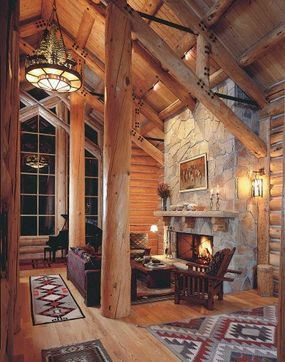
Picture it. A shake roof. Stone chimney. Smoke curling into pine branches. That’s the postcard version of a log cabin. Most people stop there. They see the exterior and assume the inside has to match—rough-hewn, dark, maybe a bit damp.
That’s a trap.
The real magic happens when you step through the door. The interior is where a log house stops being a structure and starts feeling like a home. You don’t have to dress your logs like they’re in a 19th-century museum. In fact, trying to do so often backfires.
Blending Antiques with Modern Lines in Log Homes
Who buys these places? Everyone. The data doesn’t lie. You’ve got the new-age pioneers seeking solitude. You’ve also got design trendsetters who want that tactile warmth without the rustic clutter. The styles inside log homes are as chaotic and diverse as the people living in them.
It works because logs are neutral ground. They’re textured, yes. But they’re also stable.
Take an antique oak table. Put it next to a sleek, mid-century modern sofa. It doesn’t clash. It converses. The rough grain of the wall softens the hard lines of contemporary furniture. The clean lines of modern decor keep the heavy timber from feeling oppressive.
How do you pull this off without it looking like a catalog went wrong?
Start with contrast. If your walls are dark and heavy, keep your floors light. If your furniture is ornate and old, pick lighting that’s sharp and new. Don’t try to hide the logs. Let them be the anchor. Everything else floats around them.
The best log home interiors don’t fight the material. They frame it.
Which pieces work best? Anything with intention. A single, bold statement piece often beats a room full of “country” decor. A vintage rug. A modern steel lamp. A hand-thrown ceramic bowl.
Why does this matter? Because comfort isn’t about a theme. It’s about how the space feels when you’re tired. When you’re holding a glass of wine after a long day. When the lake view is dark and the only light is coming from your living room.
Does it have to be rustic? No. Does it have to be modern? No. It just has to be yours.
How to nail the log cabin aesthetic without living in a cabin
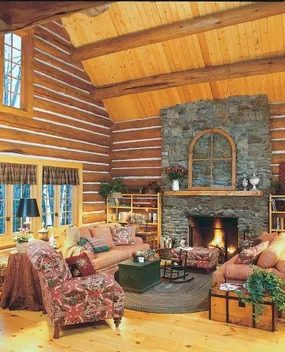
You don’t need a actual log structure to pull this off. Maybe you’re obsessed with Early American charm. Or Arts & Crafts simplicity. Southwestern grit works too. The point is the vibe, not the timber.
If you want that classic pioneer look—the kind seen on ranches and frontier outposts—you can force it into your current home. It’s about texture. Rough-hewn meets refined.
Here’s how to make it stick.
Bring the ranch look indoors with specific decor choices
Start with the walls. Paint them a warm, earthy tone. Think ochre, burnt sienna, or deep sage. Then layer on the materials that scream “cabin” but feel modern.
- Reclaimed wood: Use it for shelves, headboards, or accent walls. The knots and cracks tell a story.
- Leather and suede: Throw pillows, ottomans, chair upholstery. Keep the tones natural—tan, brown, black.
- Wrought iron: Light fixtures, curtain rods, hardware. The black metal contrasts nicely with the warm wood tones.
The goal isn’t to look like you moved into a museum. It’s to feel like you’re somewhere else.
Mix it with your existing furniture. A sleek mid-century chair looks weirdly good next to a chunky wooden coffee table. The contrast keeps it from feeling costume-y.
What’s the one thing you’d change first? Probably the lighting. Swap out sterile LEDs for warm bulbs. Maybe add some lantern-style fixtures.
It’s not just about buying things. It’s about stripping back the noise. Let the textures breathe.
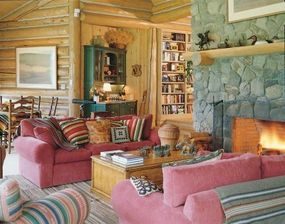
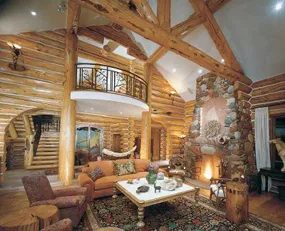
How cabin decor styles evolved from survival to style
People think of cabins as rustic. Rough logs. A stone fireplace. Maybe a deer head. That’s the cliché. The reality is messier. And cooler. Cabin decor didn’t start as a aesthetic choice. It started as a necessity. You used what you had. Wood. Stone. Animal hides. If it kept you warm, it stayed.
Then came the tourists.
In the early 20th century, city dwellers fled to the mountains. They wanted the “rustic” look but with beds that didn’t itch. This birthed the Adirondack style. Think heavy oak. Plush velvet. It was ruggedness with a safety net.
Meanwhile, up north, something different was happening.
Scandinavian influences seeped in. Not because Vikings moved to Vermont, but because the materials were similar. Pine. Spruce. Birch. The style was cleaner. Whiter walls. Less clutter. It proved you could be cozy without looking like you lived in a tree.
Then there’s the Western angle.
Think Wyoming. Arizona. Leather. Rugs with geometric patterns. Metal accents. This style leans into the cowboy mythos. It’s bold. It’s loud. It’s not trying to hide the wilderness; it’s celebrating the conquest of it.
And Appalachian style? That’s the soul.
Hand-painted furniture. Patchwork quilts. Glass jars filled with dried herbs. It’s domestic. It’s lived-in. It doesn’t care about trends. It cares about comfort.
You see these styles everywhere now. Mix them. Don’t. The history isn’t linear. It’s a collage.
“Style is knowing who you are, what you want to say, and not caring.” — Coco Chanel
Does that apply to cabins? Maybe.
The point is: cabin decor has roots. Deep ones. Understanding them helps you pick a direction. Do you want the clean lines of the North? The warmth of the Mountains? Or the grit of the West?
Your choice depends on the wood on your floor. And the view out your window.
Which cabin style fits your space?
It’s not just about picking a picture from a magazine. It’s about the bones of the house.
If you have log walls: Lean into Western or Appalachian. The texture demands it. Add leather chairs. Heavy rugs. Let the wood breathe.
If you have white-painted pine: Go Scandinavian or Modern Rustic. Keep it light. Use wool throws. Ceramic vases. Avoid clutter.
If you have stone: You’re flexible. Stone works with everything. Pair it with velvet for Adirondack. Pair it with linen for Scandinavian.
Don’t mix them all at once. You’ll end up with a boutique hotel that has no personality. Pick one. Stick to it. Then break one rule.
Maybe a neon sign in a log cabin. Why not?
History is just a suggestion. Your home is yours.
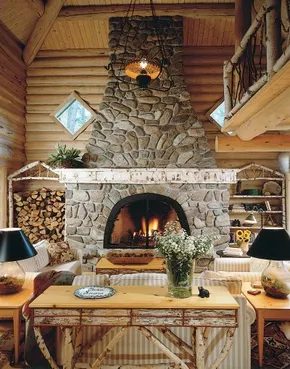
Early American and Appalachian Log Cabin Decor
Log homes aren’t just structures. They’re vessels for that specific forest quiet. You walk in, smell the wood, and feel the weight of the beams overhead like tree branches. It’s honest. Unassuming. Whether you lean toward the rigid symmetry of Colonial history or the rugged charm of Appalachia, the foundation is the same. Wood.
Early American style strips back the noise. It’s not the cluttered country look of the 80s. It’s spare. Deliberate. Think Windsor chairs. Pewter candlesticks. Things that survived the crossing from Europe because they were useful and well-made. The architecture mirrors this simplicity. Symmetrical Colonials. Cape Cods. Saltboxes. Inside, you might see a gilded Federal-style mirror catching the light from an open hearth. The colors? Cool Colonial blues. Warm oxblood reds. Even if your home uses squared Appalachian logs with wide chinking, it fits. It grounds the space.
Appalachian cabins feel different. Rougher. Realer. These settlers built everything themselves. Furniture. Textiles. Food. The result is a home that feels lived-in by design. Rocking chairs on shed-roofed porches. Wooden beds layered with scrap quilts. Stone hearths holding cast-iron kettles. The “dogtrot” breezeway between two square buildings offered shade and airflow. It’s a style that celebrates the hands that built it. You can buy the look today, but the spirit comes from understanding that scarcity. Everything had a purpose.
Shaker-Inspired Minimalism for Timber Homes
Then there’s the Shaker influence. Not log-built, but perfect for clean-lined timber frames. The Shakers fled persecution in England, landed in New York, and spread to Kentucky and Indiana. They believed in community. And in function.
They hated clutter. So they invented solutions. Pegs on walls for hats. Chairs. Tools. Their furniture isn’t carved or turned into knots. It’s beautiful because it’s simple. The grain speaks. The form speaks. Celibacy meant their population dwindled, making original pieces rare and expensive. But you don’t need an antique ladder-back chair to get the vibe. Reproductions work. Trestle tables. Tall chests. Bandboxes. Woven baskets.
Don’t forget color. Shakers used red, blue, and chrome yellow in their meetinghouses and homes. It’s a stark contrast to the neutral expectations. A splash of chrome yellow against white pine logs? It works. It’s calm. It’s ordered.
Victorian Opulence in Log Homes
Then the pendulum swung the other way. Late 1800s America wanted more. The Industrial Revolution poured mass-produced goods into homes. Ornate furniture. Silk. Velvet. Bric-a-brac. Oriental rugs. Heavy drapery with fringe.
Log homes fell out of fashion. People sheathed their log walls in clapboard to hide them. They wanted the smooth canvas of sawn lumber and decorative woodwork. But you can bring the Victorian look back into a log cabin. It actually works well. Squared logs provide a flat surface. A canvas for paintings. Mirrors. Knickknacks.
A Victorian dining room in a log home isn’t a mistake. It’s a statement. Heavy damask tablecloths. China. Silver. Crystal. Chandeliers that turn dinner into an event. In the bedroom, the femininity of lace and drapery softens the rugged timber. It’s unexpected. Maybe that’s the point. Why does a log home have to be rustic? It doesn’t.
Choosing Your Log Home Aesthetic
So where do you land? Do you want the spare honesty of Early American? The functional purity of Shaker? The opulent weight of Victorian?
The materials matter. Chinking changes the look of squared logs. Pegs define Shaker storage. Drapery defines Victorian windows. The beam structure remains. The wood scent remains. But the story you tell changes.
Start with one room. Try the Shaker pegs. Hang a Federal mirror. Drape a velvet curtain. See what the wood accepts. It’s flexible. It’s old. It’s been through worse than your decor choices.
The Arts & Crafts Rejection of Victorian Clutter
Victorian interiors felt suffocating to some. Too ornate. Too machine-made. Too fake. A growing number of homeowners in the early 1900s looked back instead of forward. They wanted the Middle Ages. Specifically, the guild system where artisans actually knew their craft. This desire birthed the Arts & Crafts movement.
Gustav Stickley led the charge. A New York furniture maker who hated the shoddy goods flooding the market. He believed architecture should be sturdy and friendly. In 1908, he built Craftsman Farms on 600 acres in New Jersey. It was a log farmhouse. Honest. Handcrafted. Real.
If you are restoring or building in this style, here is what matters. Dark wood dominates. Carved wainscoting runs from floor to eye level. Windows and doors feature diamond panes or simple rectilinear designs. The fireplace sits near the center, often surrounded by an inglenook and accented with handmade tiles. Floors are richly grained wood, covered by rugs patterned after William Morris textiles.
Stickley’s furniture stripped away the baroque nonsense. Linear chairs. Simple settees. Like the Shakers before them, these makers let the wood speak. The grain is the decoration. The joinery is the beauty.
Everything in the home was handmade. Copper light fixtures with mica shades. Hand-thrown pottery. Woven curtains with simple leaf motifs. Muted, natural colors. It feels like the forest brought inside. If you are pairing Arts & Crafts pieces with log walls, it works because both materials highlight the hand of the maker. The colors match the outdoors.
The Great Camps: Luxury in the Woods
Before Arts & Crafts took over, the Industrial Revolution barons fled to the Adirondacks. Northern New York. They wanted fish, game, and fresh air. They bought massive tracts of land and built self-sufficient compounds.
They started with tents. Then they got ambitious. The goal? Make the wilderness luxurious without losing the rustic feel. Small log buildings clustered around a main lodge. Nature became the interior designer.
Birch bark lined the walls and ceilings. Twigs formed mosaic patterns around windows. Crooked branches became stair railings. Stone piled up for foundations and chimneys. These became known as Great Camps.
Remote didn’t mean primitive. These camps had electricity. Indoor plumbing. Bowling alleys. Chapels. The early ones kept Victorian furniture. Ornate. Heavy. But as the century turned, the style shifted toward Arts & Crafts. Stickley rockers appeared by stone fireplaces.
The artisan’s hand was everywhere. Beds made from hand-peeled, waxed branches. Lampshades woven from local baskets. Blacksmiths forged ironwork for light fixtures, hardware, and fireplace screens. It was rugged, but it was high-end.
Modern Lodge Style: The Evolution
The Great Camps influenced the rest of the country. Their vision of Old World hunting lodges evolved into the modern lodge style. This is what many log cabin owners aim for today.
Logs can be round or flat. Timber framing works too. The bigger the logs or timbers, the better. This style leans masculine. It needs a massive stone fireplace. No lodge is complete without one.
Think dark wood accents. Heavy furniture. Picture a billiard room or a library designed for cigars and political debate. The color palette stays true to the Great Camps: moss green, deep reds, nutmeg browns. Textures matter here. Leather. Brocade. Velvet.
Antler chandeliers provide the light. Animal mounts and trophies are essential. They nod to the hunting tradition that birthed the aesthetic. It’s not subtle. It’s bold.
The Western Ranch Log Cabin
Pioneers used log cabins to survive the frontier. A man could build one with his hands. His wife made it home with quilts, rag rugs, and maybe a piece of furniture that survived the trip from the East.
Some abandoned logs for frame houses as soon as they could afford it. Ranchers in the West kept them. They built for generations.
Care went into these ranch houses. Logs were peeled and shaped to interlock. Round logs were stacked and chinked with horsehair, mud, or plaster. A wide porch allowed ranchers to wash up before entering.
Today, the ranch-style log cabin remains an American icon. Stone fireplace or iron woodstove at the center. Casual. Utilitarian. Navajo rugs or cowhides cover the wide-planked floors. Furnishings are oversized and comfortable. A rocking chair by the hearth. Leather sofas for resting after a day on the range.
It’s simple. It works. Why complicate it?
Cowboy High Style vs. Campy Kitsch
You want that rugged ranch look. But there’s a difference between authentic Western heritage and what looks like a costume shop exploded.
Thomas Molesworth, a furniture maker from Cody, Wyoming, nailed the former. In the early 1900s, he started furnishing dude ranches for Eastern elites who wanted the romance of the cattle drive without the actual hard labor. He created Cowboy High Style.
This isn’t just buying a saddle off Amazon. Molesworth peeled and polished fir and lodgepole pine branches. He used them to frame furniture. He upholstered the pieces in bright leather or Chimayo weavings. Wood burls and brass tacks added texture. Silhouettes of lone cowboys or Native American braves decorated seat backs. He even built bars and writing desks so guests could mail postcards back to the city.
The lighting? Iron or wagon wheel fixtures. Textiles followed tradition with striped Hudson’s Bay blankets and Navajo rugs. Accessories included spurs, boots, and bows. The goal was comfortable for posh guests but still felt primitive.
Today, original Molesworth pieces are rare. You’ll likely find reproductions from Western craftspeople. Or you go the other route.
You can lean into the kitsch. Framed Western movie posters. Pony-skin bar stools with cowboy boot legs. Is it sincere? Maybe. Does it fit in a log cabin? Yes. Whether you want Remington bronze sculptures or campy decor, the theme works.
Mixing Southwest Adobe with Log Walls
The desert Southwest has few trees. Historically, that meant precious timber saved for roof structures on adobe homes. Now, you can import logs.
Rounded, light-colored logs pair well with Southwest decor. It’s a blend of Spanish and Native American influences. Think small windows, thick walls, and tiled floors designed to beat the heat.
Use terra cotta tiles and adobe accents against warm wood tones. Furniture should echo Spanish Colonial missions. Look for carved wood tables and case pieces. The cruciform cross shape repeats in carvings, nodding to missionary history. Paint these pieces in sand, sunset, and sky colors.
Add color with woven rugs and serapes on floors or walls. Beehive fireplaces handle the cold desert nights. Handmade pottery and Mexican silver bring in local craft traditions. Sculpt adobe into soft, rounded archways if your structure allows. It grounds the space in the earth.
Cottage Comforts and Camp Rustic
Log cabins aren’t just for the Wild West. They’re summer escapes across New England, the Northeast, and the Midwest lakes. These are usually small, utilitarian builds. Round or square logs.
Cottage style prioritizes comfort and practicality. Wood floors, sometimes painted gray. A screen door leading to a porch for evening air. Inside, keep it simple. Painted cabinetry or open shelves with everyday dishes.
Furniture should be unpretentious. Slipcovered armchairs. Well-loved wicker. Simple painted chairs around a pine table. Lighting stays humble—tin fixtures, metal lamps, or vintage table lamps. Beds get chenille spreads and scrap quilts. Add faded chintz florals or awning-striped cushions.
Bring the outdoors in. Wildflowers in a Fiestaware vase. Watercolors of lakes.
Want it rougher? Subtract the cottage softness. Add camp rustic. This is for hunters and fishermen. Rounded log walls stay. Furnishings get simpler, more utilitarian.
Use your gear as decor. Guidebooks, maps, fishing poles, rifles, and mounts go on the walls. Lighting shifts to kerosene lamps or antler chandeliers. A black iron woodstove dries wet clothes and provides heat for trading fish stories.
The kitchen becomes a workspace for cleaning fish and brewing strong coffee. Use vintage graniteware kettles and cast-iron skillets. It’s functional. It’s nostalgic. It’s not trying to be anything else.
Modern Vibes in a Rustic Shell
Think logs mean flannel and wood stoves only. They don’t have to. Modern design works surprisingly well inside these structures. The key is restraint.
Start with the timber itself. If you’re going for that clean, contemporary look, choose light-colored logs or timber frames. Dark, heavy wood pulls the eye down. Light wood lifts it. It makes the space feel airy instead of cave-like.
Windows matter more than you might think. Go wide. No muntins. No grid lines dividing the glass. Just a huge pane of clear view connecting the interior to the outdoors. It blurs the line between inside and outside. That’s the modern goal.
Furniture should follow suit. Look to Scandinavian classics. Think blond wood. Chrome accents. Sleek lines. Nothing ornate. Nothing carved with angels. Just function and form.
Open Plans and Stripped-Back Features
The floor plan usually opens up. Walls get knocked down or never built in the first place.
Add some edge with materials. A metal spiral staircase cuts through the room with precision. Glass blocks add transparency without sacrificing privacy. Railings should be thin, not bulky.
The fireplace remains the anchor. But forget the stone chimney breast that looks like a castle ruin. Strip it back. Firebox. Hearth. That’s it. Concrete surround. Steel mantel. Keep it essential.
Lighting sets the mood. Recessed cans in the ceiling keep things uncluttered. Track lighting lets you aim beams where you want. Tapered torchères on the floor add vertical drama. Use them to highlight the log trusses overhead. Let the architecture shine, not the light fixture.
In the kitchen, stainless steel is non-negotiable for this style. It reinforces the industrial, clean aesthetic.
Color palettes are stark. Primary blocks like a Mondrian painting. Or a wash of neutrals. Whites. Grays. Blacks. Accessories? Fewer is better. Edit ruthlessly. If it doesn’t serve a purpose or strike you as beautiful, toss it.
Mixing Styles Without Losing Your Mind
Maybe pure modern isn’t your thing. That’s fine. Log cabins are forgiving. They accept eclectic mixes.
Combine no-fuss country with Shaker simplicity. Throw in some contemporary precision. The logs don’t care. They provide a neutral, textured backdrop for almost anything.
This casual eclectic approach works because it follows no rigid rules. It follows your interests. You like vintage pottery? Put it on the shelf. You love modern art? Hang it on the beam. The style adapts to you, not the other way around.
Where to Go Next
Ready to get dirt under your fingernails? The next section shifts gears. We’re going back to the land. It’s about decorating to reflect the frontier landscape outside your door.
Related Topics
- Country Decorating Ideas
- Modern Decor Ideas
- Window Treatment Ideas
- Kitchen Decorating Ideas
- Dining Room Decorating Ideas
- Bedroom Decorating Ideas
- Bathroom Decorating Ideas
- Home Office Decorating Ideas
- Interior Decorating
Back to the Land
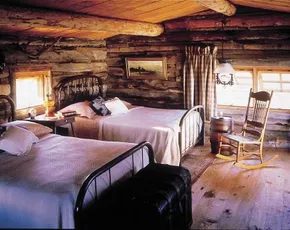
Authentic early 1900s cabin decor ideas
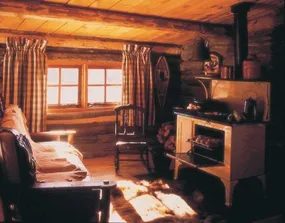
Pioneer life wasn’t easy. But it played out against a backdrop of relentless, beautiful wilderness. This homeowner leaned into that history. They stripped away modern clutter to create a sanctuary. The goal? A space that feels disconnected from the noise of today. A place to sit with the quiet rhythm of living close to the land.
The structure itself dates back to 1915. The furnishings follow suit. Nothing here feels out of place.
A cookstove provided both heat and meals, while an icebox helped preserve food.
These aren’t just props. They’re functional artifacts. The cast-iron cookstove anchors the room. It served as the heart of the home—keeping food warm and the cabin heated during harsh winters. Then there’s the icebox. Before electricity made refrigeration cheap, this wooden cabinet lined with zinc or tin kept perishables cold using blocks of ice.
Why does this matter for your own renovation? Because authenticity changes how you feel in a room. It grounds you. You don’t need to rebuild a log cabin to get the vibe. You just need to respect the era.
- Source period-appropriate pieces : Look for estate sale finds or reproduction antique furniture.
- Focus on utility : Every item should have worked hard in its day.
- Embrace the texture : Worn wood, iron, and linen tell a story better than polished surfaces.
The result isn’t a museum display. It’s a lived-in history. You can almost smell the woodsmoke and hear the ice cracking in the box. That’s the point.
Keeping It Simple: Furnishings That Don’t Distract
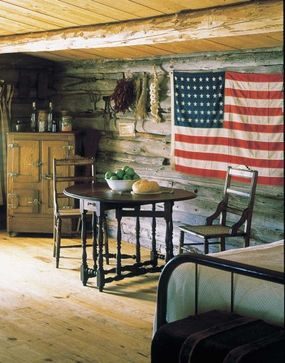
Furniture here isn’t about style points. It’s about function. You’ve got straight chairs. A rocker. Maybe a sofa for when you just need to sit still and think. Metal bedsteads keep things durable. No fancy upholstery rotting away.
“Life continues inside the cabin much as it has for almost a century.”
When the sun goes down, the electric grid doesn’t save you. You light a kerosene lantern. The smell is distinct. The light is warm, low, and honest. It changes how the room feels. Shadows get longer. Voices get quieter.
This is the heart of the DIY off-grid experience. You aren’t just building walls. You’re curating an atmosphere.
Why keep it this simple? Because complexity breaks. A complex entertainment system needs power. A power outlet needs a generator. A generator needs fuel. A kerosene lantern just needs oil and a wick.
Think about what you actually use. Do you need that sectional? Or just a place to put your feet up?
Strip it back.
Metal beds are easier to clean. Wood chairs don’t sag. Simple means you spend less time fixing and more time living.
The darkness isn’t an enemy here. It’s part of the design.
The Great Camps
Stop trying to make your living room look like a high-end resort. Or at least stop pretending it needs to be.
The Great Camp aesthetic isn’t about luxury. It’s about durability. It’s about furniture that survives a wet dog, a spilled beer, and a winter storm. You’re looking at the Adirondack style. Rough-hewn. Honest.
The big three? Log furniture. Animal trophies. And those iconic Adirondack chairs.
If you’re building this vibe, start with the wood. You don’t need perfect grain. You need character. Reclaimed barn wood works. Old beams work. The point is that it looks like it has a history. Painted white trim? No. Stained dark or left natural? Yes.
Now, the chairs. Adirondack chairs aren’t just for the porch. Put one in the corner of a bedroom. Put one by the fireplace. They define the silhouette of this style. Wide armrests. Slanted back. Built for sitting still.
Trophies are trickier. Not everyone wants a stuffed bear on the mantle. But the idea of the trophy matters. It’s about the hunt. The adventure. If you aren’t a hunter, swap the taxidermy for field guides. Old maps. Binoculars on a shelf. Dried pinecones in a wooden bowl. Same energy. Different ethics.
Why does this work? Because it feels earned. You didn’t buy it at a big-box store on Tuesday. You found it. You built it. Or it’s been in the family since 1920.
Lighting keeps this grounded. Think wrought iron. Bronze. Maybe glass with a smoke tint. No crystal chandeliers. Never.
The best cabin decor feels like it was assembled, not purchased.
Check the floors. Wide plank pine. Scratched is good. Waxed is better.
Want to know where to start? Look at your biggest piece of furniture. If it’s sleek and modern, cover it. Or replace it. A heavy, dark wood table anchors the room. It tells guests, “Sit down. Stay a while. Don’t touch that vase.”
It’s a style that rejects perfection. Which is exactly why it works.
What’s the one thing in your house that actually looks like it’s been used? Keep that. Get rid of the rest.
Why Gilded Age socialites fled to Adirondack Great Camps
Heat was the enemy. In the late 1800s, a New York socialite couldn’t just stay put when July turned stifling. She packed steamer trunks. First stop: Newport. Oceanfront mansions handled the summer swell. Then August hit. The train headed north. Into the Adirondacks. Where evergreens hugged the lakeshore.
This wasn’t a weekend trip. It was a migration.
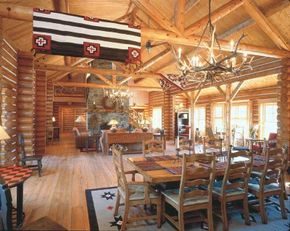
Families like the Vanderbilts and Rockefellers didn’t just visit. They built empires of wood. The “Great Camps” were sprawling compounds. Log buildings with rough exteriors but modern guts. Inside, the contrast was stark. You slept in handcrafted log beds. You ate meals prepared by servants at long dining tables.
The aesthetic was deliberate. Unpeeled logs. Split branches for trim. Bark left on. Why? To keep the outside in. The decor didn’t fight the forest. It echoed it. The main attraction wasn’t the chandelier. It was the view.
How to recreate Great Camp rustic luxury with unpeeled logs
Want that look? You don’t need a Rockefeller fortune. You do need a plan. The style relies on raw materials.
- Unpeeled logs : The core structure. They provide texture and warmth.
- Split branches and bark : Use these for trim. It adds organic detail without looking manufactured.
- Local craftsmanship : Original beds were built by locals. Replicate the sturdy, simple lines.
The goal is comfort within the wild. The decor reminds you where you are. Not despite the woods, but because of them.
The great outdoors was the main attraction, and the decor reminded guests of their surroundings.
So you keep it simple. Rough outside. Polished inside. A paradox of luxury.
Blending Old World Baronial Roots with Adirondack Simplicity
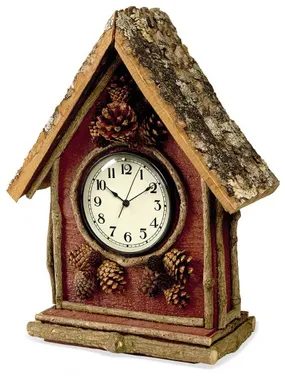
You want that Great Camp vibe? It’s not just about stacking wood. It’s a specific tension between the wild and the refined. Think twig furnishings next to mounted animal heads. Adirondack chairs sitting heavy against massive log walls. It works because it borrows from two very different places. The rugged simplicity of the Adirondacks. The dark, heavy opulence of Old World hunting lodges.
Mix them. Dark colors. Heavy European furniture. It grounds the space. Makes the logs feel like a frame, not just a wall.
Why does this look endure? Because it feels earned. It’s a back-to-nature aesthetic that doesn’t ask you to pretend you’re living in a treehouse. It asks you to sit in a heavy chair and acknowledge the woods outside.
Ready to dive into the actual furniture? The next section breaks down how to pick pieces that look like they’ve been in the house for decades.
Where to find more decorating inspiration
If you’re looking to pivot or expand, here are the usual suspects for style direction:
- Country Decorating Ideas
- Modern Decor Ideas
- Window Treatment Ideas
- General Decorating Ideas
- Kitchen Decorating Ideas
- Dining Room Decorating Ideas
- Bedroom Decorating Ideas
- Bathroom Decorating Ideas
- Home Office Decorating Ideas
- Home Spaces
- Interior Decorating
Designed by Nature
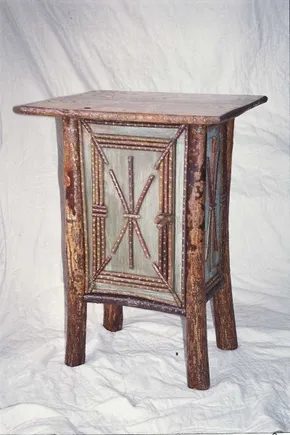
Why Adirondack Rustic Furniture Looks Nothing Like Store-Bought Pieces
Modern factories crank out cabin decor using lathes and precision machines. They want uniformity. They want fancy ornaments that look identical across thousands of units. The rustic furniture makers of the Adirondack north woods didn’t have that luxury. They had ingenuity. They had the forest.
This isn’t about mass production. It’s about using what’s right outside your door.
From massive case pieces to sturdy chairs and tiny wooden boxes, the goal was always the same. Highlight nature. Don’t hide it.
Why does rustic style matter?
Because it forces you to work with the grain, not against it. You aren’t imposing a design on the wood. You’re revealing it.
If you’re trying to replicate this look yourself, forget the perfectly turned legs. Look for knots. Look for bark edges. The beauty isn’t in the smoothness. It’s in the texture.
The furniture and accessories created in rustic style all spotlight the beauty of nature.
That’s the core rule. Everything else is secondary.

Foraging for Victorian and Arts & Crafts Design Elements
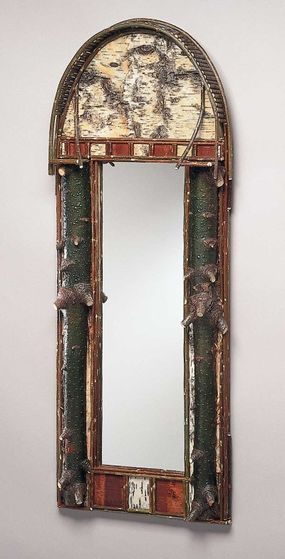
They didn’t just buy materials. They hunted them. Twigs, bark, reeds, roots, branches. Anything the forest floor offered up got swept into the workshop. It was raw, unpolished stuff.
The patterns followed the trends. If Victorian was in vogue, the work reflected that density and formality. Arts & Crafts? Then it was about the honest joinery and the natural grain. They watched what was popular and mirrored it in their handiwork.
You can do the same today. You don’t need to reinvent the wheel. Look at the style you want to emulate. Go find the materials that match that aesthetic.
Style dictates the material as much as the method.
It’s about matching the texture to the era. Rough bark for rustic Arts & Crafts. Smooth, dried reeds for something more structured. The craftspeople knew this. They let the fashion of the day guide their hands.
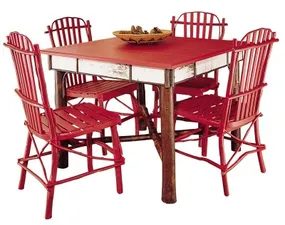
Why Adirondack rustic style still works today
The Great Camps aren’t what they used to be. That era of grand, remote luxury faded long ago. But the design didn’t vanish. It just evolved. Look around. You’ll see it in the furniture. It’s in the rough-hewn chair legs, the exposed joinery, the way wood is left to look like wood rather than painted over.
New makers get this. They aren’t just copying history. They’re honoring it. There’s a specific beauty in that imperfection. It feels grounded. Real.
If you’re thinking about bringing this look into your own space, start with the materials. Reclaimed barn wood. Thick, solid timber. Pieces that show their grain. Don’t hide the knots. Let them speak.
The appeal isn’t in the polish. It’s in the story the wood tells.
You can find new furnishings that capture this vibe without hunting through antique stores. Many artisans now produce accessories and furniture that lean into the rustic tradition. It’s accessible. It’s practical. And it ages well.
Which materials hold up best? Solid hardwoods, obviously. Pine adds a softer, lighter touch. Avoid particle board. It won’t survive the look, let alone the wear.
Why does this style endure? Because it resists the sterile. It adds texture to rooms that might otherwise feel flat. It’s a reaction against the smooth, the synthetic, the mass-produced.
Start small. A single side table. A shelf. See how it sits in the room. Does it feel heavy enough? Does it anchor the space? If not, scale up. But don’t overdo it. Rustic isn’t cluttered. It’s deliberate.
Adding a Wild West Touch to Your Cabin
You want that rugged frontier vibe. Not the cheesy, over-the-top kind with plastic tumbleweeds. The real deal. Leather. Wood. Rust.
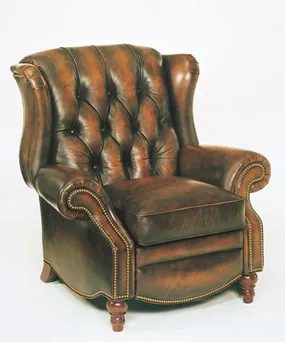
Think about the materials first. Saddle leather brings in that worn, lived-in look. A distressed cowhide rug anchors the room without shouting for attention. Pair it with rough-hewn wood furniture, maybe a reclaimed barn door converted into a side table.
Lighting matters. Forget sleek modern fixtures. Go for wrought iron sconces or lantern-style pendants. The metal should look like it has seen some dust.
The key is texture. Smooth surfaces kill the Wild West aesthetic.
Add some color, but keep it earthy. Terracotta, sage green, dusty blue. These colors mimic the desert landscape. They don’t fight each other. They blend.
Don’t forget the details. A vintage compass on the mantle. An old map framed in simple wood. Maybe a collection of antlers, if that fits your style. It’s about curation, not clutter.
Why does this style work so well in cabins? Because it matches the structure. Cabins are already rustic. The Wild West decor leans into that natural ruggedness. It feels intentional.
Where to start? Pick one focal point. Maybe the fireplace wall. Hang a large piece of western art or a textured tapestry. Build out from there.
How much is too much? When it feels like a costume shop. If you can still relax in the space, you’re good. If you feel like you’re in a saloon set, tone it down.
Which items are essential? A sturdy wooden chair. A soft throw blanket. Good lighting. Those three elements hold the room together.
Compare this to a modern farmhouse style. Farmhouse is cleaner, whiter, softer. Wild West is darker, rougher, warmer. Choose based on the mood you want.
Do it yourself. Paint a canvas with a simple geometric pattern. Distress a wooden box with sandpaper. It adds character without the high price tag.
Safety first if you’re using old hardware or repurposed items. Check for stability. Make sure electrical fixtures are up to code. Style shouldn’t cost you safety.
The result? A space that feels grounded. Authentic. Like it belongs in the landscape outside your window.
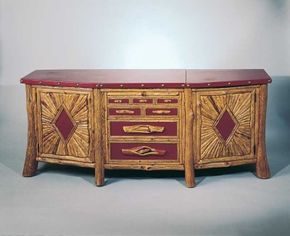
East Coast Cowboy
You don’t need a ranch in Montana to pull this off. The East Coast Cowboy vibe is real. It’s about taking those rugged, hardworking aesthetics and squeezing them into a space that might not have wide-open plains outside the window.
The core philosophy stays the same. Honest materials. Rugged forms. No fluff. But the execution shifts. It becomes less about the actual frontier and more about the idea of it. A manufactured nostalgia, sure, but one that feels grounded in texture and history.
Think leather. Lots of it. Not the shiny, perfect kind from a department store. The cracked, worn, broken-in kind that tells a story. Pair that with raw wood planks. Maybe a saddle chair in the corner. Not for sitting, just for looking.
The colors stay natural. Earth tones. Browns, tans, deep greens. Think dried sage and river stone. If you’re on the East Coast, you might lean heavier into the woods. Darker woods, deeper greens. Let the cabin exterior inform the interior palette.
How to blend rustic with refined
The trick here is balance. You want rugged, but you don’t want cave-dweller. Especially in smaller spaces or historic homes where the architecture might be more refined.
Start with the big pieces. A sturdy plank table. Leather chairs. Keep the forms simple. Native American pottery works well here. Simple shapes. Earthy glazes. It grounds the room.
Then add the softness. Woven blankets. Not just for show, but for use. Throw them over the back of the sofa or the foot of the bed. They add texture and warmth. Flannel works too. Heavy cotton. Nothing silky.
Lighting matters. You want warm, low light. Lanterns. wrought-iron fixtures. Avoid bright, clinical LEDs. You’re trying to create a mood, not a hospital.
Where to find the right pieces
You don’t need to raid a movie set. Thrift stores are goldmines for this. Look for vintage leather goods. Old saddles, even if they’re broken, make great wall art. Woven baskets. Wooden crates.
Antique markets are better for furniture. Look for pieces with history. Chipped paint. Worn legs. That’s the point. If it looks new, it’s wrong. You want the patina of use.
For textiles, check out local weavers. Or browse online for Southwestern patterns. Navajo rugs. Aztec prints. But keep it subtle. Don’t overwhelm the space. One good rug is enough.
Why this style works now
People are tired of minimalism. It’s cold. Sterile. We want warmth. We want stories. The Western theme, even the East Coast interpretation, offers that. It’s tactile. It invites you to touch the leather, feel the weave of the blanket, run your hand over the rough wood.
It’s also practical. Rugged furniture lasts. It can handle kids, pets, and messy living. It doesn’t scream “don’t touch.” It says, “live here.”
And let’s be honest. It’s cool. There’s a romance to the cowboy mythos. Even if you’ve never ridden a horse, you can tap into that sense of freedom and simplicity.
Tips for avoiding clichés
Don’t
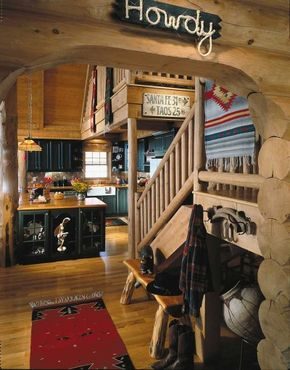
Mixing Western and Southwestern Styles in a Log Home
That “Howdy!” plaque isn’t just decor. It’s a vibe check.
If you see that hanging over an entryway, you know the owners lean into whimsy. They don’t take themselves too seriously, especially when it comes to cabin aesthetics.
This specific log home sits in the Southeast. Geographically, that’s odd for Western or Southwestern design. But the owners aren’t trying to replicate a Utah ranch. They’re blending genres.
The result? A lively space that feels comfortable, not curated.
Bright colors clash with rustic wood. Folksy artwork shares wall space with textured textiles. It’s a mix of styles that usually fight each other. Here, they work.
“A willingness to mix styles makes this home both lively and comfortable.”
You don’t need a desert landscape to pull off Southwest vibes. You just need the courage to hang a funny sign and paint a wall yellow.
The log structure provides the Western backbone. The decor adds the Southwestern spice. It’s not about authenticity. It’s about character.
Who cares if the ranch style doesn’t match the latitude? The home feels real. That’s the point.
How to layer bold colors with warm wood tones
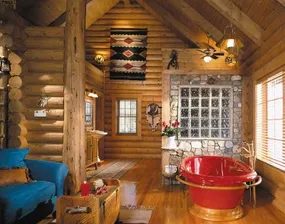
The color scheme here isn’t subtle. It hits you with painted cabinetry, woven Navajo rugs, and denim upholstery. Even the master bath features a red tub that demands attention.
But it doesn’t feel chaotic. Why? The logs.
They are rounded and finished in a light honey tone. This specific finish softens the impact of the brighter elements. It complements the rich wood flooring below. The contrast works because the wood provides a warm, natural baseline.
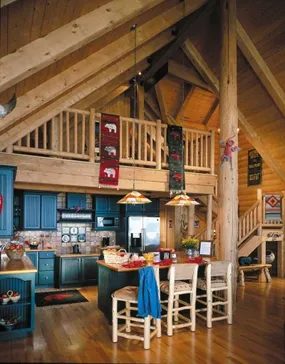
The layout supports this relaxed vibe. An informal, open floor plan connects the spaces. A loft overlooks the kitchen and great room below.
The design underscores a warm welcome.
It’s less about strict zones and more about flow. The elevated view from the loft keeps the spaces connected visually. You get the color pops without feeling boxed in.
Simply Western
The shift here is subtle but distinct. You aren’t just decorating a cabin. You’re leaning into a specific aesthetic. Simply Western. It sounds contradictory. Simple usually means stripped back. Western often implies heavy textures, leather, and bold patterns.
But they work together. If you force them, it gets cluttered. Fast. Overwhelming. The trick is restraint. You pick a few strong elements and let them breathe.
Start with the finishes. Wood is non-negotiable. But not every board needs to be distressed or dark-stained. Lighter woods, like pine or oak, keep the space feeling open. Pair that with clean lines in your furniture. Avoid ornate carvings. Stick to blocky shapes. A sturdy wooden table. A simple leather sofa.
Accessories matter more than you think. A single woven basket adds texture without noise. A horsehair mirror frame nods to the style without shouting it. Keep the color palette grounded. Think sage greens, dusty terracottas, and warm beiges. Maybe a pop of deep red in a throw pillow. That’s it.
Don’t overdo the “western” signifiers. No giant steer skulls unless you’re ready to commit. No every surface covered in fringe. It becomes a theme park, not a home.
Less is more, especially when mixing rustic textures with modern simplicity.
You want the space to feel lived-in. Authentic. Like someone actually sleeps there and cooks dinner. Not like a showroom for a cowboy boutique.
Check your lighting. Harsh overheads kill the mood. Go for warm bulbs. Brass or copper fixtures add a nice touch without looking dated.
It’s about balance. Rough wood against smooth leather. Natural fibers against clean paint. You’re building a vibe, not a museum exhibit.
If you’re unsure, start small. Change the textiles. Swap out a rug. Add a few pieces of art that feel personal, not generic. See how it feels. Adjust from there.
The goal is comfort. Style that doesn’t demand attention but sits quietly in the background. That’s the Simply Western look. Quiet confidence. No fuss.
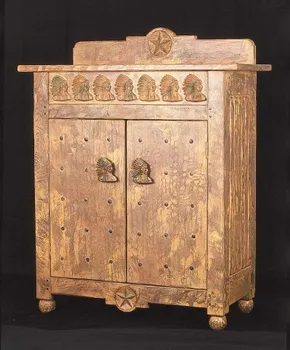
Simple structures for authentic Western cabin decor
You don’t need architectural complexity. Southwestern, ranch, and Western homes lean on structural simplicity. Fancy detailing gets in the way.
The goal is authenticity. Not a theme park facade.
Use natural materials. Keep them raw. Wood. Stone. Adobe. When you treat these elements with restraint, the style lands. It rings true.
Complicate the build, and you lose the vibe. Strip it back. Let the materials speak. That’s how you get the cabin feel without fighting the structure.
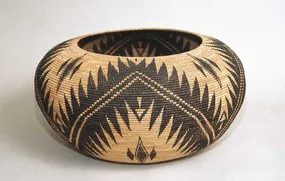
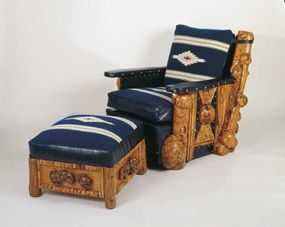
Nail the Simply Western Look with Key Furnishings
You can’t just slap paint on the walls and call it a day. The finishings matter. They make or break the vibe.
Start big. Oversize furnishings are non-negotiable here. Look for sofas or armchairs upholstered in natural-colored leather. Think tan, cognac, or worn brown. It ages well. It feels lived-in. It fits the narrative.
Now look down. Navajo rugs anchor the room. They bring that geometric, earthy pattern to the floor. Without them, the space feels flat.
Then get personal. This is where you add the twang. Don’t buy generic decor. Hunt for pieces that actually interest you. Maybe it’s Native American pottery from a local artisan. Maybe it’s a pair of scuffed cowboy boots on a shelf. These items tell a story.
The right accessories turn a house into a home.
Keep it authentic. If you don’t care about the boots, don’t buy them. Pick what resonates. The style falls apart if it feels forced.
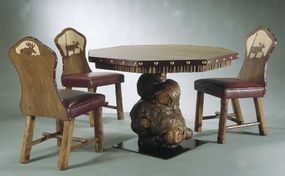
Why Your Light Fixtures Deserve More Attention
Most people skip straight to paint samples and flooring. They miss the one thing that actually changes how a room feels. Your light fixtures.
They aren’t just about visibility. They set the mood. They define the character. A bare bulb kills a vibe faster than bad weather.
You don’t need expensive designer gear. In fact, the best finds are often the weirdest ones. Think antler chandeliers if you want that rugged lodge feel. Or maybe those kitschy chuck-wagon table lamps for a touch of retro whimsy. The hunt for unique home lighting ideas is where the fun actually begins.
It leads you to places you wouldn’t normally visit. Thrift stores. Estate sales. Online marketplaces where someone else’s trash is your stylistic gold.
“Lighting is the jewelry of the home.”
Wear it boldly. Match it weirdly. Don’t be afraid to mix a serious chandelier with a silly lamp. That contrast? It’s what makes a space feel lived-in. Real. Not like a showroom where nobody actually sleeps.
Look around your house right now. What’s on the table? Is it doing anything? If it’s just taking up space, swap it. Find something with a story. Something that makes people ask where you got it.
That’s the win. Not just light. Personality.

North Woods Getaway
Think you’ve seen it all? Think again. The north woods vibe isn’t just about log cabins and moose heads. It’s about texture. Raw wood. Stone. The smell of pine. You can bring that feeling into any room, even if you live in the city.
Start with the floor. If you have hardwood, leave it bare or add a thick, shaggy rug. Something that feels like moss underfoot. Use neutral tones. Sage green. Slate blue. Earthy browns.
Lighting matters. Skip the bright overheads. Use lamps with fabric shades. Or string lights. They mimic firelight. Warm. Flickering.
Add natural materials. Woven baskets for storage. Wooden bowls on the coffee table. A throw blanket made of wool. These things ground the space. They feel real.
Don’t forget the windows. Keep treatments simple. Linen curtains. Light filtering. Let the outside in, but soften it.
Where do you find these pieces? Thrift stores. Antique shops. Online marketplaces. Look for imperfect items. Scratches tell a story. Patina adds depth.
Why does this style work? Because it’s calm. It’s slow. It invites you to sit down and stay.
Which colors fit best? Stick to nature’s palette. Moss green. River stone gray. Bark brown. Avoid bright primaries. They clash with the rustic feel.
How do you mix old and new? Pair a vintage wooden chair with a sleek metal lamp. Contrast creates interest. It keeps the room from looking like a museum display.
Safety first. If you’re adding candles or fireplaces, ensure proper ventilation. Use sturdy holders. Never leave flames unattended.
The goal is comfort. Not perfection. Let the room breathe. Let it feel lived in. That’s the secret to the north woods look. It’s not just decor. It’s a feeling.
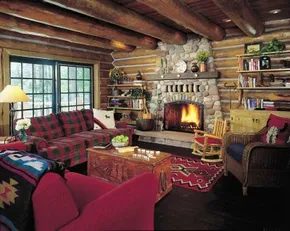
Slow down for the North Woods cottage vibe
Quaint cabin decor isn’t about clutter. It’s about the North Woods cottage theme. That means embracing the pace. Time actually slows down there. You spend long afternoons walking dirt roads. Picking wildflowers for a simple bouquet takes hours. It’s fine.
Evening twilight stretches out. Lots of room for noise. Rowdy games of dominoes work. Quiet time with a favorite novel works too. Dinners turn into feasts. Fresh vegetables. Cookouts flavored by fresh air. Then the morning. You wake to sunshine. Not an alarm clock. Who needs one?
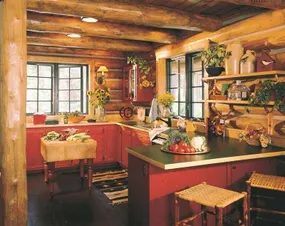
Lake Breeze Views and Rustic Cabin Details
The windows in this log cabin don’t just sit there. They are quaint, divided-pane units that open wide. That design choice matters. It lets the cool air off the lake rush straight into the living space. You feel the breeze before you even step outside.
Inside the kitchen, things get louder visually. Cheery red cabinets dominate the space. It’s a bold pick for a rustic build, but it works. Putting together picnics feels more fun when you’re surrounded by that color. It sets a tone. Casual. Ready for outdoor eating.
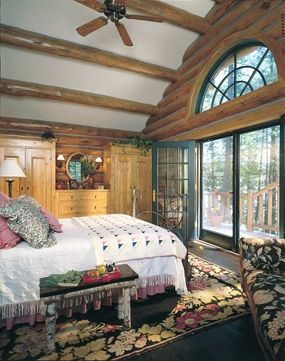
The bedroom takes a quieter approach. French doors stand ready to open. They don’t just let light in. They bring in sound. The forest rustling nearby. The lake’s gentle lapping against the shore. It pulls the outside environment directly into your private space. Why keep nature out?
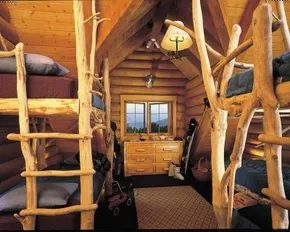
Re-Creating the Camp Cabin Vibe
You want that woodsy feel. Not just a tent in the backyard. You’re talking about the cabin aesthetic. The one where the air smells like pine needles and woodsmoke. You can fake it. But you need the right furniture.
Skip the plastic lawn chairs. They kill the mood instantly.
Look for rustic wood pieces. Reclaimed pallets work if you sand them down properly. Wear gloves. Wear a mask. Dust gets everywhere. You want rough-hewn tables, maybe a bunk bed setup if you have the space. Think log cabin, but make it safe for actual sleeping.
“The key is texture. Smooth surfaces don’t belong in a camp cabin.”
Add lanterns. Battery-powered ones if you’re worried about fire hazards. Real fire is fun, but insurance isn’t. Use them sparingly. Too many lights look like a disco, not a campsite.
Layer the Textures
Cotton is too stiff. You want linen. Or canvas. Throw blankets made of wool or heavy cotton blends. Layer them on the beds. Messy is good here. A perfectly made bed looks like a hotel. A camp bed looks lived-in.
Pillows? Yes. But not feather down. Use outdoor-grade pillows. They handle humidity better. If you’re setting this up in a screened porch, you need materials that won’t rot.
Check the flooring. If it’s concrete, lay down a jute rug. It adds warmth. It hides the cold hardness underneath.
Final Touches for the Nostalgic Camper
What about decor? Keep it minimal. A vintage compass on the wall. A framed map of a local forest. Maybe some pinecones in a glass jar. Don’t overdo it. Clutter ruins the rustic vibe.
Lighting matters most. Dimmers are your friend. You want shadows. Shadows create mystery. Mystery sells the fantasy.
Are you ready to pitch your tent in the living room? Or are you committing to the full cabin conversion?
The choice is yours. Just make sure the wood is treated. Termites hate you.
Build a Memory Wall That Actually Looks Good
You want that worn-in, nostalgic vibe. The kind that smells like pine needles and old canvas. It’s not hard to pull off. You just need to stop hiding your stuff and start displaying it.
Take the gear you actually use. That dented helmet. The frayed rope. The souvenir you bought at a gas station three states back. Hang it up. Lean it against the wall. Don’t put it in a closet.
Wood paneling or even rough-hewn logs on the walls help here. Why? Because kids will throw things. Pillows, shoes, maybe a small rock. Wood takes a beating. Drywall doesn’t. If you’re going for a camp aesthetic, you need surfaces that survive a wrestling match.
“Indestructible walls aren’t just practical; they’re part of the theme.”
Scatter a few Navajo rugs on the floor. They add color without needing a vacuum every five minutes. Add some Western touches—maybe a pair of old boots or a lasso hanging near the door. It sparks the fantasy. It tells the story of the cowboy life without saying a word.
Keep it simple. A place to sleep. A place to stash your gear. A wall that remembers where you’ve been.
That’s the whole point. You’re not building a museum. You’re building a place where memories stick. Like burrs on a dog’s fur. Annoying, but you keep them because they’re proof you were out there.
Why cottage style embraces the imperfect
There is a specific kind of magic in returning to the same patch of woods every summer. You go back. Year after year. The walls start holding memories. Not in a sentimental, weepy way. In a tactile one.
Cottage decor isn’t about polish. It’s about history. The humble gets celebrated. The slightly broken gets cherished. If it looks like it has a story, it belongs.
Take the rocks.
A toddler finds them on a hike. Smooth, gray, unremarkable to most. To the cottage dweller, they are art. You put them on the windowsill. You display them like museum pieces. Because they were there.
Then there is the enamel pitcher. It’s dented. The paint is chipped near the handle. It used to hold lemonade. Now it holds wildflowers pulled from the ditch outside. That dent? It’s character. It proves the object survived.
Sleeping arrangements follow the same logic. No crisp, hotel-style linens. Instead, you get snowy chenille bedspreads. They are soft. They feel lived in. They look better with wrinkles.
Why does this work? Because perfection feels sterile. Imperfection feels like home. You aren’t curating a showroom. You are curating a life.
The items that have seen better days are the ones that stay.
You don’t need expensive antiques. You need presence. A rock. A pitcher. A rough blanket. That’s the aesthetic. It’s easy to replicate if you stop trying to make things look new.
Let them age. Let them dent. Let the kids collect stones. That’s how you build the look.
Where the Gear Meets the Gimmicks
Summer camps are a weird mix. You’ve got the serious stuff stacked high against the wall. Fishing poles, sturdy canoe paddles, those heavy iron horseshoes for the pitch. Real tools for real dirt-and-water play.
Then you turn the corner.
There it is. The kitsch. Silly signs that make you roll your eyes. Cheap souvenirs that no one asked for but everyone buys. They don’t just sit there. They find a place. Right next to the high-performance outdoor gear. It’s a strange juxtaposition. Practicality elbowing elbow with pure nostalgia bait.
Why does this happen?
Maybe because camping isn’t just about survival skills. It’s about the vibe. The memory. You need the paddle to get across the lake, sure. But you need the funny sign to remember the joke you told while you were there.
It’s a cluttered, chaotic sort of charm. And honestly? It works.
Comfort isn’t an afterthought here. It’s the foundation.
This cabin style doesn’t judge your messy hair or stained jeans. You walk in. You let go. The air feels lighter. That’s the point.
Where traditional log homes might feel heavy, this approach strips it back. Raw timber meets clean lines. It’s a mashup. Rustic texture on one side, sleek modernity on the other. The result? A space that feels grounded but never stuck in the past.
Blending Log Cabin Charm with Contemporary Design
You want that modern log cabin aesthetic without looking like a lodge from 1995. Start with the walls. Keep the logs, but paint them. White. Light gray. Even a soft sage. It brightens the room instantly.
Furniture should be low-profile. Think mid-century modern sofas in neutral fabrics. No overstuffed, floral armchairs. Add metal accents—brass or matte black—to bridge the gap between wood and steel.
The secret is contrast. Rough wood against smooth concrete or glass creates visual tension. It keeps the eye moving.
Lighting matters more than you think. Avoid warm, yellow bulbs that make everything look orange. Stick to 3000K or 4000K LEDs. They render colors accurately. They make the wood grain pop without making the room feel like a cave.
Which Materials Work Best in a Modern Cabin?
Not all wood is created equal. For a contemporary look, choose lighter woods. Birch, maple, or pine with a clear finish. Dark walnut can work if used sparingly—maybe just a dining table.
Pair that with natural stone. Not chunky fieldstone. Thin veneers. Slate tiles. It adds weight without bulk.
Textiles need to breathe. Linen curtains. Wool throws. Avoid velvet. It absorbs light and heat. You want air flow. You want the room to feel open.
How to Update Window Treatments for a Cabin
Skip the heavy drapes. They block light. They block the view. Use Roman shades in a light-filtering fabric. Or just go bare. If you need privacy, install blinds inside the window frame. It keeps the exterior clean.
Ceiling fans with wooden blades work well. They tie the room together. Just make sure they match the floor tone, not the furniture.
Where to Start Your Renovation
Look at the ceiling first. Exposed beams are great, but sand them down. Paint them white if the room feels too dark. It raises the perceived height.
Check your flooring. Hardwood is ideal. If you have carpet, replace it. Area rugs add warmth without sealing the room off.
Quick Reference for Related Styles
If you’re bouncing between ideas, these categories help narrow the focus:
- Country Decorating Ideas
- Modern Decor Ideas
- Window Treatment Ideas
- Kitchen Decorating Ideas
- Bedroom Decorating Ideas
- Bathroom Decorating Ideas
- Home Office Decorating Ideas
Today’s Log Looks
The trend is shifting. Less is more.
You don’t need a fireplace made of river rocks to feel cozy. A simple gas insert in a clean steel surround works. It’s efficient. It looks sharp.
Add one large piece of art. Abstract. Black and white. It grounds the space.
Don’t over-accessorize. Let the

Mixing Plywood and Logs in Modern Log Homes
Plywood wasn’t always the go-to for luxury interiors. In the 1930s, it was just a new way to build structure. Midcentury modernists grabbed it anyway. They loved that fresh, clean face. They probably looked down on log homes back then. Called them old-fashioned. Maybe even primitive.
But here is the twist. That style works. Actually, it fits surprisingly well.
The secret? Keep it light. Whitewash those wood walls. Install large windows. Pale floors help too. The rounded rhythm of log walls creates a nice contrast. It plays off the sharp, geometric lines of contemporary furniture. It makes the space feel intentional.
“The rounded rhythm of log walls makes an intriguing foil for the pared-down geometric shapes.”
Kitchens are the best place to try this. Stainless steel appliances look great against logs. Stone or cement countertops ground the space. A contemporary kitchen wins over picky guests. Logs add warmth where things might feel too cold. Too austere.
Metals work too. Matte finishes are better than shiny chrome. Think stair railings. Faucets. Light fixtures. Metal cools the warmth of the wood. It adds a contemporary flair without fighting the logs.
High ceilings help. Vaulted spaces let you hang modern art. Or install banks of windows. Open spaces breathe.
Ready to see how high ceilings balance with comfort? The next section covers the decor details for a livable, stylish log cabin.
For more decorating ideas, see:
- Country Decorating Ideas
- Modern Decor Ideas
- Window Treatment Ideas
- Decorating Ideas
- Kitchen Decorating Ideas
- Dining Room Decorating Ideas
- Bedroom Decorating Ideas
- Bathroom Decorating Ideas
- Home Office Decorating Ideas
- Home Spaces
- Interior Decorating
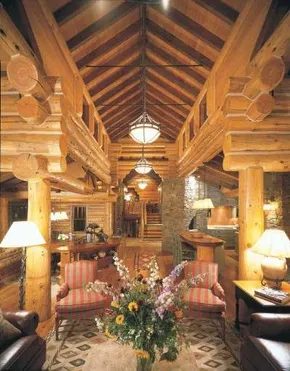
How to balance grand architecture with cozy cabin vibes
Eclectic style isn’t just about mixing patterns. It covers the spectrum. From grand gestures to snug corners. This log cabin proves the point. The secret? Balancing awe-inspiring structure with actual livability. You want height. You also want warmth.
Handcrafted logs provide that heat. Literally and figuratively. They ground the space. Meanwhile, the decor adds color. Comfort follows.
The vaulted great room merges living, dining, and kitchen zones. But keep their identities distinct.
It’s a big space. One volume. Yet each area feels separate. Elegant, but connected.
Take the kitchen bar. It’s mirrored by a low wall. That wall defines the dining zone. No doors. Just visual cues. Wood floors run throughout. So do the log posts and beams. They tie it all together.
The stone walls in the kitchen don’t stop there. They repeat in the master bedroom. There, round log beams switch out for ornate timber-framed trusses. Same material. Different feel. That’s how you keep the style cohesive without getting boring.
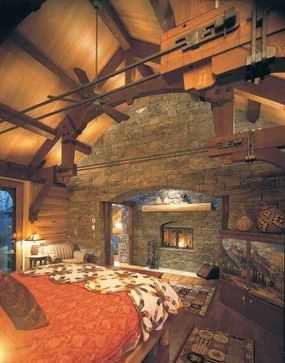
A Woodsy Retreat
Classic styling isn’t about chasing trends. It’s about grounding yourself in materials that age well. If you want that cabin feel, you need to look at texture first. Wood isn’t just a surface. It’s the soul of the room.
You don’t need a log cabin to pull this off. You need the right pieces. Raw wood floors? Good. Reclaimed beams? Better. The key is keeping it honest. No veneer tricks that peel after a year. Real stuff.
How do you create enduring style in your wooded retreat? You strip back the noise.
Choosing the Right Wood Tones
Not all brown is created equal. Light oak reads differently than dark walnut. Pick one dominant tone and stick with it. Mixing too many wood species looks cluttered, not curated.
“Let the wood speak for itself.”
Use lighter woods for walls to keep the space open. Save the darker, richer tones for furniture and floors. This creates depth without making the room feel like a cave.
Layering Textures for Warmth
Wood is hard. You need soft things to balance it. Think wool throws. Linen cushions. Maybe a sheepskin rug on a hard floor.
Why does this matter? Because contrast creates interest. A smooth wooden table looks flat until you put a rough-hewn bowl on it. Or a soft runner. The eye moves. The room breathes.
Don’t forget the windows. Heavy drapes can kill the airy feel. Go for linen or cotton. Simple rods. No elaborate valances. You want light to come in, not get trapped in fabric.
Keeping It Timeless
Skip the plastic accents. Skip the synthetic rugs. They date the room instantly.
Look for natural fibers. Jute. Sisal. Leather. These materials develop patina. They get better with age. That’s the point of classic styling. It shouldn’t look brand new in ten years. It should look lived-in. Loved.
If you’re renovating, check your hardware. Brass or black iron works well. Chrome feels too modern, too cold. Stick to finishes that complement the wood grain rather than fight it.
It’s not about perfection. It’s about comfort. Can you sit there for hours? Can you read a book without the room shouting at you? If yes, you’re good. If no, strip another layer.
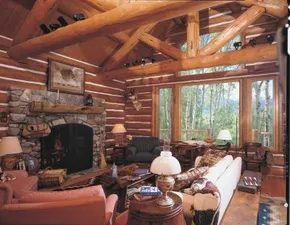
Why rustic charm needs a cozy layer
You don’t need much to survive in the woods. Running water. A stove. A bed. That’s it for the basics.
But survival isn’t the point. Enjoyment is.
The great outdoors is the main event, sure. But when you’re done hiking, you want to sit somewhere that doesn’t feel like a shelter. You want it to feel like home.
This cabin gets it. It leans into the classic log cabin look without sacrificing comfort. The stone fireplace anchors the room. Round log ceiling trusses add that rugged texture. Window seats offer a spot to stare at the trees. And yes, there’s a sleeping loft for when you need space.
Comfort isn’t an afterthought here. It’s built in.
Warm wood floors underfoot. Generous seating. Layers of pillows and throws stacked high. It’s the difference between enduring the cold and embracing it.
A cabin should be a refuge, not just a roof.
Do you want to sleep rough? Cool. Do you want to sink into a cushion after a day of chopping wood? That’s better.
The decor isn’t trying to be pretty for the sake of it. It’s trying to be lived-in. Real life happens in layers. Blankets. Books. Mugs on the sill.
That’s how you make a getaway stick.
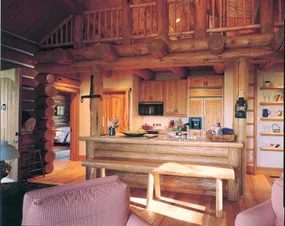
How to layer Native American patterns with country plaid for a masculine cabin vibe
Style isn’t about picking one lane. It’s about throwing the map away.
This cabin works because the owner didn’t care about rules. They mixed Native American designs with rugged country plaid. Then they threw in masculine stripes and paisleys for the bedroom. The result? A space that feels lived in. Not staged.
Look at the seating area. Country plaid upholsters the chairs around the fire. It’s warm. It’s familiar. But then you glance at the walls or the floor. There’s Native American artwork. Maybe a pillow. A throw blanket. These pieces aren’t just decor. They’re anchors.
The secret is layering comfort without losing edge.
The bedroom goes harder on the texture. Stripes. Paisleys. Layers of it. It’s not chaotic. It’s intentional. You want that masculine feel? Go for the patterns that have weight. Not pastels. Not minimalism.
How do you pull this off without it looking like a thrift store bin exploded?
Start with the largest surfaces. Upholstery. Rugs. Then add the smaller hits. Pillows. Art. Keep the color palette grounded. Let the patterns talk to each other.
Why does this mix work? Contrast. Soft wool against hard wood. Geometric tribal lines against soft, worn paisley. It creates visual tension. And tension keeps people looking.
You don’t need a designer to do this. You just need the guts to mix things that don’t “match” in the traditional sense. Grab that plaid sofa. Find that vintage Native American rug. Throw them together. See what happens.
It might look weird for a day. Give it a week. Then it’s just home.
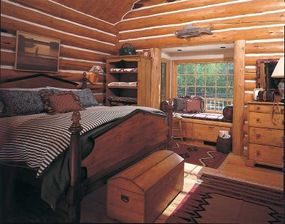
The white birches. They shimmer in the light. Summer greens fill the frame. It’s not just scenery. It’s a design constraint. You don’t fight that view. You lean into it.
Setting the cabin aglow with color and texture
How do you keep the inside from feeling cold when the outside is all nature? Warmth. You need it. Texture is the only way to get it without clutter.
Layer things up. Rough linen against smooth stone. A chunky knit throw on a sleek sofa. The contrast is what makes it feel lived-in. Not curated. Lived-in.
“Color shouldn’t shout. It should whisper.”
Pick earth tones. Moss. Clay. Slate. Let the white birch outside provide the brightness. Your interior needs depth. Darker woods, maybe. Or a rug with a complex pattern. Something to anchor the room.
Why add texture? Because flat surfaces feel sterile. Wood grain, woven baskets, ceramic vessels. Touch matters. You want to run your hand along a shelf and feel the history of the material.
Don’t forget the lighting. Warm bulbs. Lamps with fabric shades. They soften the hard edges of cabinetry and stone. It’s about making the space glow from within. Not just reflect the sun.
Which colors work best? Look at the forest floor. Browns. Greens. Greys. Accents of burnt orange or deep red can help. But keep them grounded.
It’s a balancing act. Too much texture feels messy. Too little feels empty. Start with one focal point. A textured wall. A big area rug. Build out from there.
The view is perfect. Your interior should support it. Not compete.
What’s next? You’ll need to decide where the light comes from. Natural or artificial. Both have a role.
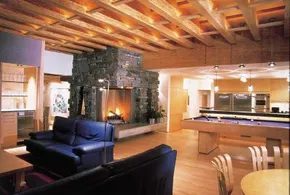
How a Stone Fireplace Anchors Modern Cabin Living
Three-sided stone fireplaces do more than heat a room. They create gravity. In this ski resort guest house, the hearth sits center stage, pulling everyone in. It’s a natural gathering spot, no matter how cold it gets outside.
The design leans hard into that woodsy setting. But it refuses to look rustic. Planed wood beams and raw plywood form the backdrop. Clean lines win out over clutter. Some of the furniture was even designed by the architect. Built-in. Tailored.
Then comes the punch. Cobalt blue sofas. A matching pool table. That specific shade cuts through the neutrals. It provides a jolt of color in the great room. Without it, the space might feel too safe. Too beige.
Want that same impact? Pick one strong hue. Repeat it twice. Once on seating. Once on a functional piece like a game table. The rest stays muted. Let the materials speak.
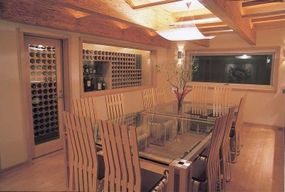
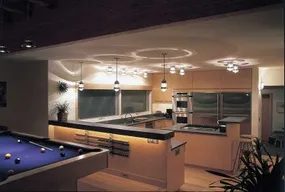
The Kitchen Meets the Sky
Black countertops don’t just sit there. They anchor the room. Against the cold shine of stainless-steel appliances, that deep matte or polished black creates a sharp, intentional contrast. It’s not subtle. It’s bold.
The kitchen glows in the evening. Warm light spills across those dark surfaces. It feels inviting. Cozy, even. But here’s the twist. No one stays in for long.
The real draw is upstairs.
The rooftop deck pulls everyone out. Why? Because the view of the slopes doesn’t lie. It’s stunning. Unobstructed. Guests drift up there with drinks in hand. They sink into the hot tub. The warmth of the water mirrors the kitchen below, but the perspective shifts entirely.
You can see the landscape. Really see it.
The design choice here isn’t just about aesthetics. It’s about flow. The kitchen is the heart. The rooftop is the lungs. One grounds you. The other expands your horizon.
If you’re planning a similar setup, consider the visual weight of your materials. Heavy black stone in the kitchen needs light, airy transitions elsewhere. Don’t let the darkness swallow the whole house. Let the light escape upward.
Where else can you relax like that? Nowhere else, really.
Stop treating rustic like a museum exhibit. You don’t need to source every nail from a 19th-century blacksmith to get the look. Mixing eras actually saves you money and keeps the space from feeling like a theme park.
The trick is balance. If you pile on too much distressed wood, it gets heavy. Counter it with something light. Glass. Metal. Even plastic if it’s the right shape.
How to mix new-age rustic with modern pieces
Start with the anchor. A reclaimed timber dining table works. A slate coffee table does too. Once you have that heavy, textured base, pull back. Hard.
Add a sleek metal chair. Maybe one with thin legs. The contrast makes the wood look more substantial without adding visual weight. It’s about tension. The roughness of the grain against the smoothness of powder-coated steel.
Lighting is where most people mess up. Skip the antler chandeliers if the room feels dark. Go for a clean-line pendant. Brass or black matte. It bridges the gap. You get the warmth of the material but the simplicity of the form.
Textiles matter. Don’t just throw a burlap sack on the sofa. Use linen. It’s soft, natural, but doesn’t scream “farmhouse.” Add a wool throw for texture. Keep the colors muted. Sage green. Terracotta. Charcoal.
Why does this work? Because it feels lived-in. Not curated. You’re inviting the outside in with the wood, but keeping the inside comfortable with the modern touches. It’s practical. It’s durable. It’s yours.
Think about durability too. New-age rustic isn’t fragile. You can spill coffee on the linen. You can scratch the metal. The wood takes a beating. That’s part of the charm. It ages with you.
Don’t forget the walls. White is safe. But a deep navy or a warm gray can make the wood pop. Just don’t go too bright. You want the room to feel grounded.
“The best rustic spaces feel like they were built over time, not bought in a day.”
Look at your floor. If it’s polished concrete, lean into the modern side. If it’s wide-plank wood, lean rustic. Adjust the ratio based on what’s already fixed. You can’t move the floor easily. Work with it.
Plants help. A large fiddle leaf fig in a concrete pot. It brings life without clutter. Keep it simple. One big plant is better than ten small ones that look like they’re drowning.
Check your storage. Open shelving with wooden crates? Yes. But mix in some closed cabinets. You need to hide the junk. The mail, the cables, the random stuff. Rustic doesn’t mean messy. It means intentional.
What about color? Stick to neutrals. Let the materials do the talking. Wood has color. Metal has tone. You don’t need paint to shout.
Try a mirror. A round one with a wooden frame. Or a hexagon in black metal. It reflects light and breaks up the vertical lines of tall cabinets or doors.
It’s not about following rules. It’s about feeling. Does the room breathe? Can you relax in it? If yes, you’re good. If it feels staged, strip it back. Remove one thing. Then another.
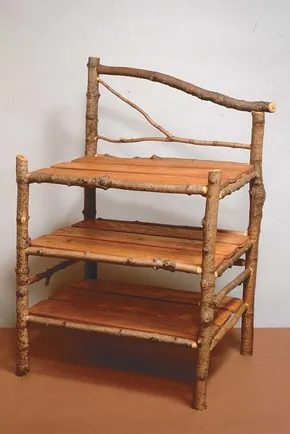
Finding Modern Rustic Furniture for a Log Cabin
Finding the right look for a contemporary log cabin takes patience. Maybe a little luck. You want eclectic vibes without the clutter. That means picking furniture and lights that speak to you.
Look at what modern woodworkers are making. They’re channeling the old masters but cutting out the noise. Victorian rustic pieces? Heavy. Layered. Covered in bric-a-brac. Today’s artisans strip it back. Clean lines. Simple forms. The wood does the talking.
The beauty of the material stands on its own.
This approach opens doors. You’re not stuck with one style. Mix sleek, simple wood pieces with other textures. It works because the focus stays on the grain, the cut, the natural flow. No fuss. Just honest craftsmanship meeting modern sensibility.
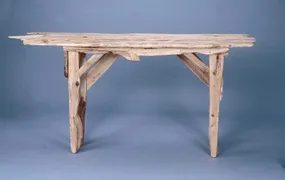
Finding Style in Unlikely Materials
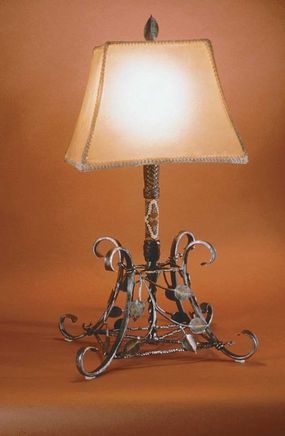
Iron doesn’t just have to be structural. It can be artistic. When forged into traditional shapes, it carries weight. When coaxed into fluid lines, it feels modern. Both approaches work for lamps. You aren’t limited to iron though. Wood offers warmth. Pottery brings texture. Other metals add contrast.
The variety of accessories available is wide. You can mix these materials to create unique lighting solutions. A rough-hewn wooden base might ground a sleek metal shade. A glazed pottery element could soften the industrial feel of wrought iron.
Iron forged into traditional shapes or coaxed into fluid lines can create beautiful lamps
Think about the material itself. How does it age? Wood finishes change over time. Iron might develop a patina. Pottery stays consistent. These details matter for the final look.
Don’t overlook the smaller elements. Accessories define the character of the piece. A simple switch plate can tie the whole installation together. Choose materials that complement your existing decor. Mix textures. Contrast finishes. Let the materials speak for themselves.
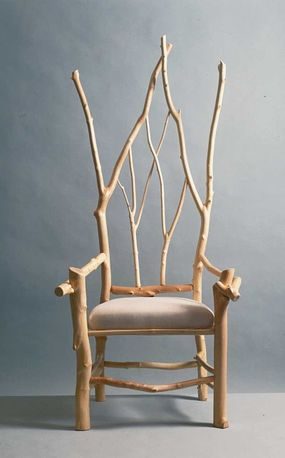
Stick to organic materials for a cohesive look
Too many choices? Yeah, it happens. The catalog is thick. The paint chips are endless. It’s easy to freeze up.
Don’t.
Lean into what feels real. Pick elements that actually remind you of nature. Rough-hewn wood. Stone. Linen. If it looks like it came out of the ground or grew on a tree, it probably belongs in a cabin.
Alternatively, pick a lane. Early American has that crisp, colonial vibe. Lodge style leans heavy on dark woods and big textures. Western brings the leather and iron. Southwestern adds adobe tones and geometric patterns.
Pick one. Echo it through the space.
Trying to mix Early American with Southwestern usually just creates visual noise. Stick to one classic cabin style. It’s easier on the eyes. And easier on your brain.
Blending Past and Present in Cabin Interiors
Old things don’t have to mean dusty.
They can mean character. Texture. A story that started before you arrived.
The trick with vintage cabin decor is knowing where to stop. You don’t want your place looking like a museum exhibit, but stripping it clean feels wrong, too. There’s a sweet spot.
Start with the bones. Exposed beams? Keep them. Rough-hewn floors? Sand them lightly, seal them, leave the grit. These are your anchors. Everything else should bounce off them.
How do you mix antique pieces with modern comfort?
It’s about contrast. A plush, contemporary sofa against a wall of reclaimed barn wood. A sleek, industrial pendant light hanging over a rough-hewn pine table. The modern piece makes the vintage item pop, and the vintage item gives the modern piece soul.
Don’t just buy “old” for the sake of it. Look for pieces that show wear. A chipped ceramic bowl tells you it was used. A faded quilt says it was slept in. That history is the point.
Where to find authentic rustic items without overpaying?
Skip the big box stores. Their “farmhouse” stuff is flat. It has no weight.
Hit the estate sales. The flea markets. The back of your parents’ garage. Look for:
- Cast iron skillets (clean them, oil them, hang them)
- Woven baskets (great for storage, terrible for dampness)
- Wooden crates (shelves, tables, planters)
- Vintage signs (weathered paint is gold)
Which materials age well in a cabin setting?
Leather. It cracks, it darkens, it fits right in. Wool. It smells like rain and fires. Stone. It’s heavy, cold, and permanent.
Avoid plastic. It screams “temporary.” Avoid glossy finishes. They reflect too much light and kill the cozy vibe.
Why does lighting matter more in rustic spaces?
Because cabins are often dark. Thick walls. Small windows.
If you light everything brightly, you lose the magic. Use dimmers. Use warm bulbs (2700K or lower). Layer your light. A floor lamp in the corner, a candle on the table, a string of bulbs overhead.
It changes the mood instantly.
Can you make vintage decor safe and functional?
Yes. But check the wiring. Old lamps can be fire hazards. Reroute them or use new cords.
Check the structure. An old ladder shelf might look great, but will it hold your books? Reinforce it. Use brackets you don’t have to see.
What about color?
Don’t be afraid of color. Rustic doesn’t mean beige.
Deep greens. Slate blues. Terracotta oranges. These colors come from nature. They fit the landscape.
Use them in rugs. In throw pillows. In one accent wall.
How to avoid the “kitsch” trap?
Curate. Edit.
If you have ten vintage signs, pick the best one. The one with the best story. The others go to the thrift store.
Clutter kills the vibe. Space lets the eye rest.
What’s the one thing you shouldn’t skip?
A fire source. Real
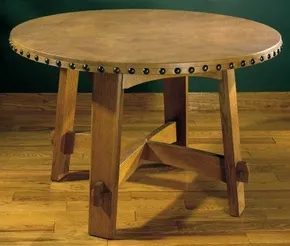
Getting the Joints Right
Wood moves. That’s the first rule you need to accept. If you’re staring at a wall of logs, you’re not just looking at shelter. You’re looking at a living material that expands in the humidity and shrinks in the dry air. The pioneers knew this. They didn’t just stack trees and hope for the best. They cut corners with precision because a bad joint means a drafty cabin, and a drafty cabin means a cold night.
Most people think log cabin style is just about the aesthetic. Rustic charm. Nostalgia for a time when things were made by hand. It is that. But it’s also structural integrity. If you’re trying to replicate that historic look, whether you’re buying vintage Gustav Stickley oak or building something new, the details matter.
A log cabin isn’t just a house. It’s a testament to the work of hands that understood how wood behaves.
You want that “ring of truth” in your decor? It doesn’t come from a mass-produced throw pillow. It comes from understanding the craftsmanship behind the walls. Early American pieces relied on solid woodworking, no veneers, no tricks. Victorian homes added the ornate touches, the embellishments that show off wealth and time. Stickley brought the Arts and Crafts movement, focusing on the grain, the quarter-sawn oak, the honesty of the material.
All of it fits. All of it works. But only if the foundation is right.
Why Corner Joints Matter More Than You Think
Look at the corners of a log structure. That’s where the stress happens. That’s where the wind hits first. There are different ways to join them. Saddle notches. Dovetails. D-cut. Each has a purpose. Each requires different tools.
If you’re doing this yourself, you need the right saw. A chainsaw gets you close. A hand saw gets you precise. Don’t rush the cut. Measure twice, cut once, check the fit, then cut again. Wood is unforgiving. If you force a log into place, you’ll split it. If you split it, you’ve ruined the structural integrity of the wall.
Think about the history. Trappers and mountain men didn’t have power tools. They had axes, adzes, and patience. They built shelter from the elements because they had to. Your goal might be decorative, but the principle is the same. Respect the material.
Choosing Your Style Without Losing the Soul
You can mix styles. It’s not a museum. It’s your home. You might have a Victorian-era chair next to a rough-hewn table. You might have a modern light fixture in a room with hand-split cedar shakes on the walls. That’s the beauty of the American log cabin. It’s an icon, but it’s flexible.
The key is to keep the spirit. Include items that feel like they were made by humans, not machines. Look for imperfections. Look for the grain. Look for the story.
- Hand-carved wood
- Woven baskets
- Iron hardware
- Natural stone accents
These things ground the space. They remind you that this place was built by hand. That’s the vibe you’re going for. Not a replica. Not a theme park attraction. A home that feels rooted in the past but lives in the present.
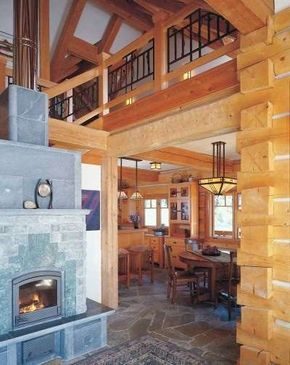
Why Arts & Crafts fits log cabins naturally
The Arts & Crafts movement didn’t just happen. It started in England, crossed the Atlantic, and took root in the US during the early 1900s. The whole point was to glorify the maker. The hand of the craftsperson mattered.
This style makes sense for cabin decor. It strips away the noise. Simple lines. Handwoven textiles. Furniture built by hand. It stands in sharp contrast to the heavy, ornamented interiors of the Victorian era. Less is more.
Mission style, as it’s often called, feels right at home in a log cabin. Both styles share a natural warmth. Both highlight the inherent beauty of wood. In this specific home, you see the connection clearly. The builders used handcrafted square logs. They stacked them carefully. Then they locked the structure together with dovetail corners.
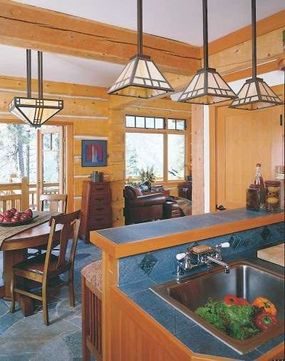
Stickley Joinery and Arts & Crafts Details
The same precision applied to the framing shows up in the furniture. Stickley-style pieces dominate the rooms. They aren’t just decor. They’re structural statements.
To pull off the Arts & Crafts vibe, every detail counts. Light fixtures feature simple geometric patterns. Window panes do too. Even the stair railings follow suit. It’s about repetition. Consistency. That’s the hallmark of the style.
“Simple geometric patterns are so common to the Arts & Crafts look.”
You don’t need complex curves. Straight lines. Clean angles. Think oak. Think handcrafted. If you’re replicating this, look for furniture with visible joinery. Mortise and tenon. Doweled joints. Avoid veneers. Solid wood only.
For lighting, hunt for Mission-style fixtures. Brass or bronze finishes work. Clear or textured glass with leaded edges adds authenticity. Don’t skimp on the hardware. Drawer pulls should be wood or simple metal. No ornate gold. No plastic.
Historical Value
This isn’t just an aesthetic choice. It’s a nod to history. The Arts & Crafts movement rejected mass production. It celebrated the maker. The house reflects that ethos.
Understanding this context matters for renovation. It guides your material choices. It tells you why a hand-forged nail might be better than a machine-driven one. It explains the preference for natural finishes over high-gloss paints.
When you preserve these elements, you’re maintaining the narrative. The house tells a story of craftsmanship. Don’t interrupt it with modern shortcuts. Respect the joinery. Respect the geometry. The historical value lies in the integrity of the build.
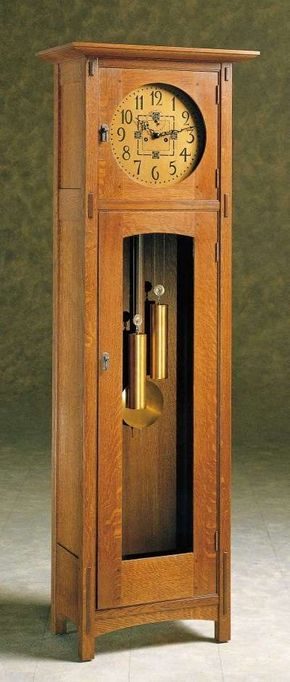
Building on the log cabin foundation
The walls are already doing the heavy lifting. Rough-hewn timber speaks of eras past, setting a stage that feels lived-in before you even unpack a single box. Now comes the fun part. You have to fill that space without drowning the character.
It’s about layering. Not clutter. Texture.
You need furniture that looks like it survived a few winters. Think distressed finishes, solid wood, and pieces that don’t look too new. New stuff breaks the spell. It screams “big box store.” You want the opposite.
Accessories matter just as much. Cast iron skillets hanging on a wall? Yes. Woven baskets for storage? Absolutely. These small touches cement the vintage vibe. They tell a story. The logs provide the backdrop; these items provide the plot.
Don’t overthink it. If it looks sturdy and slightly worn, it probably belongs. If it’s shiny and plastic, toss it.
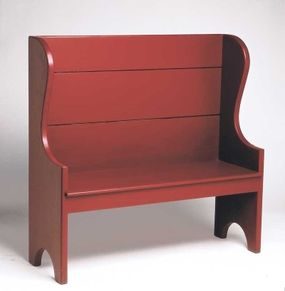
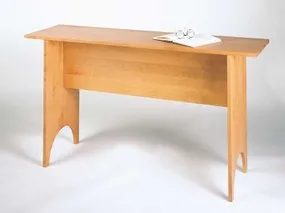
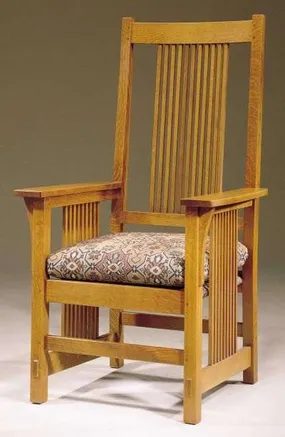
How Shaker and Windsor Furniture Set the Cabin Tone
Pick your furniture to define the room’s character. Shaker furniture offers stark, clean lines that feel honest and uncluttered. It’s about form following function. No fuss. Or go for the curved, spindle-backed silhouette of Early American Windsor chairs. They bring a classic, traditional warmth that feels lived-in.
Your furniture choice isn’t just about comfort. It sets the tone.
Choosing Floor Coverings to Match Your Cabin Mood
The floor tells the story too. A Victorian Oriental rug adds rich color and intricate pattern, anchoring the space with history. It feels formal, layered, expensive.
Flip that script. Try a rug braided from fabric scraps. It’s rugged. Resourceful. It screams cabin. This choice underlines a mood of practicality and charm.
- Victorian Oriental : High contrast, detailed, traditional.
- Braided rag rug : Textured, casual, DIY-friendly.
Which vibe fits your space? The floor covering either elevates the decor or grounds it in reality. Pick accordingly.
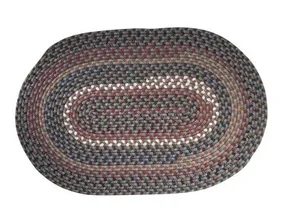
Match your fixtures to the era
Lighting makes or breaks the vibe. It’s not just about brightness. It’s about character. Pick fixtures that actually fit the style you’re chasing. Trying to pull off Arts & Crafts with a sleek, modern LED strip? Doesn’t work. You need weight. You need material.
Go for bronze table lamps if you’re leaning into that Arts & Crafts aesthetic. The metal needs to feel substantial, earthy. It grounds the room. Switch gears to Early American and you’re looking at a pewter chandelier. That specific metal finish reinforces the period look without screaming for attention.
Which metal suits your wall color? Honestly, look at the hardware on your cabinets. If your knobs are brass, don’t hang a chrome light. It clashes. It feels accidental. Get the metals to talk to each other.
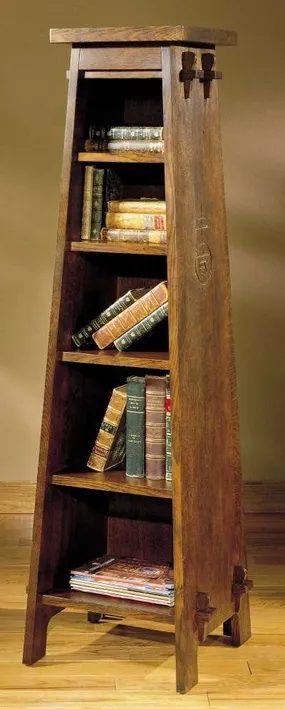
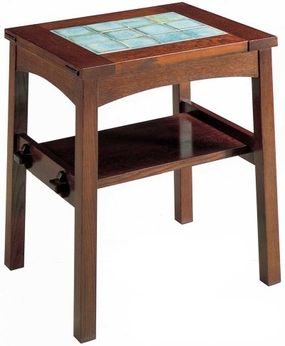
Mod Lodge
This isn’t just a style. It’s a collision. Mid-century modern lines meet rugged, rustic textures. The result? A space that feels curated but lived-in. Think clean angles softened by knotted wood. Think chrome fixtures paired with stone walls. It works because it contrasts. You don’t get the sterility of pure modernism. You avoid the clutter of traditional cabin style.
How to blend modern and rustic materials
Start with the bones. Keep the architecture clean. Flat planes. Straight lines. Let the materials do the talking. Use reclaimed wood for accent walls or ceiling beams. The grain matters. Look for character, not just color. Pair that with matte black metal or brushed brass for hardware. Keep the furniture low-profile. Eames chairs work. Danish teak tables work. Avoid ornate legs or carved details.
Lighting is where the vibe shifts. Hang a sputnik chandelier over a rough-hewn dining table. The geometric shape clashes nicely with the organic table surface. It creates tension. Good tension.
Why this style fits small spaces
Clutter kills this look. Mod Lodge relies on negative space. You need room to breathe. If you’re working with a small apartment, stick to a limited palette. Whites, grays, and warm wood tones. Add one bold texture. Maybe a shearling throw or a leather sofa. Don’t over-accessorize. One large abstract print beats five small framed photos.
Where do you find the pieces? Thrift stores for the mid-century finds. Hardware stores for the rustic accents. Don’t buy a “Mod Lodge” set online. It looks fake. Build it piece by piece. Mix the old with the new. A vintage radio on a sleek concrete side table. It tells a story.
Which colors define the aesthetic
Stick to earth tones. Olive green. Mustard yellow. Burnt orange. These were the decade’s signatures. But ground them in neutrals. Cream. Charcoal. Natural wood. The contrast keeps it fresh. If everything is brown, it’s just a cabin. If everything is white and chrome, it’s a showroom. The magic is in the middle.
The key is restraint. Let the texture speak.
Don’t force it. If a piece doesn’t feel right, leave it out. The style should feel accidental. Like you stumbled into it, not designed it. That’s the trick. You can’t fake that ease. You have to live in the space a bit to know what works.
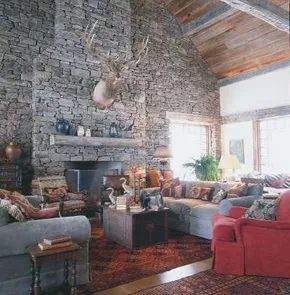
Blending Rough Textures with Soft Layers
That Adirondack Great Camp vibe? It’s everywhere now. But it’s not the fussy Victorian clutter you might expect. It’s bigger. Simpler. Heavier. Think baronial hunting lodges, not quaint cottages.
You want that ancient, masculine feel? Go heavy. Heavy tables. Iron-strapped doors. It screams durability.
Then you hit the wildlife angle. It’s standard for this look. Animal mounts. Bird specimens. Oil paintings of the hunt. Antler chandeliers dripping from the ceiling. It celebrates the wild, sure. But here’s the trick. These places weren’t rough huts. They were built for comfort.
Softness is the secret weapon.
Velvet throws. Richly patterned tapestries. Plush Oriental rugs underfoot. Warm, dim lighting. It softens the blow of all that stone and wood.
Bigger is better in lodge style. Really.
Look at the fireplace. Don’t hide it. Accentuate the mass. Set a stone chimney against a stacked stone wall. It anchors the room.
But keep it cozy. How? Drop the ceilings.
Lowered ceilings with hand-hewn beams in the kitchen and dining area create that intimate, enclosed feeling. It stops the space from feeling like a cavern.
The mass of the fireplace is accentuated by setting its stone chimney against a stacked stone wall.
Making New Materials Look Aged
New construction often feels sterile. Lodge style fights that.
You’re aiming for “New Becomes Old Again.” It’s about texture. It’s about weight.
If you’re doing this yourself, focus on materials that age well. Or look like they already have.
- Stone: Stacked stone walls aren’t just for fireplaces. Use them to frame entryways.
- Wood: Hand-hewn beams are expensive. Faux beams work if they’re done right. Look for deep grooves and uneven surfaces.
- Textiles: Layer them. A heavy wool rug over a sisal base. Velvet cushions on leather chairs.
Don’t forget the lighting. Harsh white LEDs kill the mood. Use warm bulbs. Lantern-style fixtures. Things that cast shadows.
It’s a balance. Rough edges. Soft touches. Big scale. Intimate details.
Mix them up. Break the rules if it looks right.
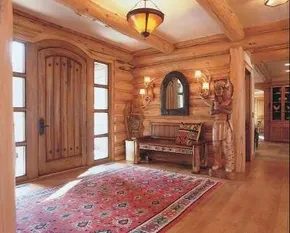
Balcony Design That Echoes Historic Lodges
That weathered look? It doesn’t have to take decades. You can fake the soul of a well-loved log cabin immediately if you know where to look. It’s not about the wood itself, but how you frame it.
Start with the architecture. The balcony here uses simple pole railings. Nothing fancy. Just vertical lines that break up the solid mass of the logs. It feels immediate. Familiar.
It pulls directly from the Old Faithful Inn in Yellowstone National Park. Those grand old lodges didn’t worry about sleek minimalism. They leaned into scale and natural materials. You’re aiming for that same rugged hospitality.
Layer is the only rule.
- Architectural features: Keep railings simple. Let the structure speak.
- Furnishings: Heavy, sturdy pieces that look like they’ve survived a few winters.
- Accessories: Items with history, or things that look like they do.
Why does this work? Because it anchors the space. A new build often feels sterile. Cold. The pole railing adds texture. It creates shadow lines. It suggests a view that has been enjoyed for years, not just today.
You don’t need a renovation budget to get this vibe. Just pick materials that age well. Wood that accepts patina. Metal that might rust a little, charmingly.
What’s the first thing you notice when you walk in? It shouldn’t be the newness. It should be the feeling of arriving somewhere that has been waiting for you.
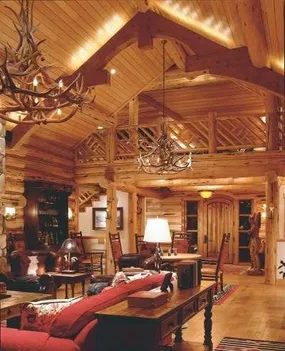
Mixing Historic Weight with Modern Comfort
That heavy ceiling truss? It looks like it was salvaged from a medieval cathedral. Solid. Old. Intimidating. But the space doesn’t feel like a museum exhibit. It feels like a home.
The trick is in the contrast. You’ve got that massive, historic timber pulling the eye up, grounding the room in something ancient. Then you drop in hickory twig furniture. It’s rustic, sure. It nods to north woods style, all rough-hewn and natural. But it’s not trying to be a cabin in the wilderness. It’s light. It breathes.
The key is letting the old structure do the heavy lifting while the furnishings stay relaxed.
This works because the home itself is spacious. You aren’t cramped. You aren’t fighting for square footage. Today’s tastes favor open, comfortable layouts, and this mix delivers exactly that. The rustic elements add texture without closing off the room. The historic truss adds drama without making the space feel small.
You don’t need to choose between “old world charm” and “modern comfort.” You just need to respect the scale. Big ceiling? Keep the floor furniture lighter. Rustic vibe? Keep the layout open. It’s a simple equation. The result is a space that feels lived-in, not staged.
Why does this combination stay popular? Because it works. It’s warm but not heavy. It’s stylish but not cold. You get the best of both worlds without the compromise.
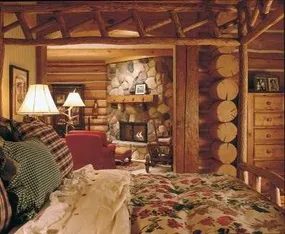
The Summer Place
Layered decor does something specific. It adds warmth. Not the heat from a radiator, but that cozy feeling like the house has been lived in for decades. You get that look by stacking textures and styles over time.
If you want to chase that vibe, start looking at how different rooms handle it.
- Country Decorating Ideas lean into rustic charm.
- Modern Decor Ideas strip back but keep the layering through light and shadow.
- Window Treatment Ideas matter more than you think. Heavy linen or sheer cotton changes the whole room’s temperature.
General Decorating Ideas often miss the point if they don’t account for space.
- Kitchen Decorating Ideas need to balance function with style. Open shelves, for instance, are a way to layer dishware as decoration.
- Dining Room Decorating Ideas rely on table settings that stay out year-round.
- Bedroom Decorating Ideas benefit from layered bedding. Think duvet, quilt, throw.
- Bathroom Decorating Ideas can feel cold without woven baskets or plush towels stacked neatly.
- Home Office Decorating Ideas often overlook the wall behind the desk. Frame art. Add shelves.
These aren’t separate silos. They’re parts of the same Home Spaces puzzle. Interior Decorating is just arranging these pieces until they stop looking like a catalog and start looking like yours.
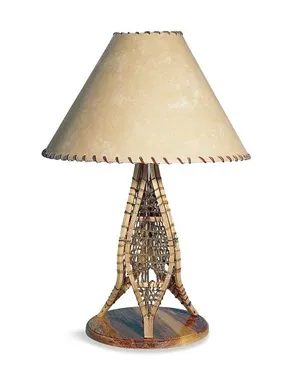
Bring the Woods Inside Without the Mosquitoes
Think about that first night at summer camp. You’re in a cabin with log walls, maybe some initials carved into the wood by kids decades ago. Bunk beds. Hardwood floors that creak. It’s a specific kind of memory. Nostalgic, sure. But let’s be honest. You don’t actually miss the bug spray. Or the need for a flashlight to find your way to the latrine.
That’s the trap with camp and cottage style. It’s easy to romanticize the aesthetic while forgetting the inconvenience. The goal isn’t to recreate the hardship. It’s to capture the feeling of those halcyon summer days. The freedom. The air. The light.
Your version of this style depends on where your head goes when you imagine “vacation.”
If you’re dreaming of deep woods, you’re looking at heavy textures. Pendleton blankets draped over armchairs. Bear-skin rugs (faux, please, we’re civilized) underfoot. It’s rustic. It’s grounded.
If you’re thinking water, the vibe shifts. Whitewashed plank paneling. Nautical ropes. A hammock on the porch that swings even when it’s not windy. This is the coastal cousin of camp style. Less fur, more cotton.
Both styles make room for the hand-me-downs. The vintage rocker Grandma tossed out because it didn’t fit her city apartment. The fishing poles Grandpa left in the garage. The faded floral quilts. These items have history. They have wear. That’s the point. You’re not starting from scratch. You’re curating a life already lived.
Furniture That Doesn’t Care Where It Lives
There’s a rigid rule in most interior design: indoor stays indoor. Outdoor stays outdoor.
Camp and cottage style breaks that rule.
The furniture should feel one step removed from the outdoors. Not quite rough enough for the forest floor, but not delicate enough to be afraid of it.
Take the dining table. If it’s solid wood, thick, and sturdy enough to hold a plate of burgers without wobbling in the wind, it belongs on the porch for summer supper. Just as easily, it sits in the kitchen during a snowstorm.
The quilt? It’s on the sofa. Then it’s on the lawn for the Fourth of July fireworks. No cover required. If you have to treat it like it’s made of glass, you’ve missed the point.
This approach saves money. It saves space. It also means you’re not babying your things. You’re using them.
Mixing the Old with the Practical
You don’t need expensive antiques. You need things that look like they’ve been used.
Creels. Canoe paddles. Worn leather boots. These aren’t just decor. They’re props for the story you’re telling. They say, “We go out there. We come back here.”
But keep it balanced. A room full of fishing gear looks like a tackle shop. A room full of bearskin looks like a lodge from the 1950s.
Pick a few anchors. A big wooden table. A comfortable chair that’s seen better days but still holds you up. A rug that can take a muddy boot.
Then add the soft stuff. Linens. Cotton. Things that breathe
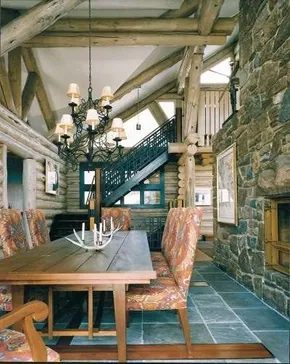
How to Blend Western Logs with Contemporary Design
Western logs bring immediate warmth to the cabin decor, but they don’t have to scream rustic cliché. In this Eastern contemporary home, those raw logs sit comfortably alongside streamlined furniture and black iron railings. The palette leans cool, using stony gray shades to give the space a sharp, modern edge. It’s a contrast that works because the warmth of the wood prevents the gray from feeling sterile. You still need color, though. Rugs, upholstery, and small accessories provide the necessary spark. Without those splashes, the room might feel too clinical.
Bringing contemporary style to a cabin means editing out the noise. Look for simple lines. Eliminate anything fussy or frilly. If it has unnecessary detail, it probably doesn’t belong here. Bold geometric shapes do the heavy lifting. This home proves it with a blocky fireplace, squared floor tiles, and a rectilinear iron bed. These hard angles underscore the modern look while the organic logs soften the blow.
Don’t ignore the vertical space. Vaulted ceilings painted white create a refreshing airiness. Accented with those same log beams, they draw the eye up without closing in the room. It’s a trick that makes even compact cabins feel expansive.
Why mix old and new? Because pure modern can feel cold in a house full of timber. Pure rustic can feel dated. The mix feels intentional. It feels lived-in.
Simple lines win. Fussy details lose.
Start with the structure. Keep the logs. Paint the rest white or gray. Add black iron for contrast. Then, and only then, add color through soft goods. It’s a formula, but it’s a flexible one. Does it work for your space? That depends on how much texture you can handle.
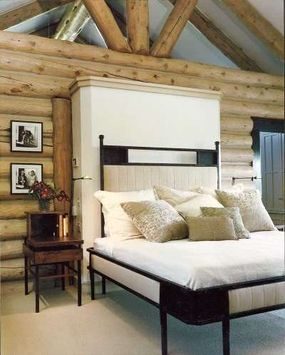
Anchoring the Cool with Wood
The logs themselves are bleached. It’s a deliberate move to cool down those naturally warm tones. You get that crisp, almost Scandinavian feel. But the space doesn’t feel sterile. It shouldn’t.
There’s a counterbalance happening everywhere you look. Rich wood accents radiate warmth, keeping the room grounded. Walk into the dining room. Look at the floor. Look at the furniture. Those pieces bring the heat back in. It’s a tactical use of material. You want the visual chill of the walls but the tactile comfort of the floor underfoot.
The bedroom leans harder into that cool sophistication. It’s quieter here. The strategy shifts from heavy timber to textiles. Fitted bedclothes and linens in various shades of neutral do the heavy lifting. It’s not about temperature anymore. It’s about texture and tone.
Neutral linens create a soft, cool backdrop that contrasts sharply with the structural warmth of the timber frame.
So you have bleached logs for the shell. Darker wood for the furniture. Neutrals for the sleep zone. It’s not a random mix. It’s a specific dialogue between materials.
More Decorating Ideas
If you’re looking to expand on this specific style, you’re not alone. The interest in blending rustic structure with modern finishes keeps climbing. Here’s where people usually go next:
- Country Decorating Ideas
- Modern Decor Ideas
- Window Treatment Ideas
- Kitchen Decorating Ideas
- Dining Room Decorating Ideas
- Bedroom Decorating Ideas
- Bathroom Decorating Ideas
- Home Office Decorating Ideas
- Interior Decorating
About the Author
Janice Brewster knows this stuff because she lived it. She spent seven years as the editor of Log Home Living and Timber Frame Homes. That wasn’t a desk job. She traveled across North America and even Finland, hunting down log and timber frame homes. She wrote about them. She saw how they lived.
Now she’s a freelance writer. She’s also put out two books, Log Cabins and Cabin Style. The knowledge is there. The context is real. You’re not just reading trends. You’re reading experience.
The bleached logs stay cool. The wood stays warm. The rest is up to you.