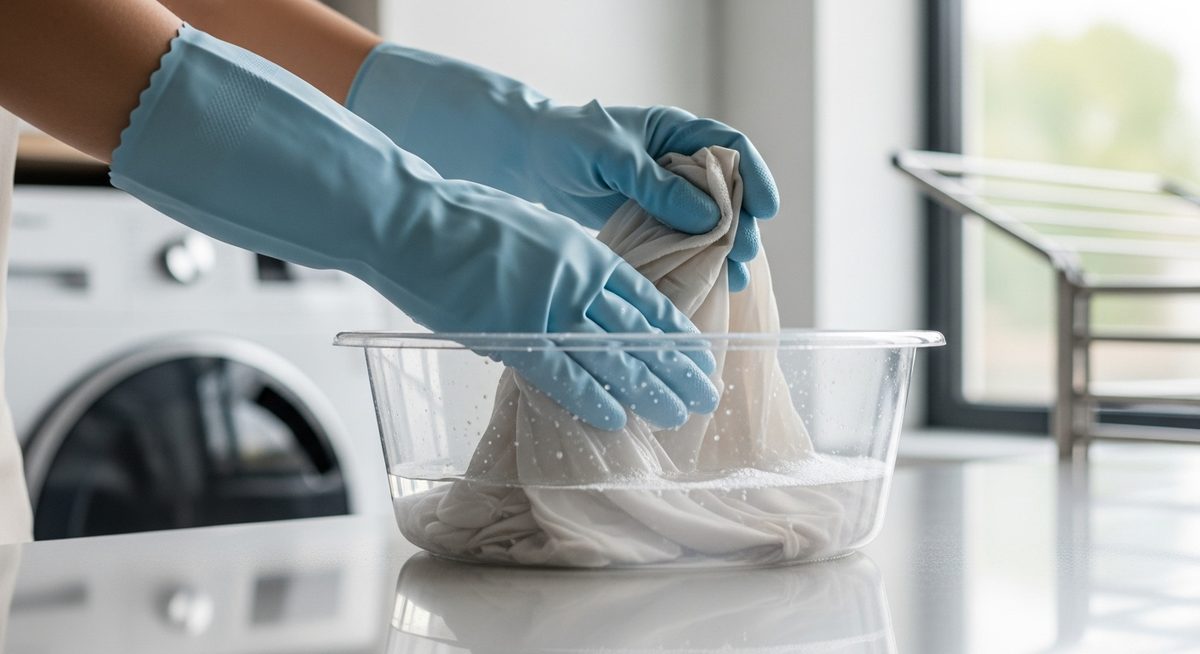
How many pretty blouses have you ruined? Shrunk. Deformed. Felted into a stiff, unusable lump. It happens after every wash, no matter how careful you try to be. The care labels act like cryptic riddles. The hand-wash cycles on your machine are wildly inconsistent. The water temperature is always a fraction too hot. These factors have already wrecked plenty of wardrobes.
There is a trick. It is fast. It feels more like magic than chore. And it might not be about the detergent at all. The real issue could be your gestuelle du lavage (the way you handle the washing process). Forget the traditional basin. Forget the aggressive scrubbing. Rediscover an everyday object in your kitchen. In minutes, you can restore softness and shine to fragile fabrics. No rubbing. No headaches.
It is time to pull back the curtain on this clever technique. It breaks every habit you have. It might just revolutionize your next load of delicates.
You Thought You Knew Hand Washing? Think Again.
Hand washing has passed down through generations. It is seen as the ultimate sign of care. The only way to treat delicate laundry gently. But even with patience, problems arise. Look closely at your clothes after drying. Pulling filaments. Rough, bristly fibers. Colors that look dull and faded.
This paradox leaves most people confused. You follow the correct motions. You are gentle. But it is not enough. This is especially true for fluid silk, intricate lace, or precious cashmere.
Here is the problem. You use too much water. You do not agitate it enough. The spinning or wringing process is a guessing game. Fragile fabrics suffer when you wipe them with a towel. They suffer when you rub too hard.
The promise of a gentle wash turns into frustration. You end up relegating those favorite pieces to the back of the closet. They sit there, unworn. A particularly clever technique could change everything in a heartbeat.
The Sealed Container: Your Secret Weapon for Delicate Care
Stop using a basin. Start using a sealed container.
This is not about soaking. Soaking often leads to fiber degradation over time. It is about controlled agitation. You need an airtight plastic container with a snap-lock lid. Ideally, one that is large enough to allow movement but small enough to fit in your sink or a large bowl.
The Process
- Fill the container. Use lukewarm water. Not hot. Not cold. Lukewarm. Add your mild detergent. Do not use standard laundry detergent. Use something formulated for delicates. Woolite or a similar gentle soap works well.
- Submerge the garment. Place your silk blouse, lace dress, or cashmere sweater inside. Push it down gently. Ensure it is fully saturated.
- Seal it tight. Snap the lid on. Make sure it is air-tight.
- Shake, don’t scrub. Hold the container. Shake it gently for about 30 to 60 seconds. That is it. No hands inside. No fingernails catching on threads. The agitation of the water against the fabric cleans it.
- **Dr
Why Airtight Containers Wash Delicates Better
For decades, the washbasin dominated the laundry room. The real shift, though, is hiding in plain sight. Look at your kitchen counters. Specifically, at those airtight food storage boxes. They are not just for leftovers. They are a superior tool for washing delicate fabrics without aggression.
This method is obscure but highly effective. It repurposes a daily item to clean without damage. You slide the garment into the box. Add tepid water. A drop of detergent follows. Then seal it tight.
No direct contact. No risk of tearing. The process is silent, clean, and surprisingly thorough.
What You Need Before You Start
You do not need special equipment. Common household items suffice.
- A sturdy airtight container (2 to 4 liters capacity)
- 1-2 liters of warm water (never hot)
- One tablespoon of wool or delicate detergent
- A clean towel for drying
This setup limits water waste. It prevents splashes. It keeps precious textiles intact. The advantage is clear: controlled hygiene with zero abrasion.
The Technique: Shake, Don’t Scrub
The secret lies in the motion. Stop wringing. Stop rubbing. Stop soaking for hours. This is about quick, calibrated action.
- Lock the lid. Ensure it is secure.
- Shake the box gently. Do it flat. Work for just a few seconds.
- The soapy water penetrates every fiber. It dissolves dirt. It respects the weave.
- Dump the soapy water. Refill with clear water.
- Shake again to rinse. Repeat if needed.
Finally, remove the garment. Do not twist it. Lay it on a dry towel. Press gently to absorb excess moisture. This is not standard hand-washing. It is precise. It prevents felting. It stops shrinking.
Build A Routine That Saves Time and Money
Adopting this method breathes new life into your laundry routine. You avoid expensive “miracle” products. You save time. You save water. It is an eco-friendly shift that does not compromise on results.
Stop fearing your favorite sweater. Or that silk scarf. A few shakes are enough to refresh stains. The texture remains untouched. The color stays true.
This is ideal for anyone who wants to preserve their clothing for years. It eliminates the need for constant dry cleaning visits. You gain control over your time. You gain control over your budget.
Integrating this trick into your weekly cycle extends the life of fragile pieces. It offers discreet, effective care. The washbasin may have held its ground for a long time. But the airtight box offers something different.
Precision. Control. Longevity.
Why stick to the old way when the kitchen holds the answer? The laundry basket is waiting to be emptied. The container is ready.